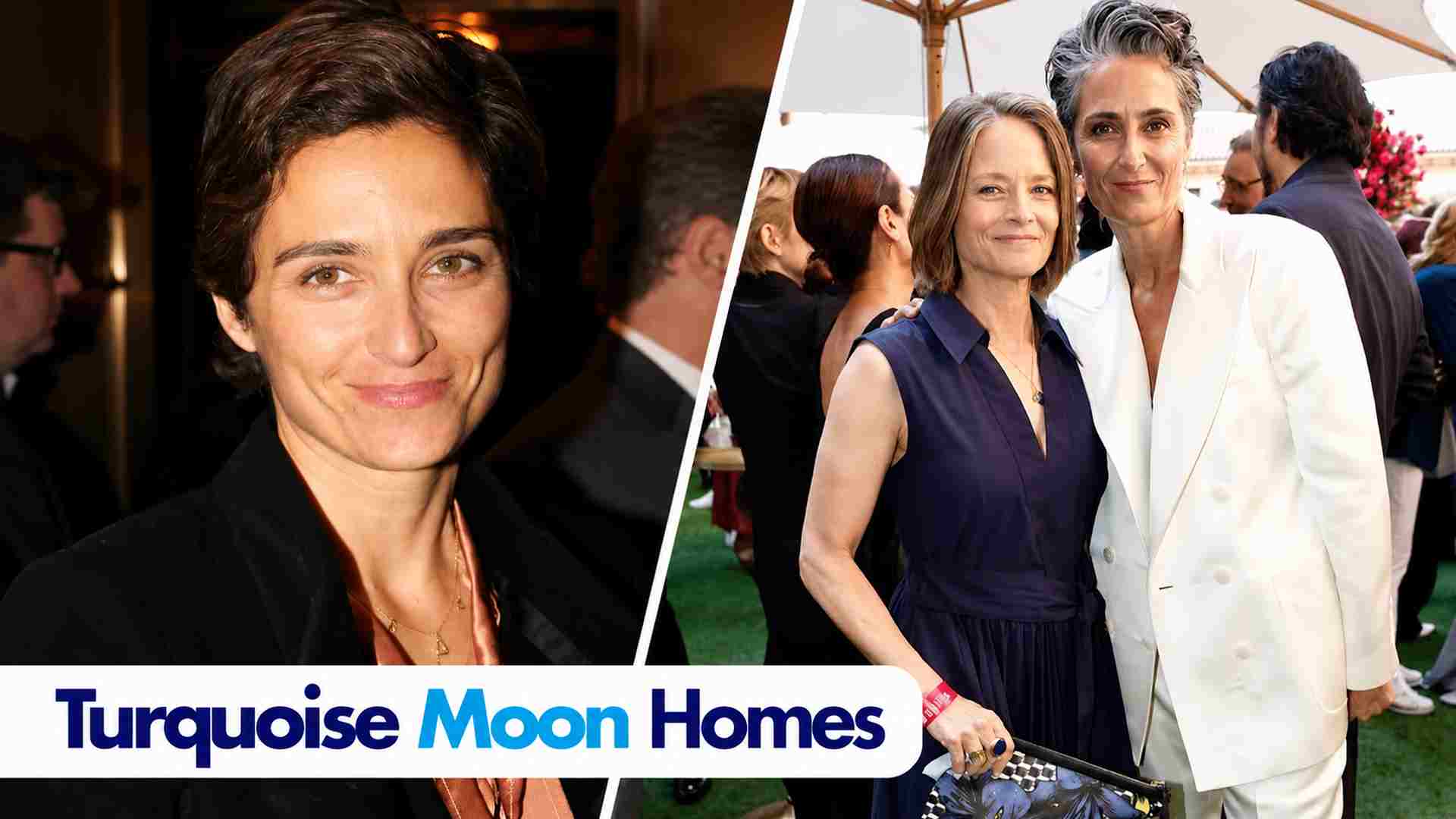
Have you ever known someone through a famous spouse, then found out they have a whole creative world of their own? That’s the case with Alexandra Hedison. Many people first hear her name beside Jodie Foster’s. Yet photography, film, and a long interest in the places we live have shaped her life for years.
Alexandra Hedison’s pictures do not depend on red carpets or celebrity portraits. They often show forests, changing buildings, painted windows, and spaces that seem caught between one state and another. She has also acted on television and directed a documentary shown at Sundance.
In this article, we’ll look at her childhood, artistic path, best-known projects, marriage, and the ideas behind her work. Let’s start with the person behind the camera rather than the headlines around her.
Who Is Alexandra Hedison?
Alexandra Hedison is an American fine art photographer, filmmaker, and former actress. Born in 1969 and raised in Los Angeles, she is known for photographic series that explore landscapes, architecture, memory, and change. Her work has appeared in galleries and museum collections.
Television viewers may recognize her as Dylan Moreland from The L Word. She later focused more closely on creating and exhibiting photographs. In 2024, she directed ALOK, a documentary short that premiered at the Sundance Film Festival.
She is also married to Academy Award-winning actor and director Jodie Foster. Their marriage began in 2014, but her artistic career has its own history, projects, and public recognition.
Quick Bio
| Full name | Alexandra Hedison |
|---|---|
| Professional name | Alex Hedison |
| Born | 1969 |
| Hometown | Los Angeles, California |
| Nationality | American |
| Known for | Fine art photography, film, and acting |
| Education | Antioch University; also studied at UCLA and SUNY Purchase |
| Spouse | Jodie Foster (married in 2014) |
| Notable television role | Dylan Moreland in The L Word |
| Documentary | ALOK (2024) |
| Based in | Los Angeles |
Growing Up Near the Entertainment World
Alexandra Hedison grew up in Southern California, where screen work was part of family life. Her father, David Hedison, was an actor whose career included film and television. Being close to the industry made acting a familiar option, though it did not determine where she would spend the rest of her working life.
Alexandra Hedison’s upbringing also gave her a lasting connection to the local landscape. The coast, hills, and changing streets around Los Angeles would later become useful subjects for a photographer drawn to the way built spaces meet the natural world. That interest appears in work made far beyond California, too.
She studied at SUNY Purchase and UCLA and later earned a bachelor’s degree from Antioch University in 2021. Her path through education was not a single straight line from college to an office job. Creative work, practice, and continued study all played a part.
There is a small but helpful lesson in that path. An artist’s skills do not have to arrive fully formed at a certain age. Her story includes learning through the work itself, then returning to formal study after years of professional experience.
From Acting Roles to a Life Behind the Camera
Before gallery audiences came to know her photographs, she spent time acting. Alexandra Hedison’s television credits include The L Word, in which she played Dylan Moreland. The character gave viewers a memorable face to connect with a name they would later encounter in another art form.
Acting and still photography ask different things of a person. On a television set, many people work toward a shared scene and a schedule. An artist making a series of photographs may instead spend long stretches watching a location, returning to it, and finding out what keeps drawing their eye.
In interviews, she has described teaching herself key camera skills and following an early interest in objects rather than faces. Doors, windows, construction sites, and other ordinary forms caught her attention. Her decision to make art from such material opened a career quite unlike her screen roles.
That shift matters because she did not simply exchange one kind of fame for another. She found a visual subject that could hold her interest across years of work. The result is a recognizable practice, not just a collection of attractive pictures.
Why Buildings and Half-Finished Places Matter in Her Photography
A newly painted wall can look plain to someone walking past. To a photographer, it might hide old marks, show layers of change, or turn a familiar street into something hard to place. This tension runs through the images of Alexandra Hedison.
Alexandra Hedison’s early series Rebuilding examined structures in transition. Buildings that had been partly removed or changed offered unusual shapes, open edges, and glimpses into places that once felt complete. Rather than recording an ordinary construction update, the work uses those settings to consider how spaces change.
It also creates a link between her art and home design. A room or house holds signs of how people once used it. During a remodel, some parts disappear while others stay. The images invite viewers to notice that brief moment when an old place is no longer quite itself, but the new one has not arrived.
What makes the idea effective is its simplicity. You do not need to know a building’s history to respond to a doorway with no room behind it or a surface painted over again and again. The forms are familiar, yet their meaning is open.
Ithaka and the Strange Shape of a Forest
After work centered on buildings, Alexandra Hedison turned her lens toward dense woodland. Ithaka includes images made in the temperate rainforest of Washington State. The setting was very different from a city worksite, but her eye stayed alert to repeating lines, blocked views, and spaces between forms.
From a distance, a forest seems like one large subject. Step among the trees, and it becomes a series of smaller scenes: an opening, a low branch, a tangle of trunks, or a shadow that changes what can be seen. Her photographs often make those details more important than a sweeping view.
She has explained that the project grew from an interest she did not understand right away. By spending time in the woods and continuing to shoot, she found a way to explore feeling lost and moving through an uncertain place.
That is one reason these pictures can be rewarding to look at slowly. They are less about finding a pretty view than noticing how the eye moves through a crowded one. A photograph can suggest a journey even when no person appears in the frame.
The In Between and the Beauty of Everyday Surfaces
Another Alexandra Hedison body of work, The In Between, turns ordinary street details into images that can resemble abstract paintings. Covered shop windows and painted glass change what people can see from one side to the other. The material itself becomes part of the story.
In an interview about her Paris work, she discussed photographing storefronts during changes in ownership. Paint on the windows hid the interior. What might have looked like a temporary nuisance to a passerby became a subject worth exploring in depth.
There is a special kind of attention in that choice. It asks what happens when a view is interrupted. Instead of showing a clear scene through the glass, the image draws the eye to the layer in front of it. Color, shape, light, and blocked sight become more important than the shop beyond.
This approach also explains why architecture is so closely tied to her practice. Buildings are not only physical containers. Their surfaces shape what we see, what we miss, and how we move through a place. Even a temporary coat of paint can change that experience.
A Brief Infinity and a New Way of Making Images
Alexandra Hedison’s work has continued to change with new methods. The series A Brief Infinity, shown in the 2020s, includes experiments made without using a camera in the usual way. Chemigrams use photographic paper and chemicals to form an image. Hand-painted surfaces are another part of this body of work.
These methods may sound far removed from a forest or construction site. Yet the questions feel connected. What does an image reveal? What does it cover? How do different materials affect the story we see?
For someone used to snapping pictures on a phone, this work offers a different idea of photography. An image does not always begin by pointing a lens at a subject. It can also grow from a hands-on process where material, light-sensitive paper, and careful choices affect the result.
The artist’s official biography and exhibition record lists major projects, shows, and collections. It also shows how she has kept experimenting rather than repeating a single successful look.
Gallery Shows and Museum Collections
Alexandra Hedison has exhibited in Los Angeles, New York, London, Paris, and Seoul. Her career includes solo shows devoted to specific photographic series and group shows that place her art in conversation with work by other artists.
For example, Everybody Knows This Is Nowhere was presented at a gallery in Beverly Hills in 2012 and later at a cultural center in Cascais, Portugal. The In Between appeared in Paris and Los Angeles. A Brief Infinity was shown in Paris, Los Angeles, and Seoul.
Her photographs are represented in collections that include the Getty Museum, the Philadelphia Museum of Art, and the Hammer Museum’s Grunwald Center collection. Museum holdings matter here because they show that her work has reached institutions beyond television and entertainment coverage.
But those names are not the only measure of the pictures. The stronger way to approach them is to notice what each series is doing. One turns a building site into a study of change. Another makes a forest feel like a maze. Another gives a covered window the weight of a painting.
Her Sundance Documentary ALOK
In 2024, Alexandra Hedison brought her creative eye to documentary film. ALOK is a short portrait of Alok Vaid-Menon, a nonbinary writer, performer, and public speaker whose work explores identity and self-expression. The film premiered at the Sundance Film Festival.
The short runs about 19 minutes. It follows its subject through personal and public aspects of their work, making space for a larger discussion about how people understand gender and how they respond to someone who does not fit narrow expectations.
Jodie Foster served as an executive producer. The project also joined the Sundance short film tour, bringing it to audiences outside the festival’s main event. The Sundance Institute’s film tour announcement identifies the director, producers, and subject.
It was an important step beyond making still images. The film tells a story through voice, movement, editing, and time. Yet it also fits a long-standing artistic interest: looking carefully at someone or something that a quick glance may fail to understand.
Marriage to Jodie Foster and Their Shared Creative World
Alexandra Hedison’s relationship with Foster attracts wide interest, but the basic timeline is straightforward. The two began dating in 2013 and married in April 2014. Foster’s representative confirmed the wedding at the time.
Both women work in creative fields, although they are known for different things. Foster built a long career in acting and directing. Her wife has worked across photography, screen performance, and documentary film. Their collaboration on ALOK brought some of those skills together in one project.
The couple tend to keep their marriage out of everyday celebrity coverage. They do appear together at some film and arts events, but neither person’s professional story needs to be reduced to their relationship.
Readers interested in another person who has developed a career alongside a well-known actor can explore Rich Orosco’s career in sports and entertainment marketing. The two stories are different, but both show why a person’s own work deserves attention.
What Sets Her Work Apart From Typical Celebrity Photography?
It may be tempting to think her career is mainly about taking photos of famous people. Her main fine art projects tell a different story. They often leave people out of the frame and place the viewer in front of trees, walls, veils, and unfinished structures.
She is interested in what a picture can suggest without spelling everything out. A bright opening among trees might feel welcoming to one viewer and uncertain to another. An empty building may seem calm, sad, or full of promise. Those responses do not require a fixed explanation.
Alexandra Hedison’s images also reward close looking. Repeating lines can turn an ordinary setting into a pattern. A blocked view can draw attention to what is missing. Changing surfaces can reveal how quickly a place loses its familiar look.
It is this mix of careful composition and open meaning that gives the photographs a life beyond a famous surname or red-carpet appearance. She has spent years returning to questions about sight, place, and change, and each new project approaches those questions differently.
Final Thoughts
What stands out about Alexandra Hedison is the patience behind her creative choices. Instead of building her identity around a single acting role or a high-profile marriage, she has made room for slow observation, risk, and fresh methods.
Her career is a reminder that familiar things can become interesting when we look at them again. A forest, a painted window, or a half-finished house can hold a story without anyone standing in front of the camera. That quiet, curious way of seeing is what makes her work her own.
Frequently Asked Questions
Does Alexandra Hedison use film or digital cameras?
Both. Her artist biography describes work with large- and medium-format film as well as digital methods. She has also made camera-less images.
What poem helped inspire the title Ithaka?
The project takes its name from Ithaka by the poet C. P. Cavafy, a poem about the journey toward a destination.
Was ALOK included in a Sundance touring program?
Yes. The documentary was selected for the 2024 Sundance short film tour after its festival premiere.
Has her photography been shown in South Korea?
Yes. A Brief Infinity was exhibited at Shinsegae Gallery in Seoul in 2023.
Where can readers see a list of her photography books?
Her official artist website has a Books section listing titles such as The In Between, Into the Woods, and A Brief Infinity.
