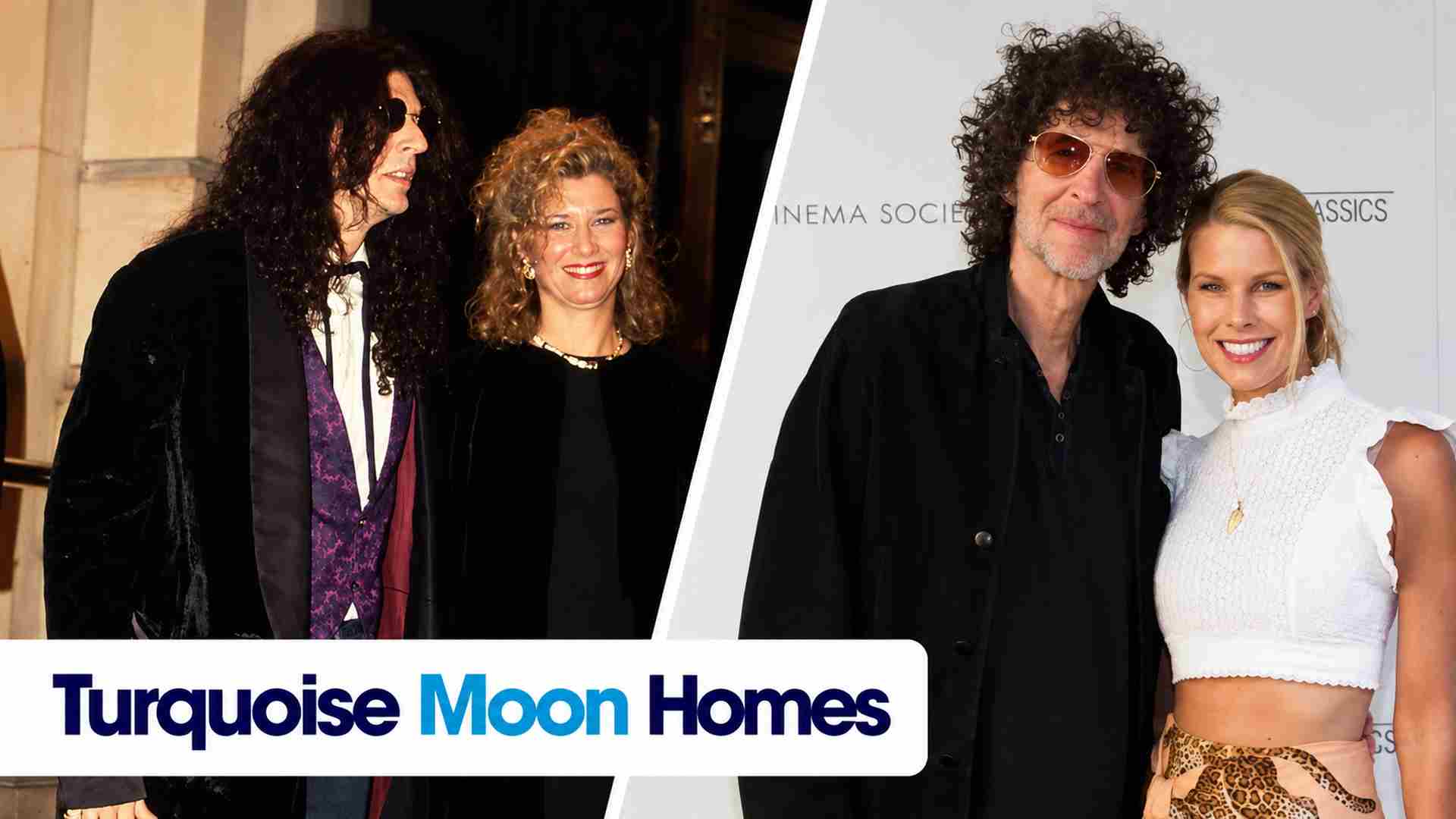
Have you ever wondered what life looks like after years beside one of America’s best-known radio hosts? Alison Berns lived through that change. Long before Howard Stern became a media giant, they were college sweethearts building a home and a family.
Their marriage lasted more than two decades and brought three daughters into the world. While his career grew louder and more public, her name became familiar to listeners who heard stories about the couple on the air. Then their relationship ended, and she began a far quieter chapter.
In this article, we’ll explore how they met, what their family life was like, the reasons publicly given for their split, her screen appearances, and her second marriage. We’ll also look at the facts behind common search questions. Let’s start before radio fame changed the family’s daily life.
Who Is Alison Berns?
Alison Berns is best known as the first wife of American radio personality Howard Stern. The two met while attending Boston University, married in June 1978, and divorced in 2001 after more than 20 years together.
They are the parents of three daughters: Emily, Deborah, and Ashley. She also has screen credits connected to Stern’s work, including a part in the 1997 film Private Parts.
In November 2001, she married David Scott Simon. She has kept a low public profile since her first marriage ended, with far fewer interviews and public appearances than her former husband.
College Life Before the Radio Fame
When Alison Berns and Howard met at Boston University, Stern was still a student with an interest in broadcasting and film. He had not yet become a national radio figure. Their connection began in a setting that felt more like a campus story than a celebrity romance.
As part of his student work, he made a film about Transcendental Meditation and cast his future wife in it. That early project gave them a shared experience before their lives became linked to television cameras and national broadcasts.
The two also went to see Lenny, a film about comedian Lenny Bruce, on their first date. It is a telling detail because Bruce’s work challenged social limits in comedy. Stern would later become known for testing similar boundaries on the radio.
None of this meant that either person could know what the next two decades would bring. At that point, they were young adults sharing time at school and planning a life together. Their relationship began before any fame could have shaped public expectations about it.
A 1978 Wedding and the Start of Their Family
Alison Berns married Howard Stern on June 4, 1978. The ceremony took place at Temple Ohabei Shalom in Brookline, Massachusetts. Both were in their twenties, and his career was still taking shape.
Like many couples starting out, they faced changes in work, home life, and long-term plans. He moved through different radio markets before earning a much bigger audience. Those career moves helped build the career that would later dominate stories about the family.
What makes the timing important is that the marriage did not begin after the money and fame arrived. It covered the uncertain years that came first. She knew him as a student and rising broadcaster before the larger media image took hold.
That history helps explain why their eventual divorce attracted such strong interest. Listeners were not hearing about a short celebrity romance. They were seeing the end of a relationship that had lasted through most of his adult working life.
Raising Emily, Deborah, and Ashley
The pair had three daughters. Emily was born in 1983, Deborah in 1986, and Ashley in 1993. Their childhoods unfolded during a period when their father’s audience and public profile kept growing.
Being a parent in that setting carries a challenge not every family faces. A radio host can speak to millions of people, but children still need ordinary care, routines, and room to become themselves. Fame changes the setting without replacing those needs.
For Alison Berns, motherhood became a lasting part of her public biography. Yet the fact that their father discussed family life on air does not make every part of the children’s upbringing public information. It is more useful to recognize their names and family connection than to invent private childhood scenes.
The daughters have followed different paths as adults. Emily has drawn public attention for creative and performance work, while coverage of the family tends to give much less detail about her sisters’ private activities. A family member’s public career should not erase another member’s right to live outside the news.
Their shared children also meant that the family would remain connected after the marriage ended. A divorce can change a home and a legal relationship, but it does not undo parenthood.
When a Private Marriage Became Radio Material
One major difference between this marriage and many others was the audience. Stern built a radio persona around frank talk, jokes, interviews, and stories that often crossed lines other broadcasters avoided. Parts of his home life became material for that style of entertainment.
For listeners, personal stories could make the host seem familiar. For family members, the same stories meant that moments normally kept inside a household were discussed by strangers. This gap between entertainment and privacy is central to understanding the marriage’s public image.
It would be too simple to describe every broadcast reference as harmful or every joke as harmless. People inside a relationship may experience public humor very differently. What is clear is that his program gave their marriage a visibility she did not create through an independent media career.
That distinction matters when reading old interviews. The public knew a version of family life filtered through one person’s microphone. It did not have equal access to both partners’ thoughts, and it certainly did not witness every ordinary day at home.
Her Screen Appearances in the 1980s and 1990s
Although she did not build a long mainstream acting career, Alison Berns did appear in productions tied to the radio world she knew so well. IMDb lists appearances on The Howard Stern Show and the 1989 video U.S. Open Sores.
Her most recognizable film credit is Private Parts, the 1997 movie based on Stern’s autobiography. In that film, she is credited as an NBC switchboard operator. The project followed the broadcaster’s rise and brought key parts of his career to movie audiences.
That credit is easy to misunderstand. Appearing in a feature film does not mean she pursued the same full-time entertainment path as the movie’s lead. Her known roles form a small collection, not a long filmography packed with starring parts.
It also helps separate a person’s work from a former spouse’s fame. She participated in specific productions, and those credits deserve accurate descriptions. They do not prove a broader career in Hollywood, nor do they define her whole adult life.
The 1999 Separation: What Was Reported
After 21 years of marriage, the couple separated in 1999. The announcement was covered while Stern remained a highly visible media figure. It was a major shift for people who had followed him since the early years of his career.
According to CBS News, which reported the separation on October 23, 1999, a spokesman pointed to the broadcaster’s work habits as a factor and said the couple planned to part on friendly terms. The report also confirmed that they shared three daughters.
The statement is useful because it comes from coverage published when the split happened. Still, a public explanation cannot give outsiders a complete account of a marriage. The private conversations and choices behind a separation belong to the people involved.
Later interviews show how hard Stern found the subject. He told Rolling Stone in 2011 that he had not felt comfortable discussing the divorce with listeners because other people’s lives were involved. That remark is significant coming from someone whose career had long relied on personal stories.
It signals a limit between what a broadcaster may want to share and what a family deserves to keep to itself. That limit becomes even more important when children are part of the story.
Why the Divorce Date Can Cause Confusion
The separation and the legal divorce happened in different years. The relationship became publicly known as a split in October 1999. The marriage legally ended in 2001.
Some articles blur those events by using one date for both. That creates the mistaken impression that the family announced a separation and completed the divorce at the same time. The two-year difference matters for an accurate timeline.
The marriage had begun in 1978, so the formal end came after roughly 23 years. But the couple had been living apart before the legal process was complete. Both details belong in a balanced account.
Readers also sometimes search for a single dramatic incident that explains everything. There is no need to invent one. The contemporary public statement and later reflections offer context, but they do not support a detailed reconstruction of private disputes.
Starting a New Chapter With David Scott Simon
In 2001, after the divorce, Alison Berns married David Scott Simon. IMDb records their wedding date as November 23 of that year. Her second marriage began during the same year the first one legally ended.
This new relationship did not lead to the same level of press attention. Unlike Stern, Simon was not known to millions of radio listeners as an entertainer. Coverage of the couple’s private routines has remained limited.
There is a naming issue worth clearing up. David Scott Simon should not be confused with David E. Simon, who is associated with Simon Property Group. The similar names have led to unreliable claims about his career on biography sites.
It is also important not to confuse him with the journalist and television writer David Simon, creator of The Wire. Identical or similar names do not make them the same person.
The basic facts of the second marriage are well established in screen-industry biographical records. More elaborate claims about property, vacations, jobs, or daily life require evidence that public profiles generally do not provide.
What Happened to Her Public Profile?
Once Alison Berns’s first marriage ended, coverage of Alison Berns became far less frequent. She did not continue as a regular public figure alongside her former husband’s radio and television projects.
That change can make people wonder whether she retired from acting or moved somewhere new. But a thin public record does not prove a date of retirement, a relocation, or any specific reason for staying out of the spotlight.
There is a difference between choosing privacy and having privacy attributed to you by outsiders. She has not given a steady stream of new interviews explaining every choice. The careful description is that she has maintained a low public profile, not that reporters know exactly what her life looks like today.
Alison Berns’s former husband, meanwhile, remained prominent through radio work, books, television appearances, and a later marriage to Beth Ostrosky Stern in 2008. Their paths became different kinds of public stories.
The contrast does not make either path more meaningful than the other. It simply shows that a person once connected to a large media audience can later be known mainly through documented family milestones and earlier screen appearances.
Why Her Story Still Matters to Readers
The lasting interest in Alison Berns comes partly from the era she shared with Stern. She knew him before his rise to fame, lived through the intense growth of his career, and helped raise their daughters while his voice reached homes across America.
It is also a story about what celebrity coverage leaves out. Search results often center on the louder partner, because that person gave more interviews and made a living in public. The quieter partner may be reduced to a few dates and relationships.
A better account keeps the known details in order and resists the urge to invent the rest. Her biography includes college life, a long marriage, motherhood, a small number of screen roles, divorce, and remarriage. Those facts are enough to show a life with more than one chapter.
Readers who wonder where she is now may want an exact address, job title, or fresh photograph. But useful reporting does not require revealing a private person’s daily life. Sometimes explaining the limits of public knowledge is part of answering the question well.
Final Thoughts
What stands out about Alison Berns is the length of the journey she shared with one of radio’s biggest personalities. She was present before the national audience, during the family’s years in the spotlight, and at the start of a new chapter after the marriage ended.
The key takeaway is that her identity reaches beyond a famous former husband. She is a mother of three, a participant in a few familiar media projects, and someone whose later life has not been made into a constant public performance.
Her story reminds us that the quiet years deserve as much respect as the years the world happened to watch.
Frequently Asked Questions
What was Alison Berns’s role in Private Parts?
She played an NBC switchboard operator in the 1997 film, which was based on Howard Stern’s autobiography.
Is Alison Berns also listed professionally as Alison Stern?
Yes. Her IMDb biography appears under the name Alison Stern, with Alison Berns listed as her birth name.
Did she appear in U.S. Open Sores?
Yes. IMDb lists her as appearing as herself in the 1989 video production.
Where did she and Howard Stern marry?
They held their wedding at Temple Ohabei Shalom in Brookline, Massachusetts, on June 4, 1978.
Does Alison Berns have a large acting filmography?
No. The available screen credits are limited and mostly connected to Stern’s entertainment projects.
You may also read: Laurie Murray: Clint Eastwood’s Eldest Daughter and the Family She Found.
