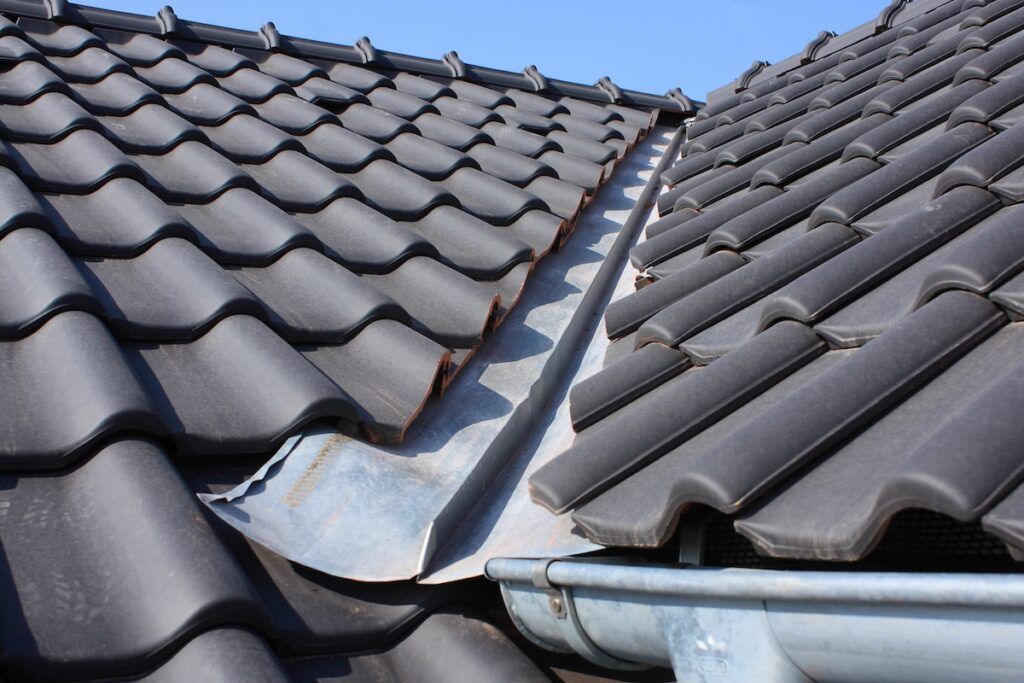
A dark mark near the upstairs hallway can look like a simple shingle problem. Yet the water may have entered several feet away, where two roof slopes meet and rain runs into a narrow channel. Roof valley leaks often appear after a hard storm, a week of wet leaves, or the first thaw. The sensible first move is not to climb onto the roof with a tube of sealant. It is to trace the timing, find the likely entry area, and work out whether the valley is blocked or its waterproofing has failed.
A valley has a demanding job. It collects water from two roof planes, so a small flaw can matter more there than on an open field of shingles. A careful inspection from the ground, photographs after rain, and a roofer who explains the complete drainage path can spare you an expensive repair that does not last. Here is how to make those decisions without confusing a stain with its source.
Why the V-shaped roof channel deserves extra attention
Picture a house with a garage roof meeting the main roof. Rain that lands on either slope funnels into the seam between them. Leaves from the nearby maple tree settle in that same channel, especially where the valley empties into a gutter. When debris stays damp, it can slow runoff and hold moisture against shingle edges. A clean-looking roof viewed from the street can still hide a problem at that meeting point.
Valleys may be finished with exposed metal, shingles cut to form a channel, or other manufacturer-approved systems. The materials differ, but the goal is the same: move water downhill without letting it reach the roof deck. Manufacturer instructions matter because the position of nails, underlayment, and the way materials overlap determine how that system works. GAF’s steep-slope roofing field guide explains why valleys receive special leak-barrier attention and why metal movement or corrosion can become an issue.
That does not mean every dark line is a leak. A little staining on exposed metal can be cosmetic, while a shingle valley with no visible metal can perform well when correctly built. The question is whether water is escaping the designed path. Keep that distinction in mind before anyone proposes replacing the whole roof.
Use the weather pattern to narrow the search
Write down when the ceiling spot changes. If it appears only during wind-driven rain, water may be entering where a roof plane meets a wall or through a damaged valley edge. If it grows after a slow, steady rain, consider prolonged runoff and debris buildup. A mark that worsens during snowmelt needs a different discussion about ice, drainage, and the roof assembly.
Take a photo from the same spot each time, ideally with a ruler or a small piece of removable tape beside the mark. Note the date and whether the surface feels dry. These details give a contractor something better than the vague instruction that the roof leaks sometimes. Do not cut into a wet ceiling, touch damp electrical fittings, or stand beneath bulging drywall. If the ceiling is sagging or water is near wiring, keep people away and arrange urgent professional help.
Roof valley leaks are easy to mislabel because water travels along decking, framing, and fasteners before showing up indoors. The stain may be downhill from the opening, or water may follow a rafter sideways. A useful inspection follows the path back toward the highest wet point rather than assuming the visible ceiling mark sits directly under the defect.
What you can see without stepping on the roof
From a safe position on the ground, look for a dark stripe of packed leaves, branches crossing the channel, or a gutter overflowing beneath the valley outlet. Binoculars or a zoomed phone photograph can help. Also check whether the gutter is pulling away from the fascia or whether water has been spilling behind it. These are different problems that can produce similar damp patches near the roof edge.
Avoid leaning out of an upstairs window, using a ladder in wet weather, or walking on shingles. Even a shallow roof can be slippery, and valleys concentrate water exactly where a person might try to stand. If the roof is steep, high, icy, or hard to access, a qualified roofer should handle the inspection and cleaning. Ask whether ground-based photography or a drone inspection is appropriate.
If leaves are the only visible concern, ask for safe debris removal and a check of the outlet below. Cleaning may solve a drainage issue, but it does not mend damaged flashing or missing underlayment. A reputable contractor should explain which condition they actually found rather than treating every valley as a sealant job.
Look inside only where access is safe
An accessible attic can offer clues, but it is not a place to improvise. If there is a stable walkway and adequate lighting, look for darkened wood, water trails, wet insulation, or rusty nail points beneath the valley. Do not step on insulation or drywall between joists. Avoid any area with exposed wiring, active dripping near electrical equipment, moldy material, or an unsafe entry.
A dry attic on inspection day does not prove the valley is sound. Water may enter only under a particular wind direction, and an old stain may remain after a previous repair. Compare attic evidence with your storm notes and photographs. A moisture meter used by a professional can help distinguish active wetting from an old mark, but the reading needs context.
Tell the contractor if you have seen water at a chimney, skylight, vent, or wall intersection nearby. Those details matter because a leak higher up can travel down to the valley. The earlier guide to ice dam prevention is useful if the trouble appears mainly after freezing weather rather than ordinary rain.
Debris blockage and failed waterproofing are not the same repair
A valley stuffed with pine needles may need cleaning, better tree management, and an outlet that drains freely. If water has been backing up under shingles, however, cleaning alone may not be enough. The contractor should inspect for lifted edges, damaged underlayment, and deteriorated decking. It is possible for two problems to exist together.
A worn valley can also have split metal, poorly placed fasteners, or shingle cuts that steer runoff under an adjacent course. The remedy depends on the roofing material and approved valley design. Smearing roof cement over the visible seam may briefly change the symptom without restoring the layers beneath it. It can also make a later repair messier.
For roof valley leaks that return after several patches, request photographs of the exposed assembly before replacement materials cover it. You want to know whether the deck is solid, what underlayment is being installed, and how the new valley will discharge into the gutter. The difference between a quick patch and a durable repair is often invisible from the yard.
Open metal valleys versus shingle-covered valleys
An open valley has a visible strip of metal guiding water between shingle edges. This makes its drainage channel easier to see, although the metal can still wear, corrode, or suffer from poor installation. A closed-cut valley places shingles across the seam and trims one side to create the drainage line. Both approaches can work when they suit the roof system and are installed to the manufacturer’s instructions.
Do not choose based on appearance alone. The roof pitch, shingle type, local climate, and the amount of runoff all matter. A contractor may recommend changing the valley design during a repair, but that recommendation should come with a reason tied to the roof rather than a blanket claim that one method is always superior.
GAF’s technical guidance on proper flashing
What a useful roofing estimate should explain
A good estimate identifies the affected valley length, the roof covering to be removed, the condition of the decking, the type of underlayment, and the flashing or shingle valley method to be installed. It should also say what happens if concealed rot appears once the shingles come off. Without that allowance, a low initial quote can turn into a dispute halfway through the job.
Ask whether the crew will protect landscaping, manage debris, and inspect the gutter connection. Photographs before, during, and after the work are especially valuable when the repaired area is not visible from the ground. Clarify whether matching shingles are available and whether a color difference is likely on an older roof.
A repair price depends on access, slope, materials, location, and hidden damage. A small debris cleanup is not comparable to rebuilding a long valley with damaged sheathing. Be wary of precise online prices presented without those details. Two written, itemized quotes often reveal more than a single number.
Know when the job has grown beyond one valley
If multiple ceiling stains appear, shingles are broadly brittle, or decking is soft across a larger area, a localized valley repair may not address the wider roof condition. That does not automatically mean a complete replacement is needed. It means the contractor should inspect the surrounding roof and explain the boundary of the proposed work.
Check whether the issue follows a recent roof installation. Installation records, photos, and warranty terms may matter. Do not assume every leak is covered, and do not let a contractor make unauthorized changes before the installer or insurer has had a reasonable opportunity to assess a claim where appropriate.
Roof valley leaks should be treated as a drainage and waterproofing problem, not merely a stain-removal project. Drywall repairs and fresh paint belong at the end, after the source has been corrected and the materials have dried.
Keep the valley working through the seasons
A sensible maintenance rhythm follows the trees and weather around your house. Inspect from the ground after major storms and during leaf drop. If a large branch hangs directly above the valley, ask a qualified tree professional whether selective pruning could reduce debris. Avoid cutting branches from a roof or ladder.
Keep gutter outlets functioning so the valley has somewhere to discharge. The roof granule loss guide
After repairs, save the invoice and photographs, then watch the area during the next few storms. A contractor should be willing to explain what was changed and what evidence would show the fix is working. A dry ceiling after one light shower is encouraging, but repeated weather is a better test.
Final thoughts
The most useful response to a suspected valley leak is calm, specific observation. Note the weather, document the stain, check what is visible from safe ground, and have a roofer trace the water path before replacing materials. You are paying for a functioning roof assembly, not just for the stain to disappear. When the diagnosis and repair scope make sense together, the next heavy rain becomes far less mysterious.
