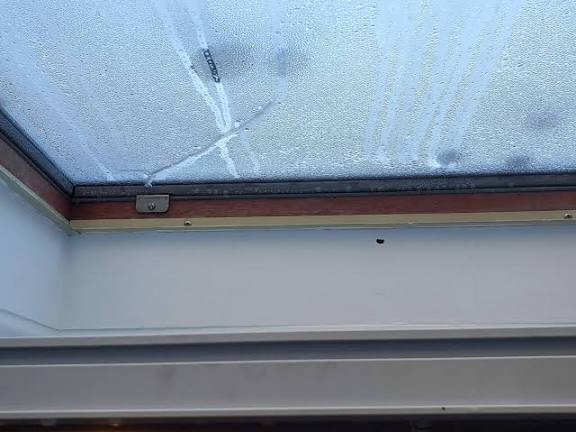
A drop of water at the lower corner of a skylight can look like a roof leak. But if the glass is cold and the room is humid, that drop may have formed indoors. Skylight condensation vs leak is a distinction worth making before you pay for flashing repairs or replace a unit that still works. Begin with the weather, the room’s moisture habits, and the exact surface where the water first appears.
Start with timing rather than a guess
Condensation often shows up on cold mornings, especially after showers, cooking, or a night with closed windows. Fine droplets may cover the inside pane or collect on the room-facing frame. A roof leak is more likely to leave a mark after rain, wind-driven storms, or melting snow. Neither clue is conclusive on its own. Water can travel along framing, and cold weather can make condensation worse during a storm. Keep a short log and photograph the skylight on both wet and dry days.
A skylight above a busy bathroom lives in a different moisture environment from one above a dry hallway. Note whether the exhaust fan was used, how long it ran, and whether the water cleared as the room warmed. The point is not to become a building scientist. It is to give the person inspecting the skylight something more useful than a single photograph of a brown mark.
Read the surface where the water begins
Wipe accessible interior glass and frame surfaces gently with a dry cloth. If beads return across the room-facing pane on a dry, cold day, indoor moisture becomes a reasonable suspect. If the surrounding drywall darkens after rain while the glass stays clear, the roof assembly needs attention. Fog trapped between sealed glass panes is another issue and should be assessed as a glazing problem rather than assumed to be ordinary surface condensation.
Do not pry away trim, force open a stuck skylight, or use a heater to dry the frame. If drywall is bulging or water is close to an electrical fitting, keep people clear and arrange urgent professional help. A damp ceiling can be dangerous, and a skylight is not a safe reason to climb onto a wet roof.
The room below may be making the moisture
Showers, simmering pots, indoor laundry, and poor air movement add moisture to indoor air. When that air meets a cool skylight, some of its water vapor can become liquid. A deep skylight shaft can make one corner colder than the rest. A shade can also change how air moves across the glass. These details help explain why one skylight sweats while another in the same house remains dry.
Use working kitchen and bathroom exhaust fans that discharge outdoors. The site’s bathroom exhaust fan venting guideENERGY STAR’s guidance on residential windows and skylightsWinter can produce two different water problems
A cold snap may chill the glass enough for indoor condensation to collect. At the same time, snowmelt and roof ice can expose weaknesses in flashing or underlayment. If dripping follows a thaw rather than a shower, ask the roofer to inspect the surrounding roof. The site’s ice dam prevention guideFlashing is not the same as a glazing seal
A skylight roof opening relies on several components. Flashing directs rain around the opening, underlayment provides another protective layer, and the glazing and frame form the unit. A failed flashing detail, a problem between glass panes, and droplets on the interior glass require different solutions. Smearing caulk around the visible frame can block drainage or hide the actual defect.
VELUX’s explanation of skylight warranty termsCompare two ordinary households
Imagine a bathroom skylight that fogs after the morning shower. The droplets disappear by lunch, the ceiling stays dry after several rainy days, and there is no new staining around the shaft. That pattern makes indoor humidity a reasonable first suspect. Check whether the fan works and where its duct ends before ordering roofing work. A window opened briefly may help, but it is not a substitute for reliable ventilation in a room used for daily showers.
Now imagine a hallway skylight that stays clear on cold mornings but develops a brown streak after wind-driven rain. The mark grows along one side even when nobody has cooked or showered. That pattern deserves an inspection of the roof covering and flashing around the opening. A third home may show both patterns. Condensation and an exterior leak can coexist, so a specialist should not force every symptom into a single explanation before checking.
The shaft and attic offer more clues
Look at the painted shaft connecting the ceiling to the skylight. Is there a damp line at a corner, peeling paint, or a patch that changes after storms? Old stains can remain after a successful repair, so photographs taken on different dates are more useful than a single mark. A moisture meter may help a professional compare materials, but readings need to be interpreted alongside the weather and construction details.
If there is a safe attic walkway, an inspector may look for wet insulation, darkened sheathing, or water trails near the skylight. Never step on insulation or ceiling drywall between joists. Do not enter an attic with exposed wiring, active water near electrical equipment, or unsafe access. Roof water may follow framing before it appears indoors, which is why a stain downhill from the skylight does not prove the opening is directly above it.
Choose a repair for the failed component
If room humidity is the cause, ventilation and air movement may be the most useful changes. If the skylight shaft is unusually cold, a qualified professional can assess its insulation and air sealing. Do not pack insulation around unknown light fixtures or cover ventilation paths. The goal is to correct the building condition that creates the moisture, not merely wipe the glass each morning.
If flashing is damaged, the repair may involve removing adjacent shingles, inspecting underlayment, and installing a compatible flashing system. If the glazing unit has failed, service or replacement may be more appropriate. These are different jobs. Random caulk around the visible frame can trap water or block intended drainage, so ask how the proposed work follows the skylight manufacturer’s instructions.
A useful estimate should identify the failed part, the materials to be removed, and what happens if damaged wood is found once the roof is opened. Ask whether the skylight itself can remain and whether surrounding shingles can be matched. If replacement is recommended, ask why a repair would not work and how the new unit will connect to the existing roof. An unexplained promise to fix all leaks is not a diagnosis.
Give the inspector a clear record
Before the visit, gather weather notes, photos, the skylight brand and model if known, and any installation or warranty paperwork. Point out whether moisture starts on the glass, the frame, or the drywall. Ask the contractor to distinguish observed damage from a suspected cause. If the report blames condensation, ask what evidence rules out a roof leak. If it blames flashing, ask whether the glass and indoor humidity were also checked.
Skylight condensation vs leak decisions should not depend on which contractor sounds most confident. Compare the evidence, the scope, and the manufacturer’s requirements. If the recommended work is expensive and the explanation is vague, another qualified opinion can be worthwhile. You want a repair that addresses the water path, not a cosmetic improvement that makes the ceiling look dry until the next storm.
Check the result over more than one day
After the source is corrected, allow damp materials to dry before repainting. Damaged drywall or insulation may need assessment and replacement. Watch the skylight during several cold mornings and the next few rain events. If ventilation was improved, the interior droplets should change. If flashing was repaired, storm-related wetting should stop. Keep a record of the work so a recurring problem does not start the investigation from scratch.
Skylight condensation vs leak is a practical home-maintenance question, not a reason to panic or ignore a drip. Notice the timing, identify the wet surface, consider indoor moisture, and insist on an inspection that explains the evidence. The most reassuring outcome is not simply a dry-looking frame today. It is knowing what caused the water and what will prevent the same trouble next season.
