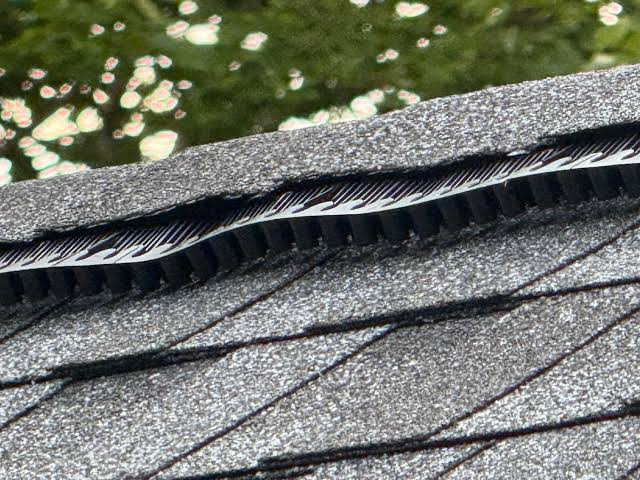
A dark line near the peak of a roof is easy to overlook until a storm leaves a damp patch on the attic sheathing. Roof ridge vent problems can look like a leak, a ventilation problem, or both. The useful first move is not to seal every opening at the peak. It is to work out whether rain is entering through damaged roof components, moist indoor air is condensing on cold surfaces, or the attic simply has too little fresh-air intake.
Picture a two-story home after an autumn windstorm. The living room ceiling looks fine, yet a musty smell appears upstairs. From the yard, the ridge caps look slightly uneven. That combination deserves attention, but it does not prove the vent is the source. Wind-driven rain, loose ridge shingles, bathroom ducts, and wet insulation can leave similar clues. A careful inspection separates them before anyone starts removing roof materials.
What a ridge vent is meant to do
A ridge vent is a continuous or sectional exhaust opening near the roof peak. In a conventional vented attic, outdoor air should enter through lower intake openings, usually soffit vents, move along the underside of the roof deck, and leave near the ridge. The system works because intake and exhaust are designed together. A ridge opening without adequate lower intake can draw air from unwanted places instead of delivering predictable attic ventilation.
This matters in homes where insulation has been pushed into the eaves. The ridge vent may be perfectly installed, but a blocked soffit prevents the intended path from forming. The homeowner sees heat buildup in summer or damp roof sheathing in winter and assumes the top vent failed. The real problem may be a missing baffle or a paint-clogged soffit grille. Treating the peak alone would miss the cause.
Read the clues before blaming the ridge
Look from the ground with binoculars or a zoom lens. A straight ridge line with evenly seated cap shingles is reassuring, though it cannot confirm the installation beneath. Gaps, lifted sections, torn end closures, displaced caps, or visible debris caught in the vent deserve a roofer’s attention. After high winds, compare both roof slopes and check whether a problem follows one short section rather than the entire ridge.
Inside the attic, use a safe access point and a bright flashlight; stay on framing or an installed walkway, never on ceiling drywall. Water tracks, fresh staining, or damp insulation directly below the peak are useful evidence. So are rusty fasteners and a wet spot that grows after rain. Take photographs and note the weather. Do not assume every darkened board is actively wet: older stains can remain long after a past repair.
When a stain is condensation, not a roof leak
Condensation often shows up during cold weather when humid indoor air reaches a chilly attic surface. You might notice widespread frost, beads of moisture on many nails, or dampness that is not concentrated at one entry point. A roof leak is more likely to create a localized track, especially after rain. Neither pattern is conclusive by itself, but the distinction changes the next step.
A bathroom fan that empties into the attic is a classic problem worth checking. The fan should exhaust outdoors through a suitable termination, not into insulation or under the roof deck. Also look for attic bypasses around plumbing, wiring, and access hatches. Warm air rising through these gaps can bring moisture even when the ridge vent is clear. Our guide to bathroom exhaust fan venting explains why that discharge point matters.
The intake-and-exhaust balance people miss
More exhaust is not automatically better. GAF’s attic ventilation guidance stresses balancing exhaust at the ridge with intake near the soffits; the correct amount depends on the roof and applicable code. If the attic has too much high exhaust relative to low intake, air may enter through ceiling leaks or other roof openings. Ask a contractor to calculate the net free vent area, not just count the vents.
An attic with complex rooflines may need a different approach from a simple gable roof. Hip roofs have shorter ridges. Cathedral ceilings and insulated roof decks need designs suited to their assemblies. Some homes use other exhaust vents rather than a continuous ridge product. Adding a ridge vent to every house is not a universal upgrade, and mixing systems without design review can create unintended airflow paths.
What makes rain get through a ridge vent
A correctly selected, installed vent is intended to resist ordinary weather, but it is not immune to damage. High wind can loosen cap shingles or expose fasteners. Improper ridge slot dimensions, missing closures, wrong fasteners, or a vent unsuited to the roof pitch can compromise performance. A roof professional should compare the installed product with its instructions instead of simply covering the whole ridge with roofing cement.
GAF’s ridge vent product information describes features designed to resist weather and debris while allowing attic exhaust. That is a useful reminder that the vent is a manufactured assembly, not an arbitrary gap under the caps. The right repair depends on identifying the product and whether its cap shingles, end pieces, and installation details remain intact.
A simple homeowner inspection plan
Begin with a date-stamped photo from the yard after a dry spell. Repeat after the next heavy rain, without climbing onto the roof. Note whether the ceiling or attic stain changes. Check accessible soffit vents for paint, insulation, nests, or stored materials blocking airflow. Photograph attic conditions only if the space can be reached safely and there is no exposed electrical hazard or unstable flooring.
Next, note how the house is used. Have showers increased, has a humidifier been running, or did someone add insulation recently? A new moisture source can explain why an older vented attic suddenly looks wet. If there is a powered attic fan or another roof exhaust, mention it to the contractor. A complete assessment considers how air enters, how it exits, and whether household moisture is being controlled.
What to ask a roofing contractor
Ask for photographs of the ridge slot, vent body, cap shingles, and any damaged flashing or underlayment. Request the vent brand and installation requirements where they can be identified. A useful proposal should explain why the observed water or airflow issue is connected to the proposed work. ‘Replace the ridge vent’ is a scope, not a diagnosis. You should understand whether the fix includes intake vents, air sealing, or repairs elsewhere.
If the roofer recommends replacement, ask how they will protect nearby shingles and preserve the roof warranty terms. Find out whether the problem is isolated to one section or whether the entire run is defective. A small wind-damaged cap may not justify rebuilding an otherwise sound ventilation system. Conversely, a badly cut ridge slot or widespread fastening problem can make spot patches a poor long-term choice.
Keep moisture and ice-dam problems in context
Winter roof trouble sometimes leads owners to assume ridge vents need to be bigger. Yet uneven roof temperatures can also involve ceiling air leaks and inadequate insulation. Our ice dam prevention guide looks at the broader heat-and-moisture picture. Ventilation can be one part of a roof assembly; it is not a substitute for air sealing or proper insulation depth.
Do not climb onto a steep or wet roof to push loose ridge caps back into place. Roof peaks are exposed, footing is poor, and the repair may involve fasteners or materials hidden beneath shingles. If water is entering living space, protect belongings, document the damage, and arrange prompt professional assessment. Electrical fixtures near a leak should be treated as a safety concern, not as a reason to reach into a wet ceiling.
The decision that saves repeat repairs
Roof ridge vent problems are best solved by identifying the failed part of the system. A loose cap calls for a different response from blocked soffits, indoor moisture leakage, or an incompatible vent layout. Once the evidence is gathered, choose the smallest repair that addresses the actual cause and ask how its performance will be checked after the next storm. A dry attic and a sound roofline matter more than a quick-looking patch.
