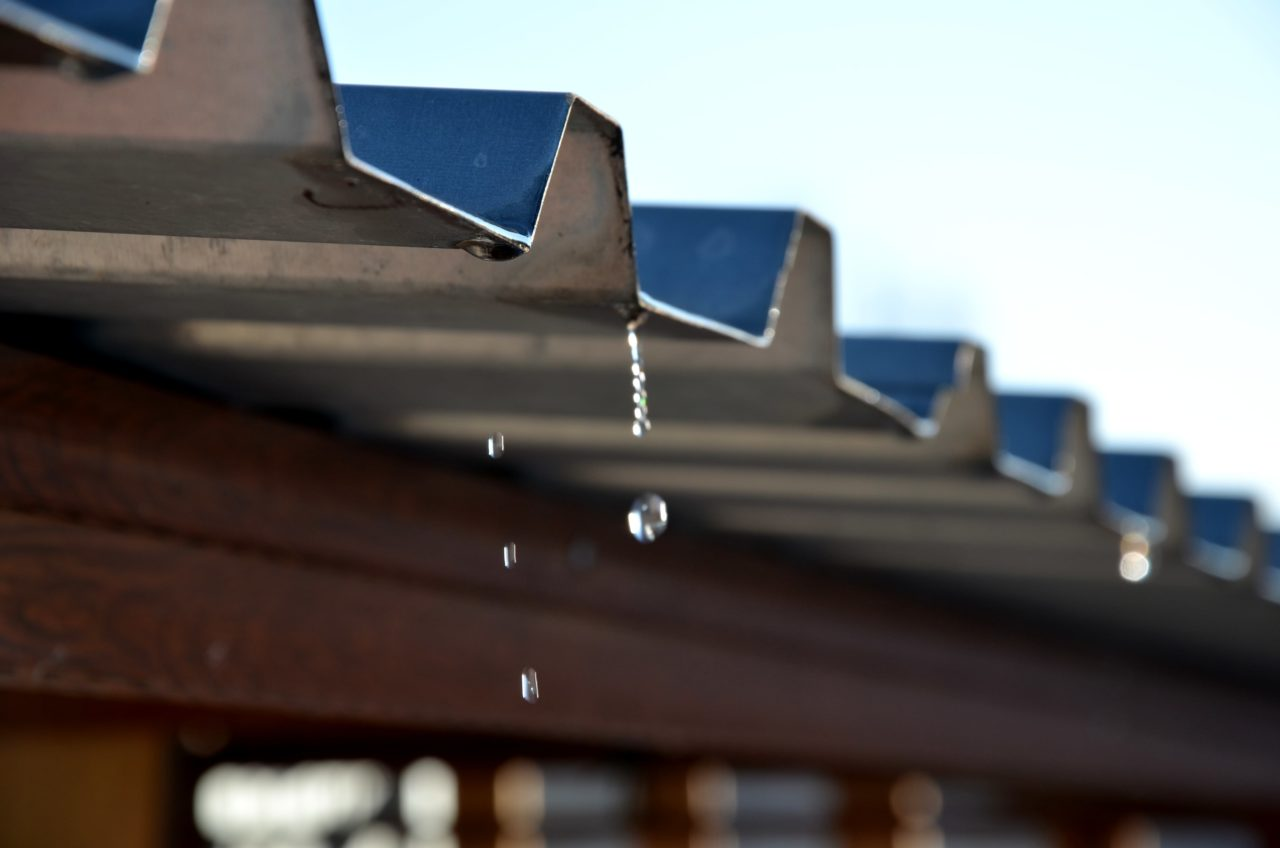
Rain can slide cleanly off shingles and still end up behind a gutter. The clue may be peeling fascia paint, dark wood beneath the eave, or a drip that appears between the gutter and the house during a storm. Before replacing the gutter, look at the small strip of metal where the shingles end. The choice between drip edge vs gutter apron often determines whether runoff clears the trim or slips into that narrow, troublesome gap.
These two metal details are related, and people sometimes use the names loosely. Both protect the roof edge by helping water move away from vulnerable wood. Their shapes and reach can differ, however. A standard drip edge provides a clean, outward-directed break at the roof perimeter. A gutter apron is typically shaped to bridge a larger space toward the gutter opening. The right answer depends on how the roof edge and gutter meet, not on which product name sounds stronger.
The small gap that makes a big mess
Imagine a house with a tidy aluminum gutter mounted a little below the shingles. During light rain, everything appears fine. During a downpour, a thin sheet of water curls around the shingle edge and trickles behind the gutter. Over time, that wet line can stain the fascia. Simply adding a larger downspout will not redirect water that never enters the gutter in the first place.
Stand safely on the ground during a moderate rain and watch where water goes. You are looking for a continuous stream from the shingle edge into the gutter, not a ribbon flowing down the fascia. A drip behind the gutter can also come from a loose seam, overflowing debris, or an incorrectly pitched gutter. It is worth ruling those out before paying for roof-edge metal work. Our guide to roof valley leaks covers a different path by which runoff can find its way indoors.
What drip edge actually does
Drip edge is corrosion-resistant metal flashing fitted at the eaves and sloping rake edges of a shingled roof. It helps shed water away from the edge of the roof deck and fascia. Some profiles are simple bent angles; others project outward before turning down. The small projecting lip matters because water can cling to a surface and follow it backward unless the shape interrupts that path.
The Asphalt Roofing Manufacturers Association’s drip-edge bulletin describes roof-edge placement and different profiles. It also explains that the underlayment relationship changes between eaves and rakes under common installation guidance. That layering is important: even an attractive visible edge cannot make up for water being directed beneath the protective materials. Roofers should follow the shingle manufacturer’s instructions and local code.
Why a gutter apron may fit better
A gutter apron is designed for the eave where runoff needs a dependable route into the gutter. Its extended leg can reach farther toward or over the back of the gutter than a short conventional edge profile. It is especially worth discussing when the gutter sits lower, has a noticeable gap behind its back lip, or was installed after the roof without a well-coordinated edge detail.
The comparison in Thumbtack’s gutter-apron and drip-edge guide emphasizes that the apron is tailored to the gutter transition, while drip edge protects the broader roof perimeter. Treat that as a functional distinction rather than a rigid rule for every brand. Manufacturers offer many shapes, and a properly chosen drip-edge profile can also direct water into a well-positioned gutter.
Eaves and rakes are different places
The eave is the lower roof edge where runoff gathers and gutters are usually installed. The rake is the sloping edge along a gable, where there may be no gutter at all. A gutter apron usually makes sense at an eave, not along the entire gable. A roof can legitimately use one edge profile on the rake and a different one at the eave, provided the pieces meet and lap correctly at the corners.
This is why buying a single bundle of metal for every roof edge can create trouble. The contractor should sketch where water exits, how the gutter is mounted, and which metal shape keeps the water moving outward. If the home has an unusually shallow overhang or ornate fascia trim, ask to see a sample piece held in position. A few minutes spent checking the geometry can prevent a surprisingly visible mistake.
How to spot an edge-detail problem
Look for paint that blisters in a horizontal line just below the gutter, water stains on the soffit, or drips that persist behind an otherwise clear gutter. Check whether the back of the gutter sits under the metal edge or leaves a gap. A gutter pulling away from its hangers can create the same symptoms. Sagging sections, loose fasteners, and accumulated leaf sludge should be documented alongside any suspected flashing problem.
A hose test may be useful for a contractor, but blasting water upward under shingles is not a fair simulation of rainfall and can create leaks. Never climb a ladder in wet conditions to inspect the metal. Use photographs from a safe position and request a close-up inspection by a qualified roofer or gutter professional. The aim is to identify the water path without causing new damage or risking a fall.
The underlayment detail is not cosmetic
Roof-edge metal works with the roof’s secondary water barrier. At a typical asphalt-shingle eave, underlayment generally laps over the drip edge so water moving down that layer can escape. At a rake, the sequence is commonly reversed. Self-adhered ice-barrier systems and specific manufacturer instructions can require additional details. Ask the installer to show the intended sequence before the shingles conceal it.
If you are replacing only a gutter, there may be limited access to the metal that lies beneath existing shingles. A roofer may be able to fit an appropriate transition, but sliding random flashing beneath brittle shingles can crack them or disturb their seals. A full reroof offers easier access to install edge metal correctly. That does not mean every gutter drip requires a reroof; it means the repair scope should match the condition of the roof materials.
Choose a profile for your actual gutter
A standard drip edge may be sufficient when the shingle overhang and gutter back edge already align well. An apron may be more suitable where a longer downward leg is needed. Metal thickness, finish, corrosion resistance, and compatibility with other materials also matter. In coastal or harsh environments, ask the contractor to explain material choice rather than assuming the least expensive shiny strip will last.
For a simple worked example, picture a straight 20-foot eave with a gutter that sits noticeably behind the shingle edge. The problem is not the 20-foot length; it is the cross-section at every inch of that run. Ask the installer to show, on one representative section, where a drop of water would leave the shingle, touch the metal, and fall. If that path ends behind the gutter, the proposed profile is not solving the problem.
Questions worth putting in writing
A useful quote identifies the metal profile, where it will be installed, whether old material will be removed, and how corners and joints will be handled. It should also say whether the gutter must be detached and reset. Ask who will inspect fascia for rot once it is exposed and what happens if soft wood is found. A low estimate that excludes necessary wood repair can become expensive after work begins.
If the roof is in a snow-and-ice climate, discuss eave protection as part of the assembly rather than relying on metal alone. Ice can back water beneath shingles, so the underlayment design matters. Our ice dam prevention guide explains why controlling attic heat and moisture also belongs in the conversation. An apron cannot fix a warm roof deck or a blocked downspout.
The choice is about the water path
The practical distinction in drip edge vs gutter apron is simple: protect the roof edge, then make sure the water reaches the place it is meant to go. Start by observing the leak, check gutter alignment, and ask a professional to show the proposed cross-section. The right metal may be barely visible from the street. That is a good thing. It should quietly keep the fascia dry instead of drawing attention to a repair that never solved the drip.
