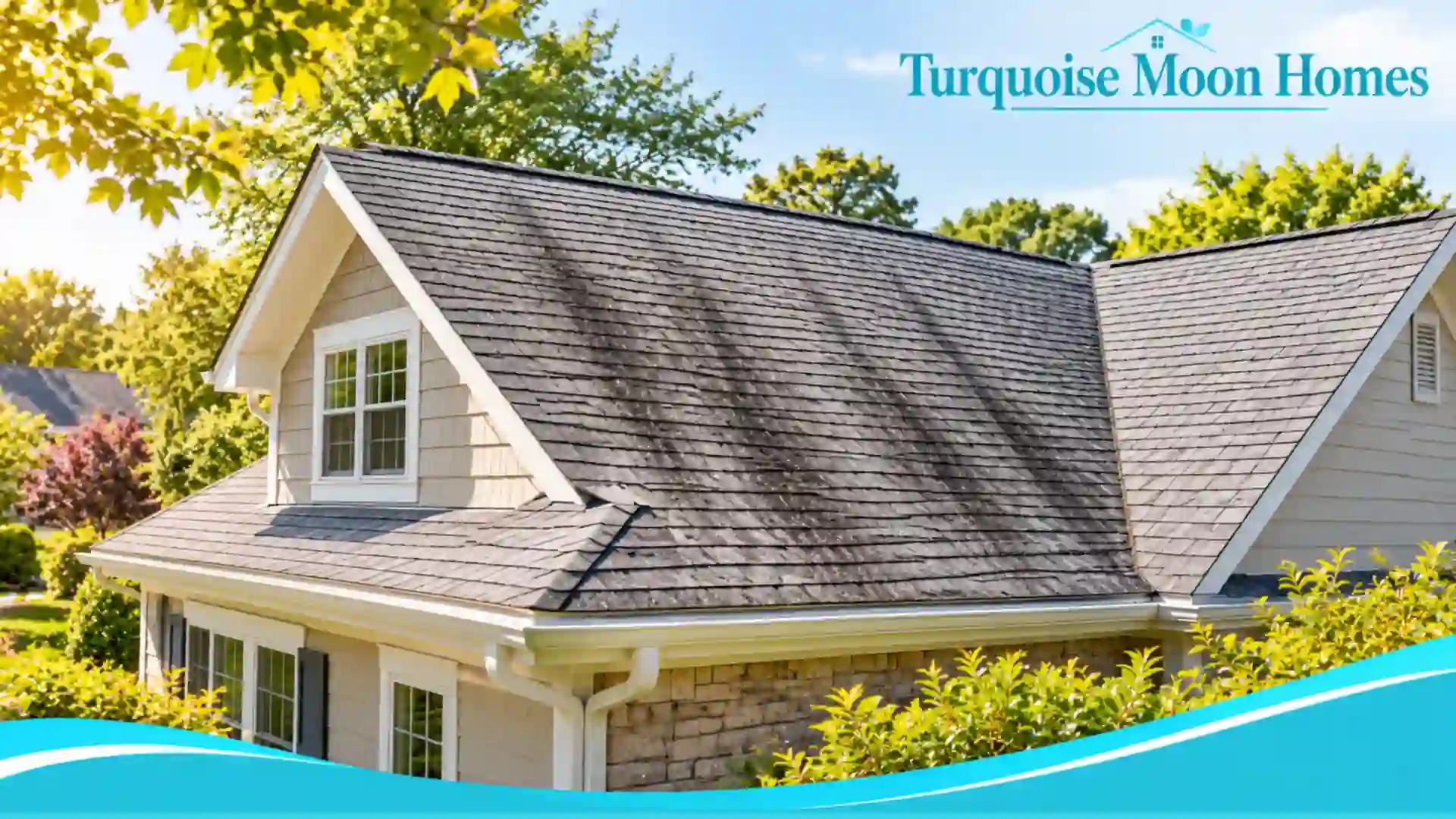
Black streaks on roof shingles are often stains from airborne blue-green algae, not a sign that the shingles have suddenly failed. The dark marks can spread across a roof that still sheds water well. Moss, soot, dirt, and worn shingles can look similar from the sidewalk, though, so the pattern matters.
It is easy to notice a neighbor’s clean roof and wonder why yours has dark bands. Before paying for a wash or a replacement, it helps to know what is actually growing or changing on the surface.
In this article, we will compare the common causes, show which clues you can check from the ground, explain safe cleaning choices, and look at ways to slow new staining without harming the roof.
Why Roof Streaks Often Follow the Shingle Pattern
Many dark roof stains come from a cyanobacterium commonly called blue-green algae. The organism spreads through the air and grows where moisture and suitable conditions allow. As colonies develop, their dark pigment can make a roof look older than it is.
Some roofs show broad patches; others develop long lines that run down the slope. Rain carries moisture along the courses, and the uneven growth makes the marks look like someone poured dark water down the shingles.
The Asphalt Roofing Manufacturers Association’s guidance on roof algae describes the typical brown-to-black appearance and explains why algae can be mistaken for soot, moss, or dirt. That distinction is useful because each problem calls for a different response.
Algae stains tend to be a visual concern rather than direct evidence of shingle failure. The bigger risk can come from an aggressive cleaning method that strips off protective granules. A stained but sound roof should not be treated like a disposable surface.
Algae, Moss, Lichen, and Granule Loss Are Not the Same
Algae often appears as a flat discoloration. It does not usually create a thick, fuzzy layer you can see from a distance. Moss, by contrast, forms raised green clumps, often near shaded edges or places where leaves stay wet.
Lichen can appear as crusty, pale or dark patches that adhere closely to the surface. It is not always easy to identify from the ground. Pulling at attached growth can damage shingles, so resist the temptation to scrape a test patch.
Granule loss is different again. Asphalt shingles have mineral granules that protect the underlying material. If large bare areas or unusually shiny dark patches appear, ask a roofer to inspect the surface rather than assuming algae is responsible.
Also look for curling edges, missing tabs, lifted shingles, or a leak inside. Those signs deserve a roof-condition assessment regardless of any stain. A roof can have harmless algae and a separate flashing problem at the same time.
Where Dark Roof Stains Tend to Appear First
Staining often develops on areas that stay damp longer. A shaded slope, a roof beneath trees, or a section that receives less drying sun may show marks before the sunny side of the same house.
That does not mean shade alone caused the problem. Windborne organisms can reach almost any roof, and weather varies from one neighborhood to the next. Two houses with the same shingle color may age very differently.
Check the pattern from a safe ground-level position on a clear day. Does the discoloration follow many shingle courses? Is it concentrated under an overhanging branch? Does one gutter overflow and leave a persistent wet strip below?
Photograph the same area from the same spot every few months. A small set of dated images can help a roofer judge whether the marks are spreading, whether debris is collecting, and whether a repair needs attention before cleaning.
Should You Clean Black Streaks on Roof Shingles?
Cleaning is often a choice about appearance. If the roof is otherwise sound and the staining is only algae, you may decide to live with it for a while. If the home is going on the market, you may care more about a uniform roof color.
Before cleaning, find the shingle brand if you can and ask about its written care instructions. Some roof products have specific restrictions, and a contractor should be able to explain how the proposed method protects the granules and nearby plants.
Never assume a pressure washer is the quickest solution. High pressure can dislodge granules, lift edges, and push water into places it should not go. Scrubbing with a stiff brush creates similar risks, even when the stain seems stubborn.
Roof cleaning is not a good casual weekend task. Chemical solutions, slippery shingles, ladders, and roof edges create serious fall and handling hazards. A trained, insured professional can assess access, runoff, roof condition, and the safest cleaning plan.
What a Careful Roof Cleaning Plan Should Include
Ask the cleaner what product will be used, whether the shingle manufacturer approves it, and how the crew will control overspray. A useful proposal should explain how gutters, siding, windows, landscaping, and water runoff will be protected.
Industry guidance favors gentle application and low-pressure rinsing rather than blasting the roof. The exact solution and dwell time should follow the relevant shingle and chemical labels. Homeowners should not improvise chemical mixtures or climb onto wet roofing.
Be cautious of promises that the stains will disappear permanently. Algae can return because airborne organisms remain in the environment. Cleaning can improve the look of the surface without changing the conditions that allowed staining.
It is reasonable to ask for photos of the roof before and after, but appearance is not the only measure of success. A good contractor should also avoid damaging flashings, shingles, gutters, and plants while completing the work.
How to Slow the Return of Algae and Moss
Start with the easy conditions around the roof. Keep gutters clear so water can drain as intended. Remove heavy leaf buildup safely and have branches trimmed where they trap debris or keep a roof wet for long periods.
Those steps are not a cure for every stain. They help reduce lingering moisture and organic material, which is particularly useful where moss has started to collect. Branch work near a roof or power line belongs with qualified professionals.
If you plan to replace the roof, ask about shingles with built-in algae resistance. GAF’s overview of algae-resistant shingles explains how certain products use copper-based technology to inhibit blue-green algae discoloration. Compare the actual product and warranty terms rather than assuming every dark shingle has the same protection.
Be wary of adding metal strips to an existing roof without a professional design. Installing them may require exposed fasteners or disturbing sealed shingle edges. A cosmetic fix is not worthwhile if it creates a path for water.
When a Dark Patch Deserves a Roofer Instead of a Cleaner
Call for a roof inspection when dark marks appear alongside active leaks, damaged flashing, loose shingles, or soft-looking decking. A stain near a chimney or vent can be coincidental, but the nearby water-entry details should not be ignored.
Also take action when moss forms thick cushions that lift shingle edges. Unlike flat algae discoloration, heavy moss can hold moisture and interfere with how overlapping shingles shed water. Do not yank the growth off by hand.
A roof that looks patchy after a severe storm may need an entirely different inspection. Missing granules, exposed mat, and lifted tabs are physical conditions, not organisms. Ask the inspector to identify each concern separately on the written report.
If the contractor recommends full replacement based only on black streaks on roof shingles, request a clear explanation of the roof’s age, condition, leaks, and repair options. Staining by itself is not a reliable replacement test.
Compare Cleaning, Maintenance, and Replacement Fairly
For a relatively young roof with intact shingles, professional cleaning and routine drainage care may be enough to improve appearance. For a roof with heavy moss and damaged edges, targeted repairs might be needed before any cosmetic work.
For an aging roof with multiple failing areas, cleaning may not be a sensible use of money. The roof’s remaining serviceability matters more than a temporary color improvement. Ask for an assessment that separates cosmetic and functional issues.
When comparing bids, look for an itemized scope: inspection, cleaning method, plant protection, disposal or runoff handling, repairs, and warranty limits. A low price that leaves those details out can lead to arguments later.
Do not compare a roof-cleaning quote with a full replacement quote as though they solve the same problem. One addresses appearance; the other changes the covering and may address worn components. The right choice depends on what the roof actually needs.
Small Habits That Make Roof Checks More Useful
Take ground-level photos in spring and fall. Check after a strong storm, especially around visible roof edges, vents, and valleys. Keep an eye on gutters that overflow or discharge water onto a lower roof.
Inside the house, note new ceiling stains, peeling paint near roof intersections, or damp attic wood. Those signs can reveal moisture problems that the outdoor streak pattern does not explain. Investigate water promptly rather than waiting for the next season.
Keep roof service invoices and product records together. If you eventually need an inspection, the roofer can see what was cleaned, repaired, or replaced and avoid repeating work unnecessarily.
Most importantly, use the ground as your observation point. A roof that looks walkable from the driveway can be dangerous, especially when algae, moss, or cleaning moisture makes it slick.
Final Thoughts: Diagnose the Surface Before Changing It
Black streaks on roof shingles can make a well-kept house look tired, but their appearance does not tell the whole story. Identify the pattern, separate flat stains from raised growth and physical wear, and check for real leak clues.
If cleaning makes sense, choose a method that protects the shingle surface. If the roof is due for replacement, consider algae resistance as one factor alongside installation quality, ventilation, flashing, and local weather.
Frequently Asked Questions
Do black roof streaks mean I need a new roof?
Not necessarily. Flat dark streaks may be algae staining on otherwise serviceable shingles. Replacement decisions should consider age, leaks, granule loss, damaged edges, and a professional condition assessment.
Can I pressure wash black roof stains?
No. Pressure washing can remove protective granules and harm asphalt shingles. Ask a trained roof-cleaning professional about a manufacturer-approved, low-pressure approach instead.
Why is one side of my roof darker?
One slope may stay shaded or damp longer, allowing more algae growth. Drainage, tree cover, and roof orientation can all affect how quickly a surface dries.
Will algae-resistant shingles stay spotless forever?
No product should be assumed to stay spotless forever. Algae-resistant designs can slow discoloration, but performance depends on the product, conditions, and the actual warranty terms.
You may also read: Roof Granule Loss: When Gutter Grit Signals Trouble.
