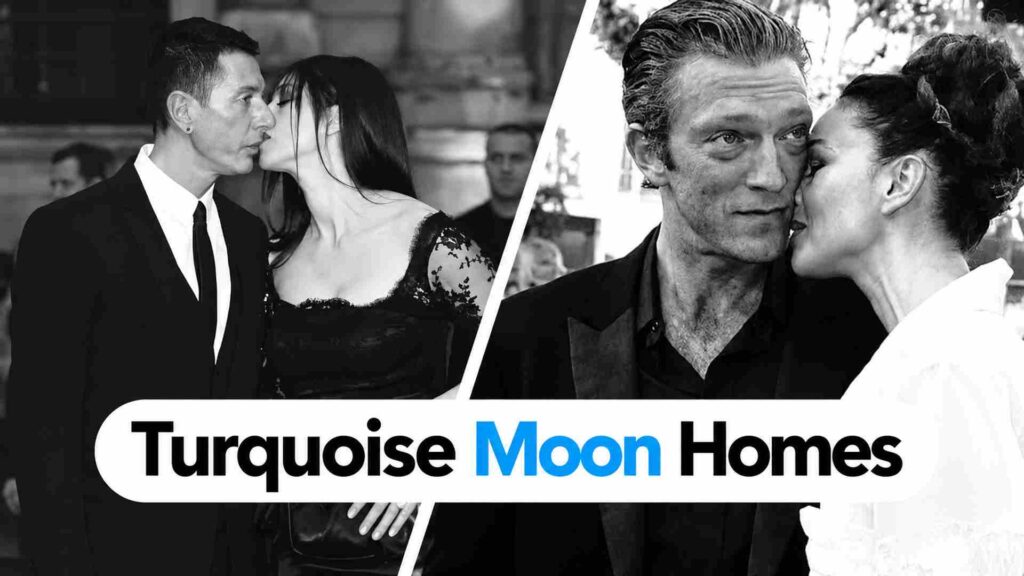
Claudio Carlos Basso made his name behind a camera, long before many people began to search for him as Monica Bellucci’s first husband. His photos appeared in leading fashion magazines. He also worked in film and went on to create art inspired by nature.
His story moves from a home darkroom to studios in Milan, Paris, and New York. Along the way, he worked with famous models, made portraits for a cause, and changed the kind of work he wanted to do.
The career of Claudio Carlos Basso is a look at how one artist kept finding new stories to tell. His early years, marriage, fashion work, and later projects show a life built around images rather than movie fame.
Who Is Claudio Carlos Basso?
Claudio Carlos Basso, also known professionally as Claudio Basso, is a photographer born in Paris in 1959. He grew up partly in Italy and built an international career in fashion photography.
His work appeared in Vogue, Elle, Grazia, and other magazines. He also shot ad campaigns, made portraits, and worked on films. His photography later shifted toward fine art and scenes from nature.
Claudio Carlos Basso was briefly married to Italian actress Monica Bellucci in 1990. His life in photography, however, began well before that marriage and continued long after it ended.
Growing Up With a Camera Close By
Basso was born in Paris. His family later moved to Buenos Aires and then to Italy. He spent some of his childhood in the coastal town of Portofino.
His interest in pictures began at home. According to the Connecticut Post, he recalled getting a camera from his mother on his 14th birthday. A 2003 profile in The Newtown Bee also described his first darkroom, which he had by age 12.
Film photography was slow, hands-on work. The person taking a picture also had to learn how light, film, and printing shaped the final result. For a young person, a small darkroom was a place to test ideas and see what worked.
Art was one part of his early life. Sailing was another. Basso told the Connecticut Post he had sailed on the Italian national team. Through that world, he made a link that helped him find work with an established fashion photographer.
Learning Fashion Photography in Milan
Claudio Carlos Basso moved to Milan to work as a photo assistant. He was not yet living the life seen in fashion ads. He earned a small sum and slept at the studio while he learned the trade.
A studio job gave him much more than time with a camera. Fashion shoots rely on a team. Models, stylists, makeup artists, editors, and photographers all need to work toward the same result. An assistant can watch how each part comes together.
One of the key people in Basso’s growth was Alberto Nodolini, an art director at Italian Vogue. Nodolini let him study work by photographers such as Richard Avedon and Irving Penn. Their use of light and form offered lessons he could bring to his own pictures.
By his early 20s, Basso was taking jobs of his own. The next stage of his work would take him beyond Milan to some of the world’s busiest fashion cities.
From European Fashion Studios to New York
The career of Claudio Carlos Basso spread across Europe and the United States. He worked in Paris and London, then moved into the New York market. His photos reached readers through American and Italian Vogue, French Elle, Grazia, Amica, and other titles.
He also took on commercial jobs. His professional biography hosted by ArtsWestchester lists work for Saks Fifth Avenue, Bloomingdale’s, and other retail names. It also points to Max Factor advertising in Japan and Elle cover work in other countries.
These jobs called for different kinds of photos. A fashion story could focus on a bold look or a mood. A retail image also had to show the product clearly. Moving between both types of work gave Basso ways to use the same skills for new needs.
He received help getting into the US market from Eileen Ford, an important figure in modeling. In his 2011 interview, he said Ford encouraged him to come to New York. He arrived in 1989.
The work could be intense. A good photo might take hours of planning, even when the final shot looked simple. Travel and long workdays came with a busy career. Basso would later choose a pace that gave him more time for personal projects.
The Photo Series That Helped Children
In 1990, Claudio Carlos Basso showed a black-and-white series called A Star and a Baby in New York. It featured famous people with infants. The prints were auctioned to support a charity that helped children born with AIDS.
The goal was different from a fashion campaign. The public knew the faces in the pictures, but the project used that interest to support a cause. Photography became a way to connect people to an issue outside the fashion world.
His interest in portraits also showed in other jobs. A portrait can reveal an expression that a busy viewer might miss. The light, setting, and timing matter, but the person in front of the lens is still the main subject.
This part of Basso’s work helps explain why he later spent more time with private portrait clients and fine art. His camera had uses beyond selling a style.
Claudio Carlos Basso and Monica Bellucci
Claudio Carlos Basso married Monica Bellucci in Monte Carlo in 1990. The marriage was short. Bellucci was then building her career in modeling and acting, years before many of her best-known film roles.
Italian outlet TGcom24 wrote about the first marriage in 2006. It described Basso as a photographer based in the United States and reported that the couple had married in 1990. Bellucci later discussed her first marriage in an interview and said it lasted about 18 months.
For readers who know Bellucci mainly from films, this earlier part of her story can come as a surprise. Yet Basso already had a busy career of his own. His photography work stands apart from their time as a couple.
His family life continued after the divorce. A 2003 report in The Newtown Bee named his then-wife, Kirsten, while covering their move to Newtown, Connecticut. That report describes his family life at that time, rather than his present marital status.
Discovering New Work in Film
Basso did not stay with still photos throughout his career. He spent time in Australia and worked on commercials and other moving-image projects. In film, a story must unfold across many shots instead of one frame.
His professional biography says he produced many commercial spots and received an International Mobius Award for creativity. After returning to the United States, he continued to work in photography and production.
A 2003 profile also noted his link to Journey Films, a production firm based in Bridgeport, Connecticut. Film gave him another way to plan scenes, guide a visual team, and work with a client.
For Claudio Carlos Basso, moving into film was not an end to photography. He came back to the camera with skills gained in a different part of the image business.
A Fresh Focus on Portraits and Nature
As his career changed, Basso began to choose work that felt more personal. By 2003, he was talking about making portraits for families, couples, and people in his local area. He still worked in fashion, but portraits held growing appeal.
His move toward fine art deepened after a serious health event in 2008. The artist biography held by ArtsWestchester connects that experience to his choice to leave more of the fast-paced fashion world behind.
Claudio Carlos Basso began to make images of trees, water, and natural forms. Many were in black and white. Without bright colors, a viewer can pay more attention to a branch, a shadow, or the shape of a wave.
The Connecticut Post visited his Woodbury studio in 2011. Its report discussed his nature photos and a project called Being the Flow, which paired images with writing by Buddhist teacher Bodhipaksa.
Portraits and nature may sound like very different subjects, but both can reward a close look. A face has shape and texture. So does a piece of wood or stone. Basso used light to draw attention to details in each.
Helping Other Photographers Learn
Claudio Carlos Basso also worked with students. He helped develop Renovance, a workshop project for people learning photography. The program drew on skills he had built over many years of commercial and studio work.
In 2009, trade magazine Shutterbug announced a webinar with Basso about wedding photography with a fashion touch. The event focused on how methods used in fashion could help wedding photographers make strong, polished pictures.
At a wedding, a photographer often has only a moment to get a shot. Light may change fast, and people may move without warning. Lessons from portrait and fashion work can help someone plan ahead without losing the natural feel of the day.
Teaching also gave Basso a chance to pass on what he once learned as an assistant. His early career depended on watching skilled people at work. Later, he could offer that kind of help to others.
Why His Work Has More Than One Chapter
The path of Claudio Carlos Basso did not follow one fixed style. He started with fashion, learned film production, taught photography, and made art from scenes in nature. Each new project used skills from the last one.
That is part of the appeal of his career. Many people see a fashion image and know the model’s name, not the person who made the shot. Yet the photographer chooses where the light falls, how the frame is set, and which moment to keep.
Basso’s work puts that unseen craft in focus. It also shows how an artist can change direction without giving up the lessons learned along the way.
Bottom Line
Claudio Carlos Basso is far more than a name in Monica Bellucci’s past. His career reached top fashion magazines, film sets, charity projects, teaching spaces, and fine-art studios. What connects those chapters is his interest in making a single image tell a story.
To read about another photographer whose work and personal life crossed paths with a film star, explore our profile of Paco Grande and his photography career.
Frequently Asked Questions
Where Was Claudio Basso Born?
He was born in Paris, France, in 1959. His childhood also included time in Argentina and Italy.
Did Claudio Basso Take Photos for Vogue?
Yes. His work appeared in both American and Italian Vogue, as well as other fashion magazines.
Was Claudio Basso Involved in Film Production?
Yes. He made commercial films in Australia and later worked in production in Connecticut.
What Was A Star and a Baby?
It was a 1990 photo series of celebrities with infants. The prints were sold to support a charity helping children born with AIDS.
Did Claudio Basso Teach Photography?
Yes. He worked with photography students through workshops and took part in a fashion-inspired wedding photography webinar in 2009.

Nike Carkarel
Nike Carkarel writes about home decor, interior design, and practical ways to make living spaces more beautiful and comfortable. At Turquoise Moon Homes, Nike shares ideas for decorating rooms, choosing furniture, improving home layouts, and making everyday spaces work better. With an interest in thoughtful design and simple home improvements, Nike helps readers find inspiration for homes that feel welcoming, stylish, and easy to live in.