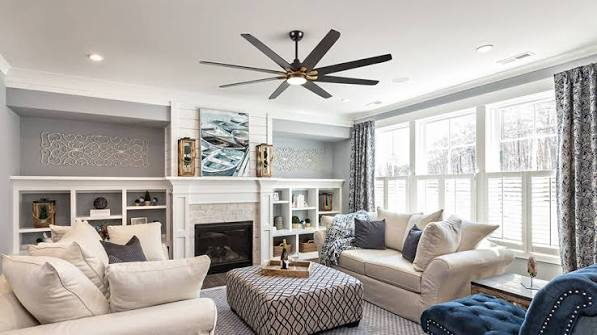
The ceiling fan circulates the air around the space, providing coolness to a home. Different rooms require slightly different roles to be played by the fan, such as whispering at night, or blowing while cooking. A fan chosen for a specific room looks right from the moment it is installed.
Design carries real weight when the fan sits at the center of the ceiling. Shoppers who browse luxury indoor and outdoor ceiling fans will find styles that range from slim modern blades to traditional silhouettes. The sections below walk through the main rooms of a house, with the fan features that suit each one.
Living Rooms Welcome a Statement Fan
The living room fan takes the central place overhead and tends to determine the decor focus. The model with a built-in LED light kit gives one the most ceiling lighting. Whichever five blades make for a heavy, balanced appearance on top of a sofa group. Long blades are used in open plans where the living room is open to the kitchen.
If the ceiling height is tall, a downrod—a metal pole willing to drop the fan down into the room—is required. An 8-to-9-foot-high installation would create a move of air right where people are. A finish that mimics a nearby lamp base or mirror frame gives the fan a good connection in space.
Bedrooms Suit Quiet Motion
A bedroom fan runs for hours through the night, so a low hum matters a great deal. A DC motor is a direct current motor that tends to run quietly on modest power. Many DC fans also offer six speeds, which allows a gentle breeze on the first setting.
A reverse switch flips the blade direction for cool months. In reverse, the fan pulls air up, which pushes warm air from the ceiling down along the walls. A remote on the nightstand lets a sleeper change the speed with ease from the bed.
Kitchens Need Easy-Care Blades
The air in the kitchen has a thin layer of oil from cooking, which deposits on the blades of the fan. If the fan has smooth and sealed blades, they can be wiped clean with just a damp cloth. They need less maintenance if made of metal or painted.
The fan should be placed away from the range hood to avoid mixing the two airflows. Above the dining table or in the center of an open kitchen would work well. A light kit providing soft light would look great in the kitchen.
Covered Porches Ask for Weather-Ready Builds
An outdoor fan carries sealed motor housings plus blades that resist moisture. A damp rating suits a deep porch under a solid roof. A wet rating suits a spot exposed to blowing rain or a hose spray.
All-weather blades in resin or treated wood keep their shape through humid summers. A powder-coated finish holds up to salt air near the coast. Homeowners can check the rating on the product page before any fan goes outdoors.
Offices or Sunrooms Benefit from Steady Airflow
An office heats up due to devices like computers, printers, or ever sunshine peeping through windows. The fan with standard rotation keeps air flowing on the desk at low frequencies. The flush mount fan is attached to the ceiling in the rooms where there is no airspace between the ceiling and the floor.
The sun porch collects warmth from large quantities of glass. The fan with large blades moves warm air from one window wall to another. The table below features the attributes referring to each of the given rooms.
| Room | Key Fan Features | Helpful Extras |
| Living room | Five blades, downrod for tall ceilings | Built-in LED light kit |
| Bedroom | Quiet DC motor, six speeds | Reverse mode, nightstand remote |
| Kitchen | Sealed, wipe-clean blades | Frosted glass light kit |
| Covered porch | Damp or wet rating, all-weather blades | Powder-coated finish |
| Home office | Medium steady speed | Flush mount for low ceilings |
| Sunroom | Wide blade span | Smart controls for sunny afternoons |
Controls Make Daily Use Simple
Fan controls come in a few common forms. Each one suits a different spot in the home. The list below covers the usual choices.
- Wall controls placed beside the light switch at the room entry
- Handheld remotes kept on a nightstand or a coffee table
- Smart controls that link to a phone app or a voice assistant
- Pull chains on simple models for a classic look
Smart ceiling fans are capable of operating on a schedule, like providing gentle air when it’s time for bed. Some of the high-tech models can also automatically adjust speed (or switch off) based on temperature in the room. With the right control type selected in advance, using a fan becomes easier.
Other types of fans involve more luxurious designs, which also increase comfort in living space. Homeowners looking for a high-end ceiling fan can first filter options by the type of room, and then by its style. Making a list of priorities for each room, for instance, “a silent fan” or “outdoor-rated fan,” simplifies the process considerably.