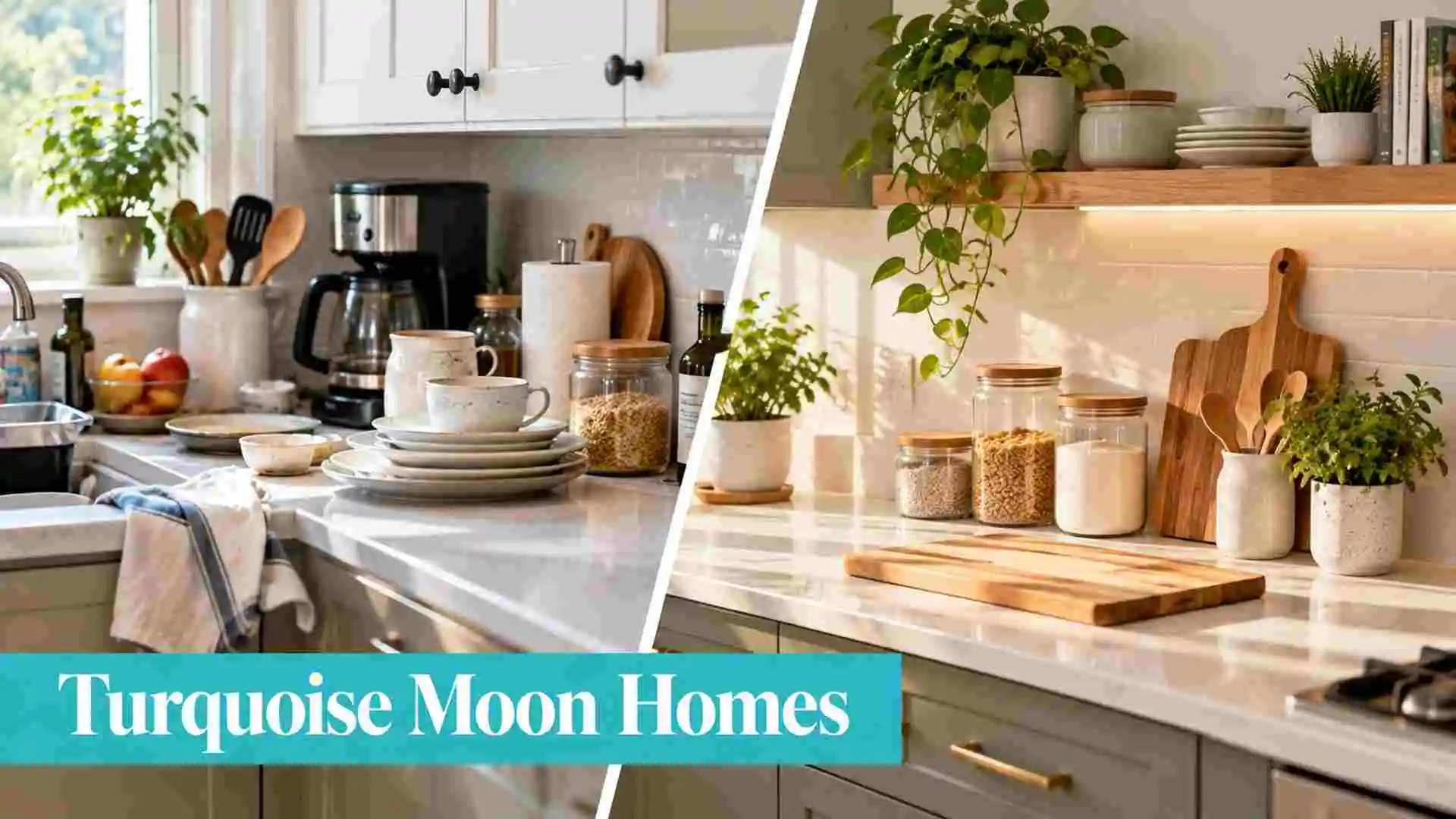
You clear a spot to chop an onion, move the coffee maker, nudge three jars aside, and still end up balancing the cutting board beside the sink. That’s the real problem in a small kitchen: the counter has become a storage shelf when you need it to be a place to cook.
Small kitchen counter organization starts by protecting one genuinely usable preparation area. The useful change isn’t buying matching containers. It’s choosing which things deserve to stay out, giving the others easy homes, and arranging your daily essentials around the way you actually make meals.
Picture your busiest evening in this kitchen, not its best moment in a photo. You need somewhere to rinse vegetables, place a pan, and set down a hot dish safely. Let’s make room for those ordinary moments first.
A Kitchen Counter Should Make Cooking Easier
Small kitchen counter organization works best when you make room for the tasks you do every day. Instead of filling every corner with matching jars and pretty trays, keep a clear place for washing, chopping, mixing, and serving. The goal is not an empty countertop. It is a kitchen where the things you need are easy to reach and where you can prepare a meal without moving a pile of things first.
Even a small counter can work well when you look at how you actually cook. A person who makes coffee every morning may want a permanent coffee spot. Someone who cooks from scratch needs a larger clear prep area. Both can have a tidy kitchen. But the best storage choices will be different.
Try the Dinner Test Before Buying Anything
picture making pasta on a weekday. You take out a pot, need room to slice vegetables, and reach for the colander. Which item forces you to stop and rearrange the counter? That object is a stronger candidate for cabinet storage than something you use every morning.
Now try the same test with breakfast. If you make toast and coffee before work, a modest coffee station may earn its place. But six pretty mugs don’t need to surround the machine. Keep the few items that shorten your routine; move the rest to a reachable shelf.
This is also why a completely bare counter isn’t always the best result. A working kitchen needs tools close by. Your goal is to stop storing the wrong things in the places where you do the most work.
Start With Your Real Counter Space
Clear the counter, wipe it clean, and return only the items you use almost every day. Put occasional appliances, duplicate utensils, extra mugs, bulk ingredients, and seasonal pieces in cabinets or other suitable storage. This simple reset reveals how much usable space was hiding under everyday clutter.
Now stand where you normally prepare food. Notice which items interrupt that space. A pretty canister can be lovely. But not if it forces you to chop vegetables beside the sink. Choose the most handy stretch of counter as your primary prep zone, then give the remaining items homes around it.
Create Small Zones That Match Your Routine
A useful kitchen has zones, even when the room is tiny. Keep a few cooking tools near the stove, dishwashing essentials near the sink, and coffee or tea supplies together if you use them daily. Grouping items reduces the need to walk between cabinets and limits the number of things scattered across the worktop.
A tray can help contain the things in a coffee station. But a tray is not a fix by itself. If the tray is crowded with unused syrups, extra cups, and pretty pieces, it still takes away counter space. Keep the group small enough that every item earns its place.
Use Cabinets Before Buying Organizers
Before purchasing a new rack, look inside the existing cabinets. Adjustable shelf risers can make better use of tall spaces. A turntable may help access to jars in a deep corner. Dividers can stop cutting boards and baking sheets from tumbling into a stack. But an organizer only helps when it fits the cabinet and the things inside it.
Measure cabinet depth and width before shopping. Check that cabinet doors can close, shelves can carry the load, and tall items still fit. Avoid adding another layer of storage just because a product looks clever in a photo. The simplest fix may be moving one seldom-used appliance to a lower shelf.
Make Vertical Space Work Carefully
Walls and the underside of upper cabinets may offer room for a narrow rail, hanging utensils, or a compact shelf. A pegboard can keep often used tools visible and off the counter. Choose surfaces and items that suit a kitchen’s heat, moisture, and cleaning needs, and follow setup steps.
Do not hang heavy pots from adhesive hooks unless the product is specifically rated for the load and surface. Keep stored items clear of burners and other heat sources. If drilling is involved, check for plumbing, wiring, and rental rules before installing fixtures. A slim stand-alone organizer may be a better choice when wall mounting is not useful.
Be Selective About Countertop Appliances
Countertop appliances often use more room than expected because they need clearance around them to operate. Keep a often used toaster or coffee maker out if it genuinely makes mornings easier. Store the bulky mixer or slow cooker when it is not in regular use and you have a safe, accessible place for it.
Read each appliance’s operating and ventilation steps. Do not squeeze appliances under cabinets when the maker requires open space. Leave electrical outlets accessible and avoid unsafe extension-cord arrangements just to make an appliance fit.
Balance Storage With the Look of the Room
A small kitchen can look calm without becoming plain. One attractive container for daily utensils, a restrained color palette, and tidy lines can make the counter feel cohesive. Repeating one finish or material across a few useful things often has more visual impact than adding a few tiny decorations.
If you enjoy color, keep it. The aim is visual order rather than an all-white kitchen. Choose a few pieces you like and leave breathing room around them. A single bowl for fruit or a plant away from cooking heat can add character without taking over the main work surface.
Keep It Clear With a Simple Reset
Good organization needs to survive a normal Tuesday, not only a staged photo. Put everyday items back after use, deal with packaging promptly, and wipe the prep zone at the end of cooking. If the same object keeps returning to the counter, that is a clue its assigned storage place is inconvenient.
Review the setup after a week. Move the things you reach for most closer to your work area. Shift the rarely touched items farther away. Your kitchen will feel easier to use when the layout follows your habits instead of asking you to follow an unrealistic system.
When a Larger Change Makes Sense
If you are still short of prep space after a thoughtful reset, think about whether a slim rolling cart, correctly sized kitchen island, or a fold-down work surface is useful for your room. Measure walkway clearance, door swings, and the space needed to open appliances before adding furniture.
Renters and homeowners alike can help a kitchen without replacing cabinets. For related ways to use tight spaces well, see our small living room ideas guide. A home works best when every room is planned around real daily routines.
Find the Space You’re Losing Without Noticing
Look at the things you must move every time you make a meal. A cutting board pushed behind a drying rack, a spice jar hiding behind the toaster, or a knife block blocking the only free corner is a clue. These small interruptions matter more than a photo of your kitchen might suggest. Try preparing an ordinary meal and notice where you have to stop and rearrange things.
The area beside the sink often becomes a landing spot for wet dishes, mail, and cleaning bottles. If that is happening, give the dishes a reasonable drying location and move unrelated papers elsewhere. Keep cleaning supplies in right storage, away from food and beyond the reach of children. You do not need an elaborate system. You need fewer competing uses for the same few inches.
A Realistic Setup for a Galley or Apartment Kitchen
In a narrow kitchen, the space between the sink and stove may be the only useful prep area. Protect it. Put a knife block in a safe location, or store knives securely in a suitable drawer insert. Keep oils near the cooking area when right. But well away from direct heat. Reserve the other counter for coffee, small appliances, or unloading groceries rather than trying to fit every activity into one spot.
If there is almost no counter between the sink and stove, think about a removable cutting board used on a stable, suitable surface. But never improvise over hot burners or an unsafe sink edge. A cart might help only if it leaves room to move safely and open cabinet doors. Measure the room with those doors open before buying furniture.
Think About What You Clean Every Day
Open baskets and containers can be lovely. But kitchens collect splashes, grease, and crumbs. Store everyday ingredients in food-safe containers that suit the contents, and follow package steps for storage. Avoid placing jars where they might be knocked over as you cook. Keep a workable gap around anything you need to wipe down often.
A countertop organizer that has to be emptied every evening may be doing more work than it saves. Choose washable surfaces where useful. If an item constantly gathers dust because you rarely use it, the cabinet is likely a better home. Everyday convenience should win over a display that looks tidy for only a few minutes.
Before and After: Judge the Change by the Work
After your first reset, make breakfast or cook dinner without deliberately tidying as you go. Is the chopping area still clear? Can you reach a pan without shifting a stack of trays? Can you set down a hot dish on an right heat-safe surface? These questions tell you whether the organization is working better than a pretty before-and-after photo.
Give the layout a few days before you buy another container. Often the best next move is moving just one item from the counter to a nearby shelf. As Better Homes & Gardens explains in its small-kitchen guide, using cabinet space and keeping often used items accessible can make a limited layout more useful.
The Test That Matters After a Week
A week later, notice what has crept back onto the counter. Are grocery bags landing beside the stove because there is nowhere else to unload them? Do clean mugs collect near the sink because their cabinet is packed? Treat those patterns as clues, not failures. Move a shelf, free a drawer, or make a landing spot that suits the habit.
When the layout works, you don’t have to tidy everything before making dinner. You can put down your ingredients, cook, and clean up without a complicated routine. That everyday ease is the real payoff of an organized small kitchen.
Set Up a Spot for Groceries
Think of the five minutes after a food shop. You walk in with bags. You need a clean place to set them down. If the counter is full, the bags end up on the floor or the stove. That feels hard before dinner even starts.
Keep a small landing spot free when you can. Put food away as you unpack it. Keep raw meat away from fresh foods and clean the counter after it touches raw food packs. The goal is not a perfect kitchen. It is a safe, easy start to the next meal.
What Goes in the Drawer?
Open the drawer nearest the stove. Look at what is inside. Do you use most of it each week? If not, move the spare tools to a less handy spot. Keep a good spatula, a spoon, and the tools you reach for most right where you need them.
Now look at the counter. Can you put the utensil jar in the drawer? Will that free a space where you can set a bowl? Try it for a few days. A small shift like this can do more than a new shelf.
If you share the kitchen, ask the rest of the home where they look for things. A smart layout only works if everyone can find what they need and put it back.
A Better Counter, Not Just a Prettier One
The most useful small kitchen counter organization changes tend to be the least dramatic: fewer things left out, clearer work zones, smarter cabinet access, and a setup you can keep. Start with what you own, make one change at a time, and give the plan a few days of ordinary cooking before deciding what else to buy.
Further reading: Better Homes & Gardens on organizing a small kitchen.
