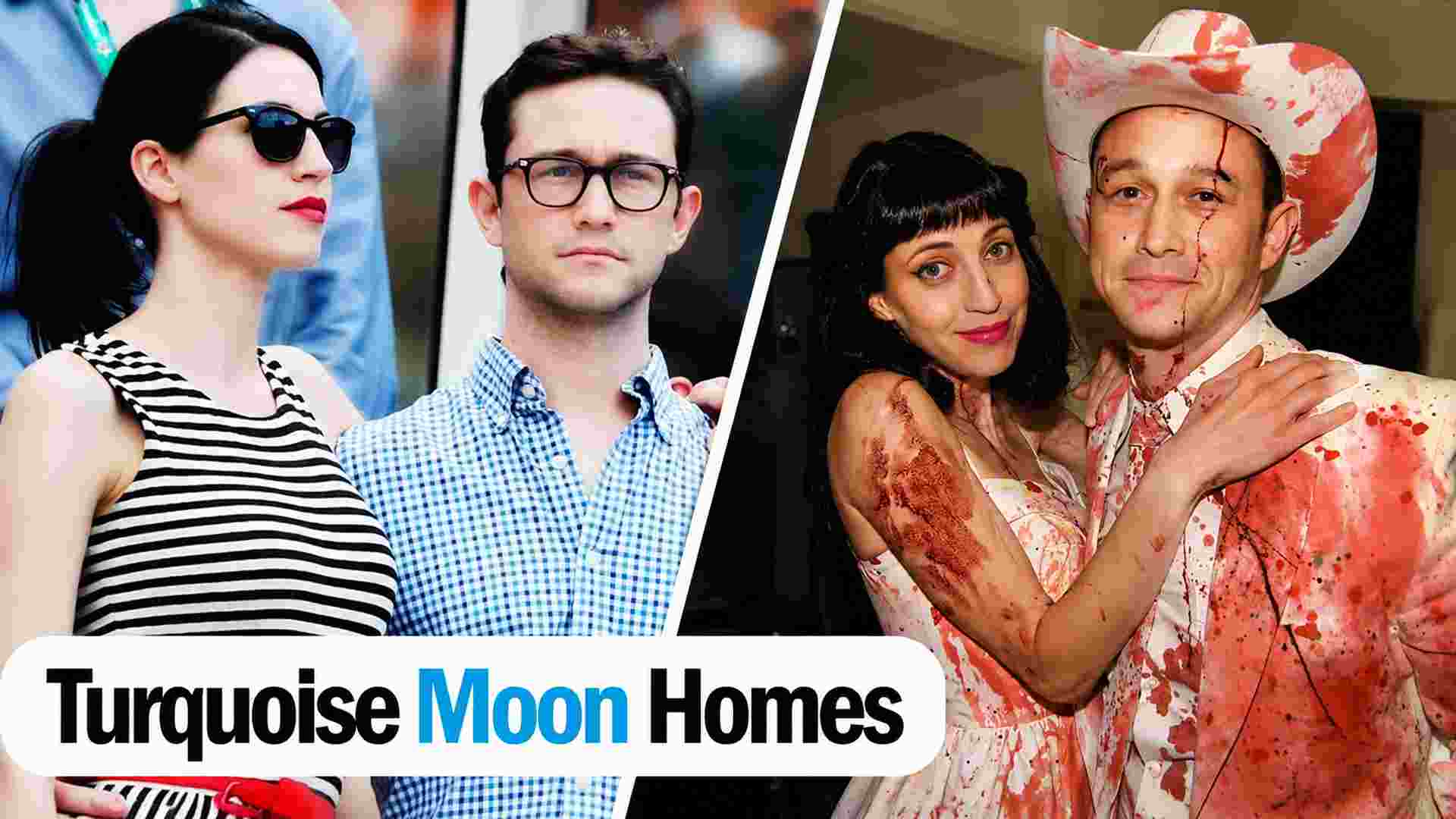
Have you ever wondered what it takes to build robots and help shape the rules for artificial intelligence? Tasha McCauley has done both. Many people first hear her name because she is married to actor Joseph Gordon-Levitt. Yet her own career has reached from tech labs to boardrooms where major choices about AI were made.
She helped start a robotics company, led a business that made digital models of real cities, and later served on OpenAI’s nonprofit board. Her work makes her more than a familiar face beside a Hollywood star. She also has three children and keeps much of her home life private.
In this article, we’ll look at her education, early ventures, leadership roles, marriage, and approach to public life. We’ll explain what her work meant in plain English, without turning a private family into gossip. Let’s begin with the person behind those projects.
Who Is Tasha McCauley?
Tasha McCauley is an American technology entrepreneur with experience in robotics, digital mapping, and artificial intelligence governance. She co-founded Fellow Robots, served as CEO of GeoSim Systems, and was once a director on OpenAI’s nonprofit board. She is also married to actor Joseph Gordon-Levitt.
Her career has combined building new tools with asking how technology should serve people. Public profiles have linked her to the RAND Corporation and groups that study the risks and social effects of advanced AI.
She and Gordon-Levitt married in December 2014 and have three children. They have chosen not to make their children’s names and daily lives part of the public story.
Learning to Solve Real-World Problems
Tasha McCauley’s path into technology did not start with a celebrity connection. Tasha McCauley studied at Bard College and later took part in robotics work at Singularity University. She also earned an MBA from the University of Southern California.
Those areas of study bring different skills together. Robotics deals with machines that sense and act in real places. Business training helps someone turn a useful idea into a company that can hire people, serve clients, and keep running.
The mix helps explain her later roles. She was not limited to writing software or presenting an idea to investors. Her career often sat between technical design and the day-to-day work of running a venture.
At Singularity University, she taught robotics and directed the Autodesk Innovation Lab. That role involved helping students explore new tools and think through problems that do not have one easy answer.
Fellow Robots and the Challenge of Working Around People
Tasha McCauley was a co-founder of Fellow Robots, a venture based at NASA Research Park in Silicon Valley. Its work explored robots for real settings, including places where customers and staff need help finding things.
Picture a busy store. A cart blocks an aisle. Someone walks in front of a machine. A shelf has moved since the last map was made. A useful robot has to cope with these normal changes without causing trouble.
That challenge goes beyond making wheels turn. The machine needs sensors, a map, software, and a way to interact with people who may have never used a robot before.
Fellow Robots was part of an effort to bring that kind of technology out of test rooms. McCauley’s role as a co-founder shows her part in a team trying to make robotics useful outside a research lab.
A startup is also a test of practical judgment. A clever device matters little if people cannot understand it, if it costs too much to use, or if it creates more work than it saves.
GeoSim Systems and the Value of Digital Cities
Tasha McCauley’s next major business chapter involved GeoSim Systems, which made detailed virtual versions of real places. She first held a business development role and later became the company’s CEO.
A flat street map can show where a building sits. A three-dimensional model can also show its size, shape, and place among nearby streets. Users can move through that model on a screen and study how spaces fit together.
Digital city models can support design, planning, training, and real estate work. They let people see parts of a location before they travel there or make changes to it. The detail depends on the data collected and the tools used to turn it into a working model.
GeoSim’s work was different from building a robot, but both projects dealt with the physical world. One tried to help a machine find its way through a place. The other helped people explore a place through software.
Leading that company added another layer to her career. A CEO must deal with staff, clients, budgets, and long-term plans, not just the technology itself.
Why AI Governance Became Part of Her Career
For Tasha McCauley, as AI tools grew more capable, questions about safety and control became harder to ignore. Who should decide how a system is used? What happens when a company wants to move fast but an error could hurt people? Who is accountable if its technology does harm?
These are governance questions. They deal with oversight, rules, responsibility, and the public interest. They are not the same as the engineering work of building a product.
Tasha McCauley later worked with organizations focused on such issues. Her mix of startup and leadership experience gave her a view of how technical goals can meet business pressure.
One current organizational profile, published by the AI Objectives Institute, identifies her as a board member, a former GeoSim CEO and Fellow Robots co-founder, and a former OpenAI director. That is a useful primary-source snapshot of her stated roles rather than an estimate based on social media.
Governance work rarely looks dramatic from the outside. Its value lies in asking difficult questions before a mistake becomes far more costly.
Her Time on OpenAI’s Board
Tasha McCauley served as an independent director of OpenAI’s nonprofit board, a role that brought her into one of the most closely watched tech groups in the world.
A board’s job is different from a research team’s job. Engineers may design and test a model. Directors must look at leadership, mission, risk, and whether decisions serve the organization’s stated purpose.
She was among the directors involved in the November 2023 decision to remove CEO Sam Altman. The move set off a fast and public leadership crisis. Altman later returned, and McCauley left the board during the changes that followed.
That episode is part of her professional record, but it should not erase the work that came before it. She had been active in robotics, virtual modeling, and technology leadership long before the crisis made board members household names among tech followers.
It also showed how much power a board can hold when an organization works on technology with wide social effects. Oversight decisions can shape not only one company but public trust in a whole field.
Research and Public-Interest Technology
Tasha McCauley’s work has also included a role with the RAND Corporation, a research organization that studies hard public policy questions. Public reporting described her as an adjunct senior management scientist beginning in 2023.
The shift from a startup to policy research can look large, but the link is clear. A founder asks how to make a new tool work. A researcher may ask what that tool will mean for people, institutions, and safety over time.
AI can help with many tasks, yet the effects depend on how it is built and used. Clear rules, independent review, and thoughtful design can matter as much as speed or computing power.
She has also been associated with organizations that examine how AI might be governed for the public good. These roles are best understood as part of her professional focus, not proof that any one person can settle the future of AI.
Meeting Joseph Gordon-Levitt
Away from work, Tasha McCauley shares a life with actor Joseph Gordon-Levitt, known for films such as 500 Days of Summer, Inception, and Looper. The pair met through mutual friends rather than on a movie set.
They married in December 2014. By that time, Gordon-Levitt had been famous for years, while his wife had already built a working life of her own in technology.
In a 2015 interview with The Daily Beast, the actor said he valued having a personal life separate from show business. He was talking about a time when the couple had just welcomed their first child.
That view helps explain why their family is not a constant feature of red-carpet coverage. It is a choice to keep home life from becoming another part of a public performance.
Her career also challenges a common assumption about celebrity spouses. She did not enter the public eye because she needed a role in the entertainment industry. She had her own work and professional goals.
Three Children and a Private Family Life
Tasha McCauley and her husband have three children: two sons born in 2015 and 2017, followed by a daughter born in 2022. They have not made the children’s names part of widely shared interviews.
For readers looking for family facts, this distinction matters. The birth years and number of children have been reported by established outlets. Claims about their schools, routines, personalities, or exact daily lives go much further than the public record allows.
Gordon-Levitt has at times spoken about wanting his children to grow up with space away from cameras. That is not unusual for a parent whose own early years included television work.
Keeping children off public platforms can give them more freedom to decide what they wish to share later. It also means a responsible profile should stop where the confirmed information stops.
Family privacy is not a gap that has to be filled with guesses. It is simply one part of the boundary the parents have chosen.
A Career That Connects Three Different Worlds
What makes Tasha McCauley’s work interesting is the range of problems involved. A store robot needs to move safely around people. A digital city needs to match real streets and buildings. AI governance asks who should guide powerful systems.
These are not identical jobs. Yet each involves technology meeting human needs. In one setting, the challenge is physical movement. In another, it is accurate information about a place. In the third, it is trust and accountability.
Her path also shows why careers need not follow a single narrow track. Early technical work can lead to business leadership, and business leadership can inform research and board decisions.
It would be easy to reduce her biography to her husband’s fame or the events of 2023. Neither gives the full picture. The through line is years spent working with technology that must operate in the real world.
Final Thoughts
I find the contrast in Tasha McCauley’s story striking. She is connected to a well-known actor, but the most revealing parts of her professional life involve the hard work of making machines useful and helping organizations think about responsibility.
From robotics and virtual cities to AI oversight, her work has crossed fields while staying close to one core question: how can complex tools serve real people? Her family life, meanwhile, has remained mostly outside the spotlight.
She is a technology entrepreneur and former board director with a distinct career, not just a celebrity spouse. That is the part of the story worth remembering.
Frequently Asked Questions
Did Tasha McCauley work at NASA?
Fellow Robots was based at NASA Research Park. That does not mean she was a NASA employee.
Was she a software engineer on ChatGPT?
Her documented OpenAI role was on its nonprofit board, not as a member of the team that built ChatGPT.
What does the name GeoSim mean in her career?
It refers to GeoSim Systems, a business that made interactive three-dimensional models of real locations. She later served as its CEO.
Did she and Joseph Gordon-Levitt meet while filming a movie?
No. Gordon-Levitt said they met through mutual friends.
Is she still an OpenAI board member?
No. She left the board during the leadership changes in November 2023.
You may also read: Victoria Chlebowski: Her Design Work, Family and Michael Imperioli.
