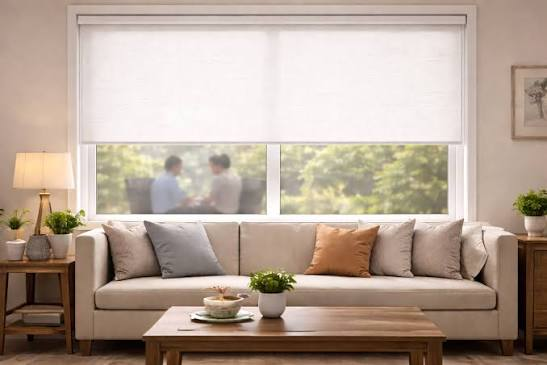
The living room looks lovely at noon. Sunlight falls across the rug, the plants glow, and the window feels like the best part of the space. Then the sun goes down, the lamps come on, and you notice how much of the room is visible from the street. A sheer curtain that felt private in daylight may not feel the same at night.
Choosing window shades for privacy and light starts with one question: what do you want the window to do at different times of day? A shade that softens harsh sun may not make a bedroom dark enough for sleep. A blackout shade may give you privacy but hide the view you love. Think through those moments before you pick a color or fabric.
Do the Evening Privacy Test
Stand outside the room at dusk if you can do so safely, or ask someone you trust to look in from an allowed outdoor spot while the indoor lights are on. Close the window covering and check what can be seen. Do not rely only on how the fabric looks in a store under bright ceiling lights.
A light-filtering shade may blur shapes yet still show outlines when a lamp glows behind it. A sheer weave may offer little privacy after dark. If the window faces a sidewalk or another home, choose a covering with a level of privacy that works at night, not just at noon. You can also layer a light-filtering shade with curtains when you want both a soft day look and a more closed evening setup.
Light Filtering, Room Darkening, and Blackout Are Not the Same
Light-filtering shades soften daylight and cut some glare while keeping the room bright. They can be a good fit for a kitchen, home office, or living room where you want daylight but not a sharp beam across the table. The amount of privacy depends on the fabric and weave.
Room-darkening shades block more light, though they may still let light enter at the edges. Blackout fabric is made to block much more light through the material, but an inside-mounted shade can still leave bright strips around the sides. IKEA’s roller-shade guide shows how the same style can come in sheer and blackout options. Read the actual product label rather than judging by color alone.
Start With the Room, Not the Trend
In a bedroom, sleep may matter more than a wide-open view. A darkening or blackout option may suit you if streetlights, early sun, or shift work make rest hard. If you read in bed, you may also want a softer light option during the day so the room does not feel shut off all the time.
A living room may need a shade that cuts glare on the TV without turning the space gloomy. A home office might need to stop a bright patch from falling across the screen at 3 p.m. A kitchen may need a wipe-clean surface near the sink. Each room has its own job. Buying the same shade for every window can make some rooms harder to use.
Think About the Direction of the Sun
A west-facing window may bring a burst of low afternoon sun into the room. That can feel cozy in fall but harsh when it hits a laptop screen or warms a seat. East-facing rooms may have the same issue in the morning. Watch the light on a normal day before choosing a shade.
If glare is the main problem, try adjusting an existing covering at the time the sun is strongest. You may find that a light-filtering shade gives enough relief. If heat is also a concern, look at products with energy ratings rather than assuming a thick-looking fabric will solve it. The U.S. Department of Energy has reported research on insulating cellular shades and their role in home comfort.
Roller Shades Keep the Look Simple
A roller shade uses a single panel that rolls up at the top of the window. It is often a neat choice when the room already has a lot of pattern, art, or trim. The clean line can sit behind curtains if you want a softer look at the sides.
The tradeoff is that the fabric may block your view whenever you lower it for privacy. Look for the right fabric weight and check how it moves. In a room where you open the window often, make sure the shade does not get caught by the handle. If the shade sits inside the frame, check the maker’s depth needs before you order.
Cellular Shades Can Help With Comfort
Cellular shades have pockets that trap air within the covering. They come in light-filtering and darker fabrics. Some offer a top-down, bottom-up style, which can let daylight in above eye level while covering the lower part of a window. That can be useful when a neighbor’s window faces yours.
Not every cellular shade has the same energy rating. If comfort is a main reason to buy, look for tested products and a clear label. The Department of Energy has published guidance on rated cellular shades. A shade may help with heat flow, but it will not repair a drafty window or replace sound weatherstripping.
Roman Shades Add Softness Without Long Panels
A Roman shade folds into neat layers as it rises. It can add texture to a plain room, especially when you like the look of fabric but do not have space for full curtains. In a dining nook, a warm linen-look shade may feel softer than a hard slatted blind.
Think about cleaning before you choose a delicate fabric. A shade near cooking steam or splashes may need more care than one in a quiet sitting room. Check the lining too. Some Roman shades are made to filter light; others have a darkening layer. The style name alone does not tell you how much privacy you will get.
Inside Mount or Outside Mount? Measure Both
An inside mount sits within the window opening and can show off the trim. It needs enough depth for the brackets and headrail. It may also leave small gaps at the sides. An outside mount covers more of the frame and can help block side light, but it needs room above and beside the window.
Measure the width at the top, middle, and bottom, then the height at more than one point. Follow the maker’s rules for which number to order; brands may handle deductions differently. Do not round up on a guess. Check for cranks, locks, tile, or trim that could block the shade. A paper sketch with all measurements is far easier to use than three numbers saved in separate phone notes.
Plan for the Door, the Desk, and the Sofa
A shade that fits the glass can still get in the way of daily life. A desk placed right under the window may make a pull handle hard to reach. A sofa arm can press against a long shade. A patio door needs a covering that will not snag every time someone walks through.
Try moving through the room as you normally do. Open the window. Turn the lamp on. Sit where you watch TV. Notice where glare hits and which edges are in view. This small test helps you decide whether you need a single wide shade, two narrow ones, or a different kind of window covering.
Cordless Is the Safer Choice Around Children
Accessible cords on blinds and shades can pose a severe danger to young children. The U.S. Consumer Product Safety Commission urges families to choose cordless window coverings. When you shop, look for the word cordless and follow the maker’s setup steps.
Do not assume a cord tied high is risk-free. Keep cribs, beds, and climbable furniture away from windows and any cords. If you live with young children, treat safety as part of the purchase, not as a detail to solve after the shade is on the wall. The same care matters in rooms where children visit, even if they do not live there.
Renter-Friendly Options Need a Real Fit
If you rent, check the lease before drilling into trim or walls. Some shades use brackets that need screws. Others may use a no-drill system, but the fit and load limits depend on the product. Do not assume every no-drill bracket will work with every frame.
Keep the window’s opening path and any required exit clear. Test a sample or one window before buying a full set. If the shade needs a mount you cannot use, consider a different product rather than a weak workaround. Our renter-friendly decor guide covers the same basic idea: make a room feel personal while respecting the surface and the lease.
Layering Shades and Curtains Without a Busy Look
A simple shade can do the work of privacy while curtains add softness and color. This is useful in a living room with hard floors, plain walls, or large windows. Keep one layer quiet if the other has a bold pattern. A pale shade behind printed curtains can look calmer than two competing fabrics.
Plan the hardware before you buy. The shade and curtain rod need enough space to move without rubbing. Check that you can reach the shade control. For more on curtain height and length, the site’s bedroom lighting guide can help you plan how the room feels after dark, when the window and lamps work together.
Buy for the Window You Live With
Before you order, make a note for each window: room, privacy need, light level, mount type, width, height, and any handle or trim in the way. Choose the fabric only after those facts are clear. If the store offers a swatch, hold it up at the window in daylight and again at night.
You may end up with different shades in different rooms. That is not a design mistake. It means the bedroom can be dark enough for sleep while the living room still gets soft daylight. Good window coverings make the room easier to use without asking you to think about them all day.
Final Thoughts
The best shade is not always the darkest, the newest, or the one in the prettiest photo. It is the one that gives you the light and privacy you need at the hour you need it. Start by watching your window for a full day, then match the fabric and fit to what you learn.
A good choice can make a room feel brighter at breakfast, calmer during work, and more private after sunset. That is a lot of value from a piece of fabric you may barely notice once it is right.
