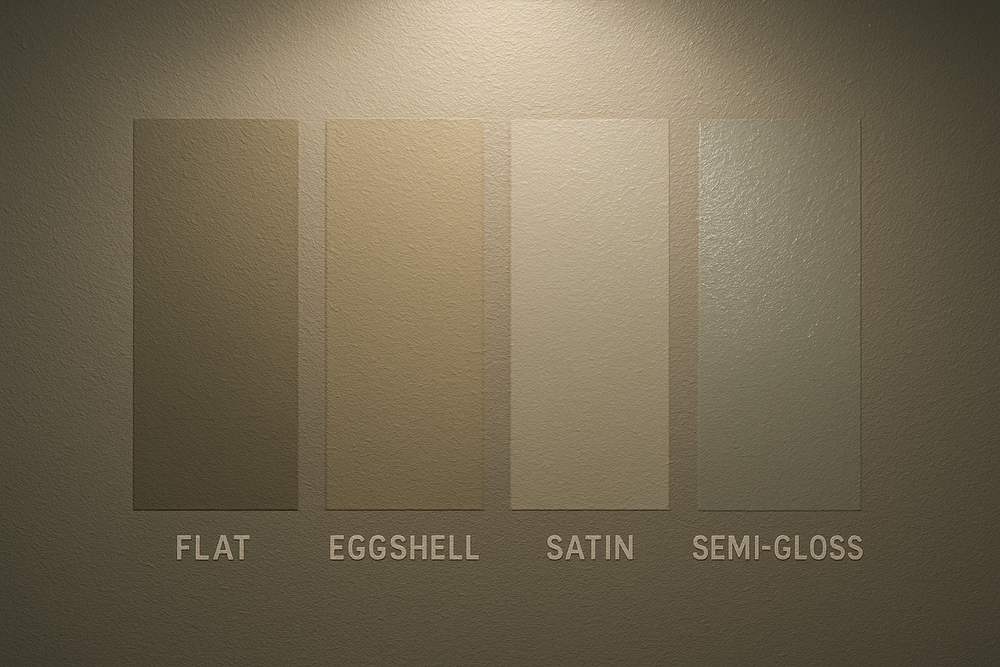
The color sample looks perfect on the card. Then you paint a wall, turn on the lamps, and notice every patch and roller mark. Or you choose a soft finish for the hallway and find that fingerprints are harder to wipe away than you hoped. The shade may be right. The sheen may not be.
When choosing eggshell vs. satin vs. semi-gloss paint, think about three things before the color goes on the wall: how much light hits the surface, how often people touch it, and how smooth the wall really is. More shine can help with cleaning in many paint lines, but it also makes flaws and glare easier to see. A lower sheen looks calmer, yet the exact washability depends on the product.
You don’t need one finish for the whole house. A living room, busy hallway, and bathroom ask different things of paint. The useful choice is the finish that makes each space easier to live with after the brushes are washed.
See the Sheen in the Light You Actually Use
Picture a hallway in the afternoon. Sunlight enters from a side window and travels almost flat along the wall. That low angle catches dents, old patches, and roller texture. A shiny finish can make those small marks stand out. At night, a bright wall sconce may do the same thing.
Now picture a family room with soft light from several windows. An eggshell finish may look gently polished there, without drawing attention to every bump. Satin has a bit more shine and may be easier to clean, depending on the paint. Semi-gloss reflects more light and can look quite bold across a large wall.
Don’t judge sheen from a tiny chip under store lights. Paint a test patch or sample board with the exact product and finish you plan to buy. Move the board around the room and check it in morning light, late sun, and under your normal lamps. Color can shift with lighting, but so can the way the finish feels.
Eggshell Gives Living Spaces a Softer Look
Eggshell is a common choice for living rooms, dining areas, and adult bedrooms. It has a subtle glow rather than a flat, chalky look. On walls that are fairly smooth, it can make color feel rich without looking glossy. It also tends to be more forgiving of small wall flaws than shinier options.
Think of a room with a cream sofa, wood floors, and a large window. An eggshell wall can give the space a quiet background so the furniture and art stand out. It is a good place to start when you want a finish that feels warm rather than polished.
There is a tradeoff. A basic eggshell paint may not take heavy scrubbing as well as a tougher satin formula. But premium washable paints can blur that line. Check the actual product’s cleaning guidance rather than assuming every can marked eggshell behaves the same way.
Satin Can Make Busy Walls Easier to Live With
Satin has a more visible glow. It often makes sense in hallways, kids’ rooms, and spaces where hands brush the wall on the way past. If a dog shakes off near the entry or a backpack keeps bumping the corner, a durable satin paint may be easier to maintain than a low-cost flat finish.
That doesn’t mean satin is always the winner. On a wall with old repairs or a lot of texture, the extra reflection can highlight the very things you hoped to hide. If the hallway is narrow and strongly lit from one end, test the finish first. You may prefer a high-quality washable eggshell that offers a quieter look.
When you compare products, ask what the maker means by scrub resistance, stain resistance, and washability. Those claims vary by paint line. The word satin on the label tells you about the finish, not the whole story of how well the coating will hold up.
Semi-Gloss Works Best Where Shine Has a Job
Semi-gloss reflects noticeably more light. It is a classic choice for doors, baseboards, window trim, and other surfaces that get touched and cleaned often. On trim, that contrast can be beautiful: a soft wall beside a crisp, lightly shiny door frame gives the room some shape.
Across a whole wall, though, semi-gloss can feel busy. It may show patch lines, dents, and uneven application more clearly. In a bathroom, it can be a sensible choice for some surfaces, but it is not a cure for steam or poor ventilation. A suitable bathroom paint and a working exhaust fan matter more than shine alone.
The Sherwin-Williams paint sheen guide places semi-gloss among the finishes used for trim, doors, and some kitchens or bathrooms, while satin and eggshell options suit many lived-in rooms. Treat that as a starting point, then check the finish and care directions for the exact paint you choose.
Choose by Room, but Watch the Exceptions
In a living room, eggshell is often a comfortable default. If kids play there and the walls get wiped often, a durable satin or washable eggshell may make more sense. For a bedroom that stays fairly calm, eggshell can give you the softer finish you want without much upkeep.
A kitchen is different. Grease, splashes, and hands near switches create cleanup needs. Satin can be a practical wall finish in many kitchens, while trim may call for semi-gloss. Near a stove or sink, paint must still suit the surface and exposure; a washable finish is not a replacement for a proper backsplash where one is needed.
In a bathroom, look for paint designed for moisture-prone rooms and make sure the fan vents properly. Satin or semi-gloss may suit the space, but a matte bathroom formula can also work if its maker rates it for that use. If condensation runs down the wall, solve the moisture problem before painting over it.
For a narrow hallway with lots of side light, the wall’s condition may matter more than the room label. A smooth wall can handle a little sheen. A patched wall may look better in a lower finish. The best answer is the one you can see on your own wall, not a fixed rule printed on a chart.
Prep Work Can Matter More Than the Finish
A fresh coat won’t hide loose paint, grease, or raised patch edges. Wash dirty areas as directed, let the wall dry, repair small defects, and sand only when it is safe to do so. Use the primer recommended for the surface and paint system. The smoother and cleaner the base, the better your chosen sheen is likely to look.
If the home was built before 1978, old paint may contain lead. Don’t sand or disturb it casually. Follow U.S. lead-safe guidance and use a certified professional where required. Good ventilation also matters during painting and drying; follow the product label for fresh-air and reentry advice.
Avoid switching sheens halfway through one wall. Even with the same color, the change can be obvious when the sun hits it. If you need to touch up later, use the same product and finish, and keep in mind that touch-ups may still show due to age, application, or light.
Buy a Sample, Then Make a Real Decision
Before you buy gallons, paint two sample boards: one in the finish you think you want and one a step higher or lower in sheen. Set them beside the trim and furniture. Look at the boards from the sofa, not only from six inches away. Check them again with the lamps on.
Run a gentle cleaning test only after the paint has fully cured for the time stated on the label. Use the maker’s recommended method, not an abrasive scrub pad. If the sample looks too shiny or shows every bump, choose the calmer finish. If you need a tougher wall and like the glow, the higher sheen may earn its place.
The same room-first thinking helps with other details. Our living room curtain length guide shows how one small finish choice can change the feel of a whole space. And if you’re planning a bedroom refresh, explore bedroom lighting ideas before you judge a new wall color at night.
Let the Finish Support the Room
The paint can be easy to clean and still feel wrong if it throws glare across your favorite wall. It can look wonderfully soft and still frustrate you if every touch leaves a mark. Start with the life that happens in the room, test the finish in real light, and check the paint’s care details.
Eggshell, satin, and semi-gloss each have a place. The trick is not picking the shiniest or the safest-sounding option. It’s choosing a surface that looks right on an ordinary day and keeps working long after the room smells like fresh paint.
