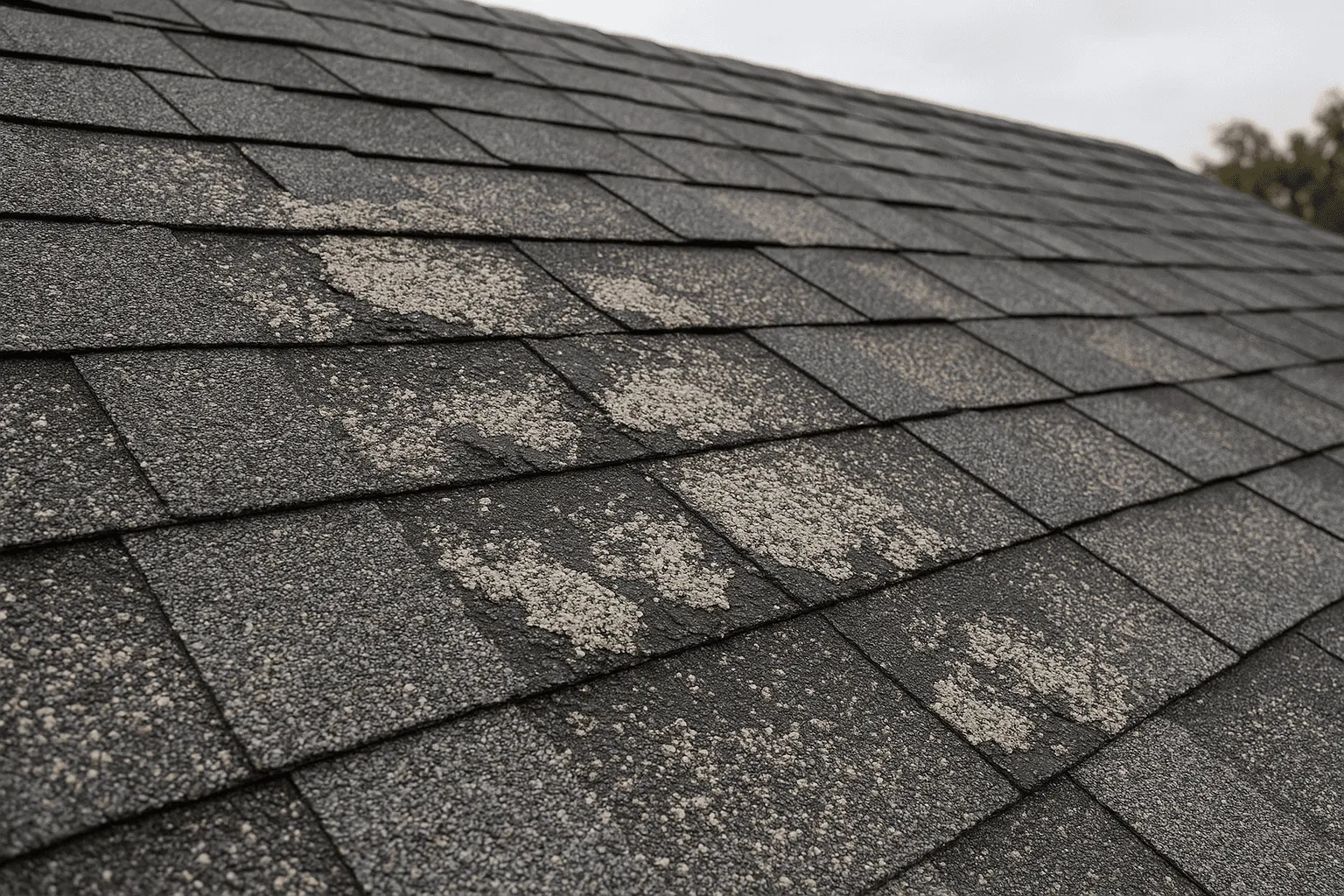
A little sand-colored grit at the bottom of a downspout can make a homeowner picture an expensive new roof. Yet those tiny pieces do not tell the whole story. On a recently installed asphalt roof, some loose surface granules may wash away without affecting performance. On an older roof, a fresh bald patch can mean the protective coating is wearing thin. The useful question is not simply how much grit you found. It is where the material came from, whether the pattern is changing, and what the shingles look like from a safe distance.
Roof granule loss deserves attention when you can see exposed asphalt, sudden localized damage after a storm, or shedding that keeps getting worse. It rarely justifies a replacement decision from gutter debris alone. In this guide, we will sort normal shedding from meaningful wear, show how to document the signs without climbing, and explain which questions help you get a sound inspection rather than a rushed sales pitch.
What those tiny roof granules actually do
Asphalt shingles are not simply black sheets with color sprinkled on top. Mineral granules cover the asphalt surface, giving the roof its finished appearance and shielding the underlying material from sunlight and weather. The granules also help create the textured finish you see from the street. When coverage becomes patchy, the asphalt beneath faces more direct exposure. That is why a dark area where granules have disappeared matters more than a spoonful of loose material sitting in a gutter.
Picture two houses after the same rainstorm. One has a new charcoal roof and a light dusting of matching particles in its downspout splash block. The other has a fifteen-year-old roof with a broad, shiny dark strip on one sun-facing slope. Both have loose granules, but they do not present the same decision. The first calls for monitoring. The second deserves a closer look at the actual shingles and their overall condition.
Roof granule loss on a new roof can be normal
Manufacturers apply extra loose particles during shingle production. Some of these sit on the surface rather than being permanently embedded. Handling, installation and the first few rain events can carry them into gutters. GAF’s technical advisory on new-shingle granule loss explains that this early shedding is often strongest immediately after installation and tends to decrease over time. That makes the direction of change more informative than one dramatic-looking pile.
If your roof is new, write down the installation month and take a photo of the same downspout outlet after comparable rainstorms. Avoid trying to measure a universal safe quantity; roof area, gutter design, rainfall and the number of downspouts all affect what collects in one place. Instead, look for a clear decline and check whether the roof still appears evenly covered. If material keeps accumulating heavily or color changes appear, contact the installer with dated photos and the shingle product information.
Roof granule loss: even aging or a bare patch
An older asphalt roof weathers gradually. Its surface may fade, and small amounts of grit can appear during gutter cleaning. Uniform color change is different from a sharply defined area that exposes the darker asphalt beneath. Roof granule loss becomes more concerning when a patch is visible from the ground, especially if nearby shingles are cracking, curling, lifting or breaking. Those companion signs suggest the issue is not merely cosmetic.
A useful comparison is a worn carpet. A few fibers in the vacuum are not the same as a threadbare path where the backing shows. Shingles work differently from carpet, of course, but the distinction helps: the condition of the surface left behind matters more than what has fallen off. Ask an inspector to photograph the affected shingles at close range and explain whether the protective coating is still intact.
After hail, look for a pattern rather than a promise
Storms can create a different kind of damage. Hail may displace granules in concentrated spots, while wind can crease or tear shingles. A circular mark is not proof of hail damage on its own, and a roofer should examine other evidence such as affected soft metals, vents and the timing of the storm. The Colorado Roofing Association’s homeowner guidance recommends documenting unusual loss and asking a qualified contractor to inspect persistent or localized damage.
Do not let anyone diagnose an insurance claim from a photograph of gutter grit alone. Storm coverage depends on the policy, the cause and the documented damage, not a universal number of granules. Keep photos, the date of the weather event, repair records and any inspection notes together. If an adjuster or contractor recommends a replacement, ask which slopes are affected and why targeted repair would or would not be suitable.
A safe five-minute check from the ground
Start with the gutter outlet after rain. Note whether the particles match your roof color and whether the amount seems different from earlier cleanings. Step back where you can see the roof in good daylight. Look for irregular dark areas, missing tabs, raised edges and obvious color changes. Binoculars can help, but never position yourself in a roadway or under unstable tree limbs to get a better view.
Then look indoors for fresh ceiling stains, damp attic decking visible from a safe access point, or a musty smell after rain. None of those symptoms proves granule loss caused a leak; flashing, vents and other details may be responsible. Still, they change the urgency. A dry roof with slight shedding is a monitoring problem. Active water entry is a repair problem and should be addressed promptly to limit interior damage.
Why pressure washing is the wrong shortcut
A discolored roof can tempt homeowners to blast away stains. High-pressure water can strip the very surface material the shingles need, and walking on a steep or wet roof adds a serious fall risk. If the roof looks streaked rather than bald, ask whether the issue is algae staining instead of missing granules. Those problems require different responses. Do not scrape, brush aggressively or apply a mystery coating to hide a damaged surface.
Likewise, pouring loose granules back onto shingles will not restore their original bond. A topical sealant is not a substitute for a manufacturer-approved repair plan. When a contractor suggests a treatment, ask for the product instructions, warranty implications and a written explanation of what defect the treatment actually corrects. A solution that makes the roof look darker for a week is not necessarily protection.
When roof granule loss calls for repair
The decision depends on how widespread the wear is, the age and condition of adjacent shingles, and whether compatible replacement shingles are available. One damaged section on an otherwise sound roof may be repairable. Multiple slopes with extensive exposed asphalt, repeated leaks or brittle shingles can make piecemeal repairs less practical. There is no reliable age or percentage threshold that settles every house, so resist estimates that use one number as a universal rule.
Ask for two written options when feasible: the scope and limitations of a localized repair, and the case for a larger replacement. A useful proposal identifies the affected slopes, ventilation or flashing concerns, disposal, underlayment details, and what happens if hidden decking damage appears. If you are comparing bids, make sure they describe the same work. The cheapest total can be misleading if one contractor omitted necessary components.
Keep a simple record that makes the next inspection easier
Make a small roof folder with installation paperwork, product names, warranty information, dated photographs and any storm-related notes. Photograph from roughly the same safe spot each season so a change in color or texture is easier to recognize. After a major storm, document visible differences before anyone begins work. If you hire a professional, request photographs of the areas you cannot safely see and a short explanation in plain language.
This habit helps even when nothing is wrong. Roof granule loss is easier to judge as a trend than as a single snapshot. Pair roof checks with ordinary seasonal maintenance, such as clearing drainage routes and preparing outdoor plumbing. Our guide to winterizing outdoor faucets covers another small job worth doing before freezing weather arrives.
Final Thoughts
Finding grit in a gutter is a clue, not a verdict. A newer roof may be shedding surplus granules, while visible bald areas, damaged shingles or sudden storm-related changes call for professional attention. Watch the surface, keep a record and ask for a specific diagnosis. That measured approach protects your home and gives you room to make a repair decision without turning every handful of roof granules into an emergency.
