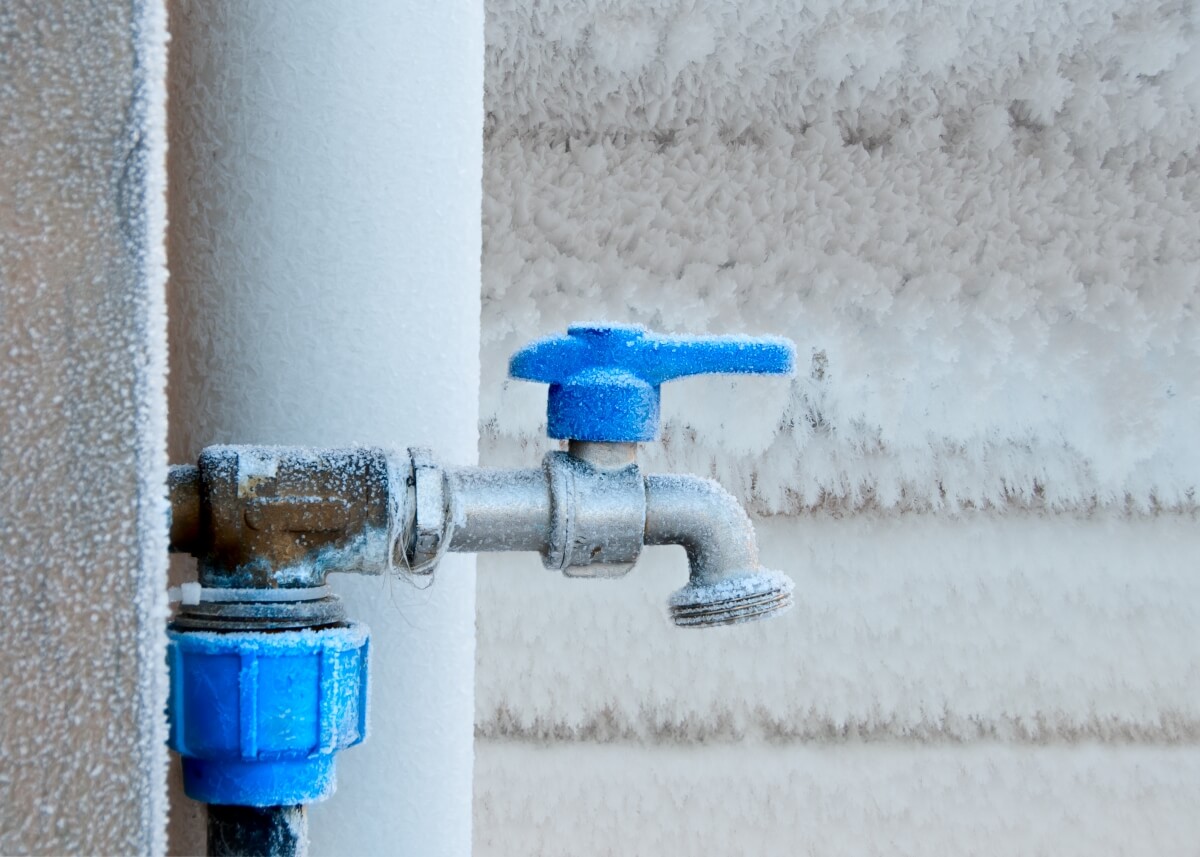
The hose is still coiled by the flower bed, the last mums are blooming, and the outdoor faucet looks perfectly fine. Then the first cold night arrives. A hose bib can seem harmless from the outside even when water is trapped in the short pipe behind the wall. That’s why a few minutes in fall matter more than an expensive repair in spring.
To winterize outdoor faucets, start by taking off hoses and attachments. For a standard faucet with an indoor shutoff, close that valve and drain the outdoor line. A frost-free model works differently, but it still needs its hose removed so it can drain as designed. The right steps depend on what is installed, not on how cold the metal feels today.
You don’t need to turn the whole yard into a plumbing project. Walk the outside of the house, find every water outlet, and work through each one. A side-yard spigot hidden behind shrubs is just as easy to forget as the one beside the patio.
Start With the Hose You Forgot Was There
The simplest mistake is leaving a garden hose attached. Even a frost-free faucet may not drain if a hose, timer, splitter, or nozzle holds water at its outlet. That water can freeze where it should have escaped. Start at the connection, not at the cover you plan to buy.
Unscrew the hose, empty it, and set it somewhere it can dry. A long hose drains more easily when you lay it out on a gentle slope and lift one section at a time. Once it’s empty, coil it without sharp bends and keep it in a shed or garage. Take off quick-connect fittings and watering timers as well. Check the back porch, side gate, and garage wall for a second faucet.
If the hose fitting is stuck, don’t force the pipe where it enters the siding. A hard twist can strain a weak joint behind the wall. Stop if the faucet moves, the connection is badly corroded, or you cannot loosen it without heavy force. A plumber can deal with the fitting before cold weather turns a small issue into a leak.
Know Whether Your Faucet Is Frost-Free
A standard hose bib usually shuts water off close to its outdoor handle. A frost-free sillcock has a longer valve body that closes farther inside the warm part of the building. That design helps water drain from the exposed section when the hose is off. It is not a promise that the faucet can never freeze.
Don’t guess based on a shiny handle or a product label from a previous owner. If you know the make and model, check the maker’s directions. If you’re unsure, look for a dedicated indoor shutoff on the line that serves that outlet. In some homes it sits near the basement wall; in others it is in a crawl space or utility area. Not every house has one for every faucet.
This difference matters. A standard faucet with an indoor shutoff can often be isolated and drained. A frost-free faucet should be handled as its manufacturer directs, and some models have their own winter-care details. When the plumbing is unclear, ask a licensed plumber rather than closing random valves and hoping for the best.
Drain a Standard Hose Bib the Right Way
Picture a short pipe running from your basement wall to the tap outside. Closing the indoor valve stops new water from entering that section, but it does not remove the water already there. You still need a path for that water to leave.
First, find the shutoff that actually feeds the outdoor faucet. Close it gently. Go outside and open the spigot so the line can drain. If the indoor valve has a small drain port, place a container beneath it and follow the valve’s instructions to release trapped water. Close the drain port after the line has emptied. In many standard setups, the outdoor spigot stays open through winter after the indoor supply is shut off and the line is drained.
The American Red Cross recommends removing and storing hoses, closing inside valves that supply outdoor hose bibs, and opening the outdoor valves to drain them. Its guidance also notes that water expands when it freezes and can break both metal and plastic pipes.
If water keeps flowing after you close the supposed indoor valve, you may have found the wrong one or a valve that no longer seals. Don’t keep turning harder. Trace the plumbing or call for help. A steady flow means the line is not isolated, so putting on a cover and walking away won’t solve the problem.
A Faucet Cover Helps, but It Is Not a Drain
An insulated faucet cover is useful for extra protection on a cold exterior wall. It can reduce heat loss around the exposed fixture. It cannot remove water trapped inside a pipe, fix a leaking valve, or make a connected hose safe. Treat it as one layer, not the whole winter plan.
Choose a cover that fits the shape of your faucet and sits snugly against the wall. A loose cover that leaves a wide gap may do less than you expect. Check that the strap or cord is secure and the cover doesn’t pull on a fragile fitting. Don’t wrap a leaking faucet so tightly that you hide the drip.
If a pipe passes through an unheated garage or crawl space, that area may need more attention than the tap outside. Insulation can help exposed pipes, but severe cold and drafts still matter. Have vulnerable lines checked if the route runs along a poorly insulated exterior wall. A cover on the outside is no substitute for sound plumbing inside.
What Changes in a Rental or Older Home?
You may have no access to the basement shutoff, or you may find several valves with no labels. That is common in shared buildings and older homes. Don’t turn a mystery valve that could cut off water to another unit or a critical system. Ask the landlord, property manager, or maintenance team which outlets are your responsibility.
If you rent, you can still do the low-risk part now: disconnect your hose, remove attachments, and report a dripping or damaged spigot. Keep a short note or photo of the issue and the date you told maintenance. The property owner may need to handle the valve, drain port, or insulation.
In a house you own, labeling the correct indoor shutoff now can save time next fall. Make the label plain enough that someone else can find it when you’re away. You do not need a complicated chart. “Back patio faucet” on a tag is far more useful than a row of unmarked handles.
Don’t Forget the First Thaw
Cold damage can stay hidden until water runs through the pipe again. When spring comes, remove the cover, inspect the outlet, and follow the right steps to restore the water supply. Turn the water back on slowly if your system allows it. Watch the pipe, wall, and nearby floor for damp spots while the faucet runs.
If the water pressure seems odd, a wall becomes wet, or the faucet leaks from its body, stop using it and get the plumbing checked. Do not assume the winter cover failed; the leak may come from a fitting or a section of pipe you cannot see.
The same calm inspection habit helps elsewhere around the house. For another easy fall task, see how to store patio cushions for winter without trapping damp fabric.
Give Every Outdoor Tap a Last Look
Walk the property once more before the first forecast freeze. The faucet behind the shed, the small outlet by the driveway, and the one beneath the deck all deserve a check. A disconnected hose, a properly drained line where required, and a sound cover can make a long cold season much less stressful.
The reward isn’t a picture-perfect yard. It’s knowing you didn’t leave a simple source of water damage tucked behind the fall leaves. Finish the job while the weather is still pleasant, then put the hose away and enjoy the last warm afternoons.
