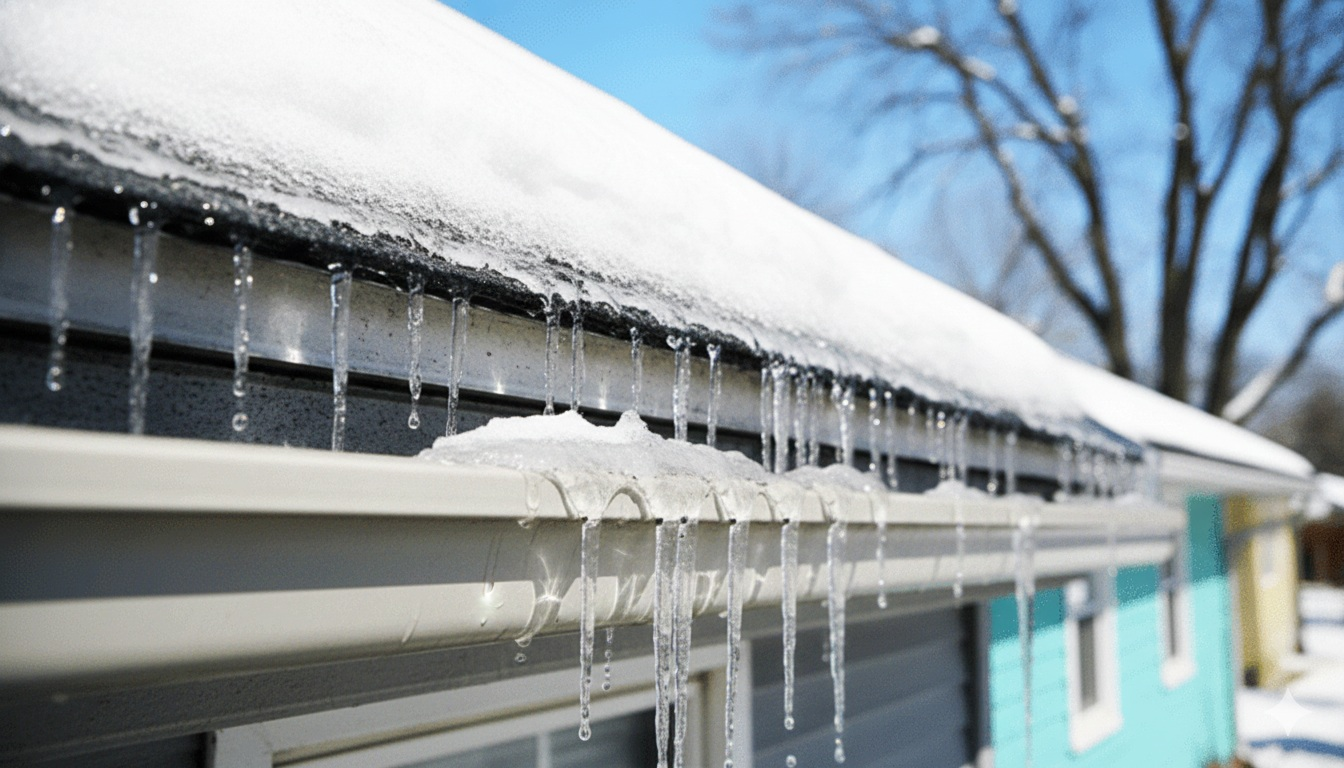
The first snow looks peaceful until a thick ridge of ice forms along the gutters and a brown mark appears above an upstairs window. It is easy to blame the gutter, but the real trouble often starts much higher up. Warmth escaping from the living space melts snow on the upper roof. The water runs toward a colder edge, freezes again, and can trap later meltwater behind it. That trapped water may find a route under roofing and into the house.
Effective ice dam prevention begins with heat and air movement, not with smashing ice off the eaves. The aim is to keep the roof surface more evenly cold during snowy weather and make the roof assembly resilient if freezing and thawing still occur. Here is how to recognize the risk, prioritize lasting fixes, and handle a winter leak without making the roof more vulnerable.
How an ice ridge turns into an indoor leak
An ice dam is a barrier of refrozen water near the roof edge. Snow above it may keep melting, but the resulting water cannot drain freely. Unlike ordinary rain, this water can sit against the shingle overlaps. Shingles are designed to shed water moving downhill, not to hold back a pool. When water backs up, it can reach the underlayment, roof deck, insulation or wall cavities. The first visible stain may appear some distance from the actual entry point.
The University of Minnesota Extension’s ice dam guidance explains that uneven roof temperatures, snow cover and freezing outdoor conditions interact to create this cycle. A heavy icicle alone is not a complete diagnosis. Look for a persistent ice ridge, water backing up behind it, repeated stains after thaw periods, and patterns that recur on the same roof sections.
Ice dam prevention starts with attic heat leaks
In a typical vented attic, warm indoor air can escape through ceiling openings around wiring, plumbing, attic hatches, recessed fixtures and poorly sealed partitions. That heat warms the roof deck from below. Even a generous layer of insulation can underperform when warm air bypasses it through gaps. The problem is often concentrated above bathrooms, hallways, kitchens or upper-floor rooms where penetrations interrupt the ceiling plane.
Imagine two neighboring houses after a long snowfall. One roof holds an even blanket of snow. The other shows bare stripes above warm rooms and thick ice at the edge. That difference does not prove one home has an insulation defect, since sun, wind and roof shape also matter. It does suggest a worthwhile energy audit. A blower-door test and infrared assessment, performed under suitable conditions, can help identify air leakage before anyone simply adds more insulation.
Ice dam prevention: seal air leaks before adding insulation
A practical long-term plan starts with finding and sealing leakage paths between conditioned rooms and the attic. Accessible gaps may need suitable sealants, weatherstripping or specialized assemblies, depending on the location. Work near chimneys, flues, recessed lighting and combustion appliances requires the proper clearances and fire-safe materials. This is not a place for improvised foam around a hot component. When access is awkward or hazards are present, hire an experienced weatherization professional.
Only after leakage is addressed should you assess insulation depth and coverage. Check for compressed batts, bare ceiling areas and thin coverage near the outer walls. In vented attics, baffles may be needed to preserve intended airflow at soffit vents while allowing insulation to reach the edge. A contractor should use local climate-zone requirements and the actual roof design rather than promising that one R-value solves every house.
Ventilation helps, but it cannot fix every heat leak
Attic ventilation has a role in managing moisture and roof temperatures when the assembly is designed for it. Yet adding a powered attic fan is not a shortcut around an air-leaky ceiling. It can change pressure relationships and sometimes create new problems. Unvented roof assemblies have different requirements from conventional vented attics, so do not copy a neighbor’s solution without understanding your construction.
The U.S. Department of Energy’s Building Science Education guidance on cold-climate eaves connects attic air sealing, appropriate insulation and ventilation with lower ice-dam risk. It also describes protective self-sealing membranes at vulnerable roof edges. Those membranes are an added defense against backed-up water, not a substitute for controlling heat loss inside the home.
What roof-edge protection can and cannot do
During reroofing in cold regions, ask about the code-required ice-barrier membrane at eaves and other vulnerable areas. The installer should explain where it starts, how far it extends inside the exterior wall line, and how it integrates with drip edges and underlayment. Local codes, manufacturer instructions and roof geometry govern the exact detail. A correctly installed barrier may reduce leakage if water backs up, but it will not stop a ridge of ice from forming above it.
That distinction matters when comparing estimates. A contractor may offer a membrane as a cure-all while ignoring the warm attic below. Another may propose insulation without inspecting existing roof-edge protection. A durable plan often addresses both the cause of melting and the path water could take if ice still forms. Ask for a written scope that separates air sealing, insulation, ventilation and roofing work.
What to do when ice is already building
Do not climb onto an icy roof, chip at shingles or swing a tool at frozen gutters. The fall risk is severe, and impact can damage roofing, gutters or flashing. A roof rake used from the ground may reduce some snow load near the eaves on suitable roofs, but it can still damage shingles and is not a lasting solution. Keep clear of falling ice, electrical service lines and overhead hazards.
If water is actively entering the house, protect belongings, photograph the affected area and contact a qualified professional. A specialist may be able to remove an urgent ice blockage using equipment suited to the roof. Avoid improvised heat sources, salt mixtures or direct high-pressure spray. Once the immediate leak is controlled, arrange a diagnosis of the building’s heat loss and water-entry route before repairing stained drywall.
The tricky cases: dormers, skylights and half-story homes
A simple gable roof can be easier to evaluate than one with multiple dormers, valleys, skylights and short knee walls. In a finished half-story, the ceiling may follow the roof slope, leaving little space for insulation and ventilation. Warm air can escape through side attics and transitions where sloped ceilings meet vertical walls. These junctions deserve careful attention because a blanket recommendation to add attic-floor insulation may miss the actual thermal boundary.
Take photographs of where ice forms on each roof plane. If one valley repeatedly dams while nearby edges stay clear, ask an energy professional and roofer to review the geometry together. Snow drifting, solar exposure and the way water concentrates at a valley can complicate the pattern. Treat recurring localized trouble as a design and building-envelope question, not merely a gutter-cleaning task.
Ice dam prevention checklist for cold-climate homes
Before winter, review last year’s roof photos and any ceiling stains. Confirm that gutters and downspouts drain as intended, though clean gutters alone cannot prevent ice dams. Check the attic hatch seal and ask whether known ceiling penetrations were air-sealed during earlier insulation work. Make sure bath fans and other exhaust ducts terminate outdoors, not into the attic. Plan a professional energy assessment if the same ice ridge returns every season.
Schedule roof work before snow and freezing weather make access dangerous. Keep contractor records and photograph completed work from safe positions. For the rest of the house, protecting outdoor faucets before the first freeze is another small preventive task that belongs on the same seasonal calendar. Ice dam prevention works best when it is planned calmly in autumn rather than improvised during a winter leak.
Final Thoughts
The dramatic ice hanging from the gutter is usually the last chapter of a story that began indoors. Focus first on attic air leaks and the right insulation strategy, then check ventilation and roof-edge protection for your particular assembly. If water is already coming in, use professionals for dangerous roof work. The goal is not a roof that never sees snow or ice. It is a house that loses less heat and gives winter meltwater fewer chances to reach the rooms below.
