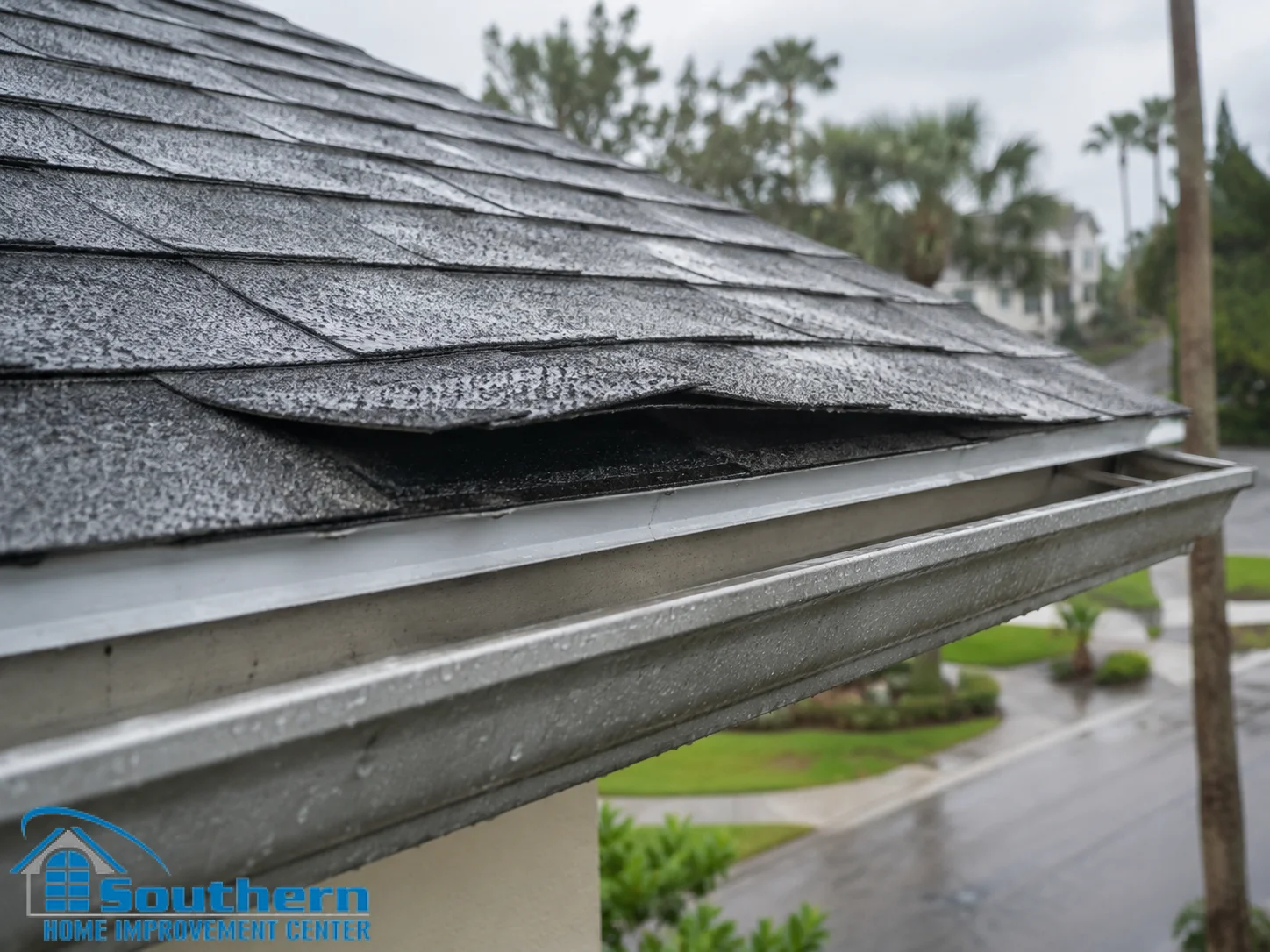
A storm passes, the yard is quiet, and one strip of shingles still stands a little proud of the roof. Wind lifted roof shingles can be as minor as a broken seal or as serious as a creased, torn tab that no longer protects the deck. The repair depends on the material’s condition, not just how high the edge sits.
From the ground, you can gather the clues that matter: where the lifted pieces are, whether any have torn, and whether water has entered. A roofer can then decide whether a sound tab can be resealed or a damaged shingle must be replaced.
The right decision is usually smaller and more specific than either ignoring the edge or replacing an entire roof on sight.
Read the Damage Before You Touch the Shingle
Wind lifted roof shingles may look like a few dark tabs sticking up at the edge. The important detail is what happened to the material while it moved. A tab that merely lost its bond is different from one bent hard enough to leave a pale crease.
After a gusty night, look from the sidewalk for missing pieces, raised corners, torn tabs, or a jagged line along the eaves. Check the yard for fragments. Avoid walking the roof to push a loose edge down; the material may be brittle, and the surface may be slippery.
Photograph the whole slope as well as the trouble spot. Wide pictures show whether damage follows the roof edge, a ridge, or a single area. Those patterns help a contractor judge whether the problem is local or part of a larger fastening or sealing failure.
The Difference Between an Unsealed Tab and a Torn Shingle
A sound asphalt shingle has a sealant strip that bonds to the course below under suitable conditions. Wind can break that bond, leaving a tab free to flutter. If the mat remains intact and the shingle is otherwise sound, a professional may consider resealing it.
A visible crease across a lifted tab is more serious. It suggests the material bent sharply while wind pulled against it. Torn corners, missing granules along a fold, or exposed underlayment call for replacement rather than an attempt to flatten the surface.
GAF’s wind-damage guide separates loose or curling shingles from tearing, punctures, and complete removal. That distinction is a helpful way to read a repair proposal instead of treating every lifted tab as the same job.
Why Roof Edges Often Show Trouble First
Wind does not push on a roof evenly. Corners, edges, and changes in shape can experience greater uplift than sheltered central areas. That is why one eave may look rough after a storm while the opposite slope appears untouched.
An edge with poor adhesion may be vulnerable long before a tab actually tears. The first gust can lift it, and later gusts can work it repeatedly. Nearby soffit or fascia damage may offer another clue that the edge took a hard hit.
Check the gutter line and rake edges from a safe spot on the ground. If a whole row looks raised, ask the roofer to inspect starter-strip details and fastening, not merely glue down each visible tab. The edge assembly needs to work as a system.
Weather, Age, and Installation All Change the Answer
Cold shingles can be less flexible when someone tries to lift them for a repair. Older shingles may crack even during careful handling. A roofer must judge whether neighboring courses can be separated and resealed without creating new damage.
Heat matters too. Some self-sealing strips need suitable warmth to bond as intended. A recently installed roof may not have completed that process before a storm. That does not prove a defect, but it is worth checking the product instructions and installation date.
The Insurance Institute for Business & Home Safety’s roof guide explains how temperature-activated sealant and roof-edge details affect wind performance. It is a reminder that the shingle and its installation must be considered together.
A Ground-Level Storm Check That Takes Ten Minutes
Walk around the home only after the weather clears and the area is safe. Start with the side that faced the strongest gusts, then look at the roof edges, vents, and visible valleys. Do not stand beneath hanging branches or damaged power lines.
Inside, look for fresh ceiling discoloration, wet window trim near roof intersections, or drips in the attic access area. Photograph stains and record when they appeared. Water can travel, so do not assume the damaged tab directly above a mark is the entry point.
Make one short note for the contractor: date of storm, approximate wind direction if known, number of visible lifted areas, and whether water entered. A precise description is more useful than asking for an emergency roof replacement before anyone has inspected it.
When Resealing Can Be a Reasonable Repair
If the shingle has no crease, tear, puncture, or lost fastening, a professional may be able to restore its bond with the manufacturer-approved method. The roofer should check the shingle’s condition and the surrounding courses first.
Resealing is not the same as smearing caulk across the top. The placement, quantity, and type of roofing adhesive matter, as does the shingle’s ability to lie flat. Excess material can make a messy patch without restoring the designed water path.
Ask what the repair will look like and how it will be checked after installation. A contractor who explains the shingle condition, fasteners, and sealant method offers more reassurance than one who promises to ‘stick everything down’ in a few minutes.
When Replacement Is the More Durable Choice
A torn or creased tab has already lost part of its protective strength. Even if someone can press it flat, the damaged mat may not shed water reliably. Replacing the affected shingle is usually a better conversation than concealing the fold.
Replacement involves working beneath the course above, removing old fasteners, and fitting a new shingle without harming the surrounding roof. This is delicate work on an aging roof, and the contractor may need to replace a slightly larger patch to leave the area sound.
Color matching is a real tradeoff. A new shingle can look darker than weathered material. That cosmetic difference is not evidence of a bad repair. Ask to see a sample in daylight and prioritize proper fastening and overlap over a perfect color match.
What to Ask About Underlayment and Decking
Lifted shingles can expose the layers underneath to rain. Underlayment offers secondary protection, but it is not a reason to leave damaged shingles open through another storm. The roofer should look for wet areas and damaged decking before closing the repair.
If water has entered, ask whether the insulation or attic framing needs to dry. Replacing only the visible roof covering while leaving soaked material can create a second problem indoors.
The separate article on roof decking rot explains how softness and long-term moisture can change the scope of work. A stain does not automatically mean rotten wood, so ask for photographs and a clear reason before authorizing decking replacement.
Insurance Evidence Without Turning Every Repair Into a Claim
Take photographs before temporary protection or repair when it is safe to do so. Note the storm date and keep any contractor inspection report. Those details can help if you later need to discuss the loss with your insurer.
Coverage depends on the policy, deductible, roof condition, and cause of damage. A few loose tabs may cost less to repair than the deductible, while a broad wind event may justify a claim. Do not rely on a contractor’s promise that insurance will pay.
If active leaking requires urgent work, protect the home first and keep records of reasonable emergency measures. Tell the insurer what was done and why. Do not delay safety work solely to preserve an untouched roof for photographs.
Compare Two Repair Proposals by Their Scope
Suppose one estimate covers three visibly lifted tabs and another includes a whole eave. Ask each roofer to mark the affected area on a photo and explain whether nearby shingles have lost their bond or have been creased.
Check whether the price includes removal, replacement shingles, fastening, disposal, and any needed underlayment work. Ask how the roofer will handle brittle surrounding courses. A detailed scope can reveal why one proposal is higher without assuming the larger job is automatically better.
Also ask about weather timing. A repair performed in unsuitable conditions may need special sealing steps or a later check. The contractor should be willing to explain those conditions rather than treating every day as identical.
Prevention Starts With the Whole Roof Edge
A roof that has repeatedly lost tabs at the same edge deserves more than another patch. Ask the roofer to examine starter courses, nailing, edge metal, and the condition of the roof deck. The goal is to understand why wind keeps finding the same weak point.
After storms, take a few ground-level photos from the same spots. Keep gutters clear and arrange professional trimming for branches that scrape shingles. These habits will not correct a bad installation, but they can reduce added wear and help you notice change.
If replacement becomes necessary, discuss wind ratings, installation details, and the manufacturer’s full system requirements. A label on a shingle package alone does not guarantee performance if the roof assembly is installed incorrectly.
The Warning Signs That Should Not Wait
Missing shingles with visible underlayment, a new indoor drip, or a large area of lifted material deserves prompt professional attention. Keep children and pets away from falling debris, and do not attempt a roof repair in high winds.
A single uncreased corner on a dry roof may allow a scheduled inspection rather than a panic call. Still, book it before repeated storms work the loose edge further. Waiting for a stain can turn a small repair into an interior cleanup.
If the roof has widespread lifted sections, ask for a thorough inspection before choosing spot repair or replacement. The answer should reflect the condition of the surrounding material and the actual damage, not just the age of the house.
Final Thoughts
A roof edge is built to overlap and shed water in one direction. Wind tests those connections from another direction, which is why a tab that looks almost normal may still need attention.
The useful next step is a documented inspection and a repair that restores the bond, fasteners, and water path together. That is how a small lifted corner stays a small problem. For other roof airflow clues, read our roof ridge vent problems guide.
