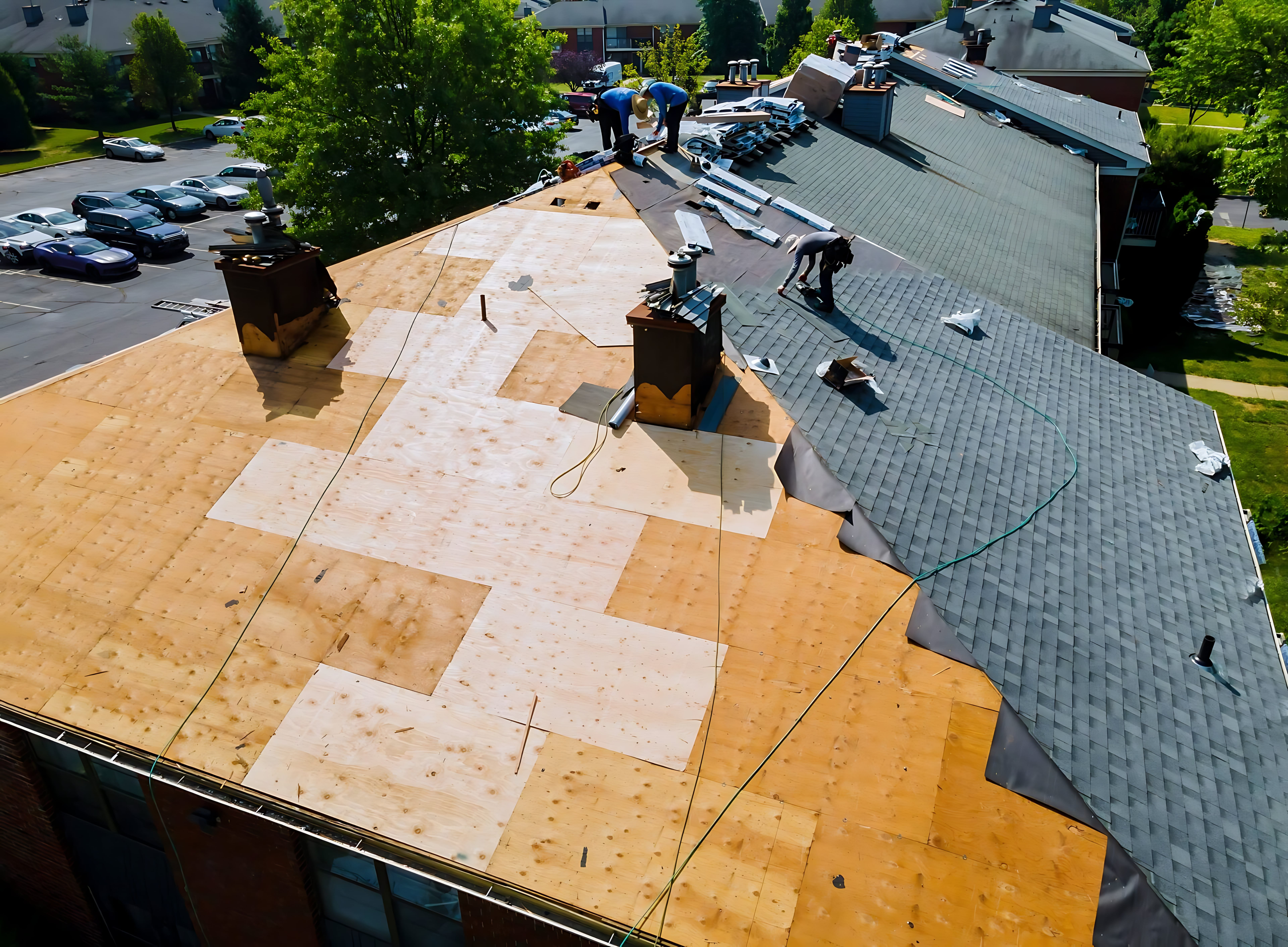
Roof shingle buckling is a raised ridge or ripple in asphalt roofing that often comes from movement in the wood deck or wrinkles in the underlayment beneath the shingles. It can show up on a new roof as well as an older one. The shape and location of the ridges help identify the likely cause, but the layers below must be checked before anyone chooses a repair.
A wavy roof can be unsettling, especially when the shingles were installed only months ago. The right response is not to assume every uneven line means storm damage or to replace the entire roof without inspecting what supports it.
Here is how to recognize different patterns, understand the role of moisture, and ask for a fix that addresses the hidden layer instead of just pressing the visible shingles flat.
The Difference Between Buckling, Curling, and a Raised Nail
Buckling usually looks like a ridge running across several shingles, sometimes following the seam between roof deck panels. Curling is different: the edge or corner of an individual shingle turns upward. A nail pop is more localized, with one small bump or lifted spot around a fastener. These problems can coexist, but they do not share one universal repair.
Take photos from the same ground-level location in morning and afternoon light. Low sun makes ridges easier to see. Note whether the lines repeat at regular intervals, cross multiple shingle courses, or appear as scattered wrinkles. A regular pattern suggests a different underlying problem from a few random bulges.
Roof shingle buckling should not be judged by appearance alone. Some mild irregularities are mainly visual, while other distortions may compromise how water moves across the roof. A roofer can check whether shingle tabs remain seated, fasteners are sound, and the roofing assembly still sheds water correctly.
How Moisture Causes Roof Shingle Buckling
Wood changes size as its moisture content changes. If roof sheathing is exposed to rain or heavy dew during construction, it can absorb water before the roof covering goes on. As panels swell or later dry, movement at their edges may push up the materials above. The result can look like straight, repeating lines across a roof slope.
Older roofs built with individual boards can behave differently from roofs covered with plywood or oriented strand board. Adjacent boards may expand at different rates, especially when attic moisture is not controlled. A replacement roof laid over an uneven surface can make those irregularities more visible rather than conceal them.
The Asphalt Roofing Manufacturers Association explains the connection between deck movement and buckled shingles. Its guidance also points to underlayment wrinkles as a separate cause. This distinction matters because adding sealant to the surface cannot correct a panel edge that continues to move beneath it.
Why Wrinkled Underlayment Makes a New Roof Look Uneven
Underlayment sits between the wood deck and the shingles. If that sheet is wrinkled, stretched poorly, or exposed to moisture before roofing is completed, the folds can show through the finished surface. Unlike ridges that follow panel joints, these ripples may wander across a roof in an irregular pattern.
Some homeowners first notice the issue when sunlight strikes a newly installed roof at a low angle. The unevenness may have been present from the beginning but harder to see under flat midday light. Photos taken immediately after installation can help establish when the distortion appeared.
A contractor may need to lift affected shingles to confirm the problem. Simply waiting for a wrinkle to disappear is not a sound plan when the surface is clearly distorted or leaks are present. Ask whether the underlayment was installed dry and flat and what repair the material manufacturer recommends.
Attic Airflow and Humidity Are Part of the Diagnosis
An attic that traps moisture can contribute to changes in roof decking. Warm, humid indoor air may enter through gaps around ceiling fixtures, access hatches, and plumbing openings. Ventilation helps manage the attic environment, but it works best alongside air sealing that reduces moisture entering from the rooms below.
Do not assume that cutting another vent into the roof will solve every wavy-shingle problem. Intake and exhaust must work together, and the roof design matters. A blocked soffit vent can limit airflow even when a ridge vent looks open. Poorly placed new openings can also disrupt the intended ventilation path.
Our guide to roof ridge vent problems explains why an exhaust opening is only one part of the system. If a roofer suspects moisture-driven roof shingle buckling, ask for an inspection of attic conditions and deck moisture, not just a visual look at the top surface.
Installation Details That Can Create Raised Lines
Roof sheathing should be properly supported and spaced according to the applicable installation instructions. Panels pressed tightly together may have little room for normal movement. A poorly fastened panel or an uneven framing surface can create a ridge that telegraphs through the roof covering. These are assembly issues rather than defects in the shingle color or finish.
Fasteners also deserve attention. Nails that are not driven correctly can hold individual shingles away from the roof. Debris trapped beneath a course can produce a lump that resembles a more serious ridge. The repair may be small when one isolated obstruction is found, but widespread patterns call for a broader inspection.
IKO’s residential roofing FAQ describes shingle buckling and the influence of deck movement. A useful takeaway is to ask for a cause-specific explanation. If the proposed work does not address the deck, underlayment, or fastening problem that created the ridge, the visible bump may return.
When a Local Repair Makes Sense
If a limited area is affected, the surrounding shingles are flexible, and the deck is sound, a roofer may be able to remove the affected courses and correct the material beneath. The work can involve replacing wrinkled underlayment, adjusting a fastening problem, or repairing a small damaged section of sheathing.
Repair becomes more complicated when shingles are brittle or sealed tightly enough that lifting them breaks nearby tabs. In that situation, the contractor should explain the risk before opening the roof. A larger patch may be necessary to restore proper overlaps and water shedding, even if the original ridge occupies only a narrow strip.
Ask for a photograph of the exposed layers before they are covered again. It should be possible to see what caused the distortion and how the replacement material lies. A written repair scope should name the underlayment, sheathing, and shingle work rather than offering only an undefined ‘flatten roof’ service.
When Replacement Is the More Practical Choice
Roof shingle buckling across many slopes can point to a widespread installation or moisture issue. If the deck is uneven throughout, fixing a few ridges may leave the underlying problem untouched. Similarly, older shingles with widespread wear may not survive repeated lifting, making piecemeal repair expensive and unreliable.
Replacement does not automatically mean the entire house needs a new roof. A professional can evaluate whether the problem is confined to one roof plane or shared across the system. Request photographs, a clear explanation of the affected area, and a comparison between repair cost and the remaining life of the roof.
Do not confuse visible buckling with wind-lifted shingles. Wind can crease or loosen tabs without creating long ridges over panel joints. The distinction affects both repair materials and any conversation about storm-related insurance coverage.
How to Handle a Warranty Conversation
Find the original roofing invoice, shingle brand, installation date, and any workmanship warranty. Product warranties and contractor workmanship warranties cover different things. A distortion caused by wet decking or poor installation may not be treated like a manufacturing defect in the shingles themselves.
Contact the installer with dated photos and a brief description of when the ridges first appeared. Ask for an inspection and written findings. If a warranty claim is possible, follow the stated process before authorizing another contractor to remove large areas, since unapproved work may complicate documentation.
A second opinion is useful when the proposed solution is expensive or vague. The second roofer should inspect the same areas and explain whether the ridge follows a deck joint, underlayment fold, or fastener line. Matching diagnoses provide a stronger basis for deciding what to do next.
A Safer Inspection Routine for Homeowners
Never walk on a roof just to check a cosmetic-looking ripple. Steep pitches, wet shingles, and hidden soft spots make a seemingly short climb dangerous. Ground-level photographs, attic observations from safe framing or a proper walkway, and a professional inspection are enough to begin a useful assessment.
Watch for water stains, damp insulation, musty odors, or fresh ceiling discoloration after storms. Those signs raise the urgency because water may already be moving through the roof assembly. A wavy line without moisture evidence still deserves documentation, but it does not call for a risky emergency climb.
Keep copies of photos after major weather changes. A consistent view can reveal whether the ridge is stable or becoming more pronounced. The aim is not to diagnose the roof from a phone picture; it is to provide a timeline that helps the roofer investigate the right layer.
Final Thoughts
Roof shingle buckling is a clue about the roofing system beneath the visible surface. The most useful question is not how to hide the wave but why the roof stopped lying flat.
Once the source is known, a repair can be judged by whether it restores the deck, underlayment, and shingle overlap as one working assembly. That is what separates a lasting solution from a cosmetic touch-up.
