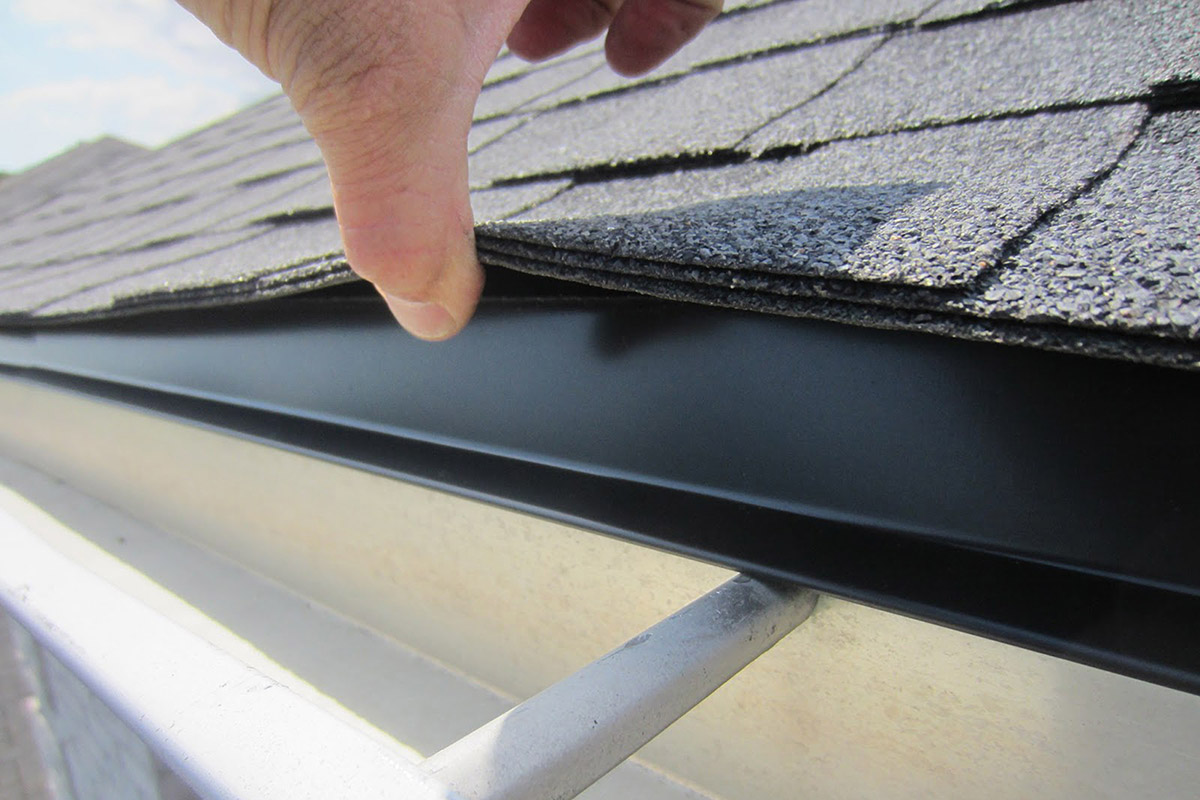
A roof shingle overhang is the short lip of asphalt shingle that extends beyond the metal drip edge at the eaves and rakes. On many shingle roofs, the right projection is measured in fractions of an inch, not whole inches. Too little can let runoff track back toward the fascia. Too much leaves a fragile edge exposed to wind and breakage.
That narrow strip is easy to miss from the driveway. Yet it can explain why water stains appear behind a gutter even when the gutter itself is clean. Before anyone trims or replaces shingles, it helps to understand where the measurement begins, how the drip edge is shaped, and which installation instructions apply to the roof.
Here is how to assess a roof edge from a safe location, recognize a poor overhang, and ask a roofing contractor for a repair that addresses water flow rather than hiding the symptom.
How much should asphalt shingles overhang?
For its conventional drip-edge detail, GAF specifies that shingles project approximately 3/8 to 3/4 inch beyond the drip edge. Its technical advisory also explains an important exception: where a projecting D-style drip edge already carries water outward, shingles may sit flush with that projecting metal edge. These are product-specific instructions, not permission to ignore local codes or another shingle maker’s requirements.
Other manufacturers use slightly different details. Owens Corning’s starter-course guidance for certain shingle products describes a 1/4- to 3/4-inch projection beyond the drip edge. The practical takeaway is to check the exact shingle and starter-strip installation documents before treating one internet number as universal.
Look at the full roof edge, not only the visible shingle tip. The shingle, starter strip, drip edge and gutter must work together. A contractor can show where the measurement starts on your particular profile and explain whether the drip-edge nose changes the target.
Measure from the metal edge, not the fascia board
The fascia is the vertical board behind many gutters. The drip edge is the bent metal flashing at the roof perimeter. On a typical eave, water should travel across the shingle surface, clear the metal lip, and fall into the gutter or away from the trim. Measuring from the fascia instead of the drip edge can make an acceptable roof appear short or long.
A roof shingle overhang is not the same as the distance from the roof decking to the gutter front. Gutter placement, metal profiles, and the thickness of the fascia all affect that visible gap. Ask for a close-up photo with a ruler placed perpendicular to the roof edge if you need a precise check.
Do not lean out of an upstairs window or climb a ladder merely to obtain a measurement. A contractor’s inspection photo is far safer and often reveals whether the starter course is correctly positioned under the first full shingle.
What happens when the shingle edge is too short?
When the shingles end behind the intended drip line, runoff can cling to the underside of the roof edge and reach wood trim. The first signs may be peeling paint on the fascia, streaks on the soffit, or damp marks near the gutter brackets. Wind-driven rain can make the problem more obvious.
That does not prove the overhang is the only culprit. A missing drip edge, a gutter tucked too high, a poorly sloped gutter, or blocked downspouts can produce similar stains. During a rainstorm, watch from the ground where water goes. Photograph the location and note whether the problem occurs in gentle rain or only during heavy downpours.
A useful repair starts with diagnosis. If the metal flashing is missing, extending shingles alone may not solve the issue. If the drip edge is sound but the starter strip was cut too short, the roofer may need to lift and replace affected material while preserving the surrounding shingle seals.
Why a long overhang is not extra protection
It is tempting to assume that more projection will carry water farther from the house. In reality, asphalt shingles need support near their edges. An unsupported strip can bend, curl or crack as it ages. The exposed lip also catches wind, which can stress the starter course and the first shingle row.
GAF warns against extending conventional shingles more than 3/4 inch past the drip edge in its referenced detail. A noticeably longer roof shingle overhang should prompt a closer look, especially when the ends appear uneven or the first row has begun to curl.
Trimming the excess in place is not always the best answer. The roofer must first identify the starter strip, sealant location and the remaining length of the full shingle. A careless cut could remove the intended seal or leave the edge uneven. A replacement starter course may be the cleaner solution.
The difference between eaves and rakes
The eave is the lower horizontal edge where rain usually drains into a gutter. The rake is the sloping edge at a gable. Both need a finished shingle edge, but they face different conditions. Eaves handle concentrated runoff; rakes are more exposed to wind lifting the side edges.
A contractor may use the same nominal projection at both locations while adjusting details for the manufacturer’s starter product and metal profile. The starter course at a rake helps secure shingle edges against wind, so it should not be treated as decorative trim.
On a house with dormers, multiple gables, and short roof returns, inspect each edge separately. A good-looking main eave does not guarantee the short rake above a porch was finished correctly. Those small sections can be easy to overlook during a fast installation.
How the starter strip changes the answer
The first visible row of shingles normally sits over a starter strip. That underlying strip provides a sealed base at the perimeter and helps resist wind uplift. If the full shingles project farther than the starter, the edge can behave differently from a properly aligned two-layer assembly.
Ask whether the installer used a manufactured starter product or a manufacturer-approved alternative. The answer matters because sealant position and permitted placement differ. A roof shingle overhang should be checked as an assembly, not as a single loose flap.
For example, an edge that looks straight from the street may still have a starter strip set too far back. Conversely, a small visual difference between starter and field shingles may be intentional under the product instructions. Photographs during installation are useful evidence if the roof is new.
Drip-edge profiles can change what you see
Common metal edge profiles do not all project the same distance. Some wrap tightly down the fascia; others extend the water-shedding nose farther outward. This explains why two neighboring houses can show different shingle-to-metal relationships without either one being wrong.
What matters is a clear path for water. The metal should direct runoff away from the wood, while the shingle edge should follow the manufacturer’s specified position. Sealant smeared along the gutter line is not a substitute for properly shaped flashing.
For a deeper look at the metal beneath the shingles, our guide to drip edge versus gutter apron explains why these parts are sometimes confused and where each is commonly used.
Gutters need the right relationship with the roof edge
A correctly installed gutter catches water leaving the roof without pushing upward on the shingles. When the gutter back edge is set too low, runoff can overshoot during storms. When it is forced too high, the gutter can interfere with the metal drip edge or trap debris at the roofline.
Before changing the roof shingle overhang, check whether the gutter has sagged, pulled away from the fascia, or developed a blocked outlet. Water spilling over the front during a downpour may be a capacity or clog issue rather than an edge-length issue.
Watch several locations, including corners and downspout runs. A problem limited to one corner suggests a different diagnosis from uniform water tracking along the entire eave. Good repair estimates should describe those observations, not simply offer to add more caulk.
Signs worth photographing before a contractor arrives
Look for a visibly ragged first row, shingles that droop past the metal, dark streaks on fascia, wet soffit spots, gutter water flowing behind the trough, and loose starter material. Take wide photos to show the roof section and close photos from a safe viewpoint to show the edge.
Also note the timing. Did the staining begin after a reroof, after a gutter replacement, or after a severe windstorm? A recent change often helps narrow the cause. A roof that has performed well for years and suddenly leaks may have a new gutter or flashing fault rather than an original overhang problem.
If water is entering the attic or interior ceiling, treat that as an active leak and arrange a professional assessment promptly. Do not wait for a cosmetic edge correction to address damp insulation or stained drywall.
Repair choices for an existing roof
For a minor isolated problem, a roofer may be able to replace the starter and first course in a short section. That can be more sensible than disturbing the entire roof. However, old brittle shingles may crack when lifted, especially in cold weather, and the repair area may need to extend farther than the visibly damaged edge.
If the roof lacks suitable drip edge, a larger perimeter correction may be required. The roofer should explain how the metal, underlayment and starter course will be layered. Simply sliding metal beneath finished shingles without checking fastening and water flow may create a new weak spot.
For widespread poor edge work on a recent installation, request a written corrective plan and compare it with the shingle manufacturer’s requirements. The lowest-cost patch is not necessarily the best value if it leaves a wind-prone edge or voids a product-specific installation condition.
Questions to ask on a roofing estimate
Ask the contractor to identify the shingle brand and model, the drip-edge profile, the starter-strip product, and the proposed finished projection. Request a photo showing a ruler at the actual metal edge. That turns a vague promise to “fix the lip” into a measurable scope of work.
Ask whether any shingles must be removed, how the existing underlayment will be protected, and what happens if brittle materials break during lifting. A detailed estimate should also cover debris removal, gutter protection, and a final water-shedding inspection.
Finally, ask how the repair follows local code and the applicable installation instructions. The GAF technical advisory on drip edges and shingles explains its edge limits, while Owens Corning’s Duration Storm installation instructions illustrate a manufacturer’s starter-course detail. Your installed product’s current instructions should control the job.
A sensible final check
A good roof shingle overhang is small, consistent and supported. It carries water past the flashing without leaving a long, flexible strip in the wind. If the edge looks wrong, begin with photographs and a water-flow check rather than a DIY trim.
The goal is not to make every roof edge look identical. It is to confirm that shingles, starter strips, metal flashing and gutters work together on your specific house. A clear measurement and a written repair scope are worth more than a quick guess from the driveway.
Should shingles touch the gutter?
They should direct water toward the gutter, but they should not be pressed against or bent by it. The correct relationship depends on the drip edge and gutter placement.
Can a roof overhang be too long?
Yes. Unsupported asphalt-shingle edges can curl or break. Follow the installed manufacturer’s maximum projection rather than extending the shingles farther for appearance.
Does a drip edge replace the shingle overhang?
No. Both parts are involved in water shedding. Some projecting metal profiles permit a flush shingle detail, but only where the applicable product instructions allow it.
