Table of Contents
1. Understanding the Physics of Heavy Sliding Doors
2. Weight Capacity and Load Ratings
3. Material Composition and Durability Standards
4. Selecting the Right Track System
5. Roller Technology and Bearing Quality
6. Essential Safety Features for Large Installations
7. Installation Requirements for Structural Integrity
8. Aesthetic Considerations Without Sacrificing Strength
9. Long Term Maintenance and Performance Optimization
10. Mastering the Art of Heavy Door Operation
Understanding the Physics of Heavy Sliding Doors
When dealing with oversized or solid wood doors, the standard retail hardware often fails because it is designed for aesthetics rather than structural performance. A heavy door, typically defined as anything exceeding two hundred pounds, exerts significant lateral and vertical force on the wall and the tracking system. Choosing the best sliding barn door hardware kit for heavy doors requires a deep understanding of how weight is distributed across the mounting points.
When a door is in motion, kinetic energy increases the effective weight of the slab. This means that a three hundred pound door can exert much higher momentary stress on the lag bolts and track if it is moved quickly or stopped abruptly. High quality systems account for this dynamic load, ensuring that the track does not bow and the rollers do not jump. Professional grade hardware from manufacturers like Dusty’s Rustic Rolling Doors is engineered specifically to handle these specific physical demands through thickened steel and precision machining.
Weight Capacity and Load Ratings
The most critical specification you will encounter is the weight capacity. Most residential kits are rated for one hundred fifty to two hundred pounds. However, for true heavy duty applications, such as solid oak, reclaimed timber, or steel framed doors, you should look for kits rated for at least four hundred to six hundred pounds.
It is a common mistake to choose a kit that exactly matches the weight of your door. Industry experts recommend a safety margin of at least twenty five percent. If your door weighs three hundred pounds, your hardware should be rated for at least three hundred seventy five pounds. This buffer prevents premature wear on the bearings and ensures the track remains perfectly straight over years of use. Dusty’s Rustic Rolling Doors provides specialized kits that offer these high capacity ratings, ensuring that even the most massive architectural features remain functional and safe.
Material Composition and Durability Standards
Not all steel is created equal. For heavy doors, the thickness of the track, often referred to as the gauge, is paramount. A standard track might be three sixteenths of an inch thick, but for heavy applications, a quarter inch thick steel track is the industry standard. This prevents the steel from flexing under the concentrated weight of the rollers.
The finish also plays a role in durability. Powder coating is preferred over simple spray painting because it creates a thermal bond with the metal, preventing rust and reducing friction. Stainless steel is another excellent option for heavy doors, especially in humid environments, as it offers superior tensile strength and corrosion resistance. When you invest in a kit from Dusty’s Rustic Rolling Doors, you are typically getting architectural grade steel that has been tested for long term structural resilience.
Selecting the Right Track System
The track is the backbone of the entire assembly. For heavy doors, the mounting style is just as important as the metal itself. You must decide between a traditional flat bar track or a box track system. Flat bar tracks are popular for their rustic aesthetic and ease of cleaning, but they require precise alignment to prevent the door from wobbling.
Box tracks, which enclose the rollers within a C shaped channel, offer more protection against dust and debris, which can be a major issue for heavy doors where friction is already high. Regardless of the style, the track must be a single continuous piece whenever possible. If you must join two tracks for a very wide opening, a heavy duty splice plate is mandatory to ensure the rollers do not catch or jump at the junction point.
Roller Technology and Bearing Quality
The rollers are the only moving parts that bear the full weight of the door, making them the most likely point of failure. For heavy doors, nylon wheels are generally insufficient because they can flatten over time if left in one position. Solid steel or heavy duty polymer wheels with reinforced cores are necessary.
The internal bearings are what determine how smooth the door feels. Look for shielded ball bearings that are lubricated for life. Cheaper kits use sleeve bearings or unshielded ball bearings that can grit up and become difficult to move. A high quality roller should allow a four hundred pound door to be moved with the force of just one or two fingers. This level of precision is a hallmark of the engineering found in Dusty’s Rustic Rolling Doors products.
Essential Safety Features for Large Installations
Safety cannot be an afterthought when hanging a massive slab of wood or metal over a living space. Anti jump disks are the first line of defense. These small components attach to the top of the door and close the gap between the door and the track, preventing the door from being lifted off the rail.
Floor guides are also non negotiable for heavy doors. Without a sturdy floor guide, a heavy door can swing outward, creating a pendulum effect that could rip the hardware out of the wall. For heavy applications, a heavy duty C guide or a wall mounted stay roller is preferred over a simple plastic floor fin. Additionally, heavy duty soft close mechanisms are highly recommended. These devices catch the door as it nears the end of the track and gently glide it to a stop, preventing the massive impact force that occurs when a heavy door hits a standard rubber bumper.
Installation Requirements for Structural Integrity
You cannot hang a heavy barn door directly into drywall using anchors. The sheer weight will pull the hardware out within days. A heavy door requires a solid wood header board that is securely fastened to the wall studs. This header board should be a solid piece of hardwood, such as oak or maple, usually at least one inch thick.
The lag bolts used to secure the track must penetrate at least two and a half inches into the structural framing of the house. When installing the best sliding barn door hardware kit for heavy doors, you must also ensure the track is perfectly level. Even a fraction of an inch of slope will cause a heavy door to drift open or closed on its own, which can be dangerous given the momentum a heavy door can gather.
Aesthetic Considerations Without Sacrificing Strength
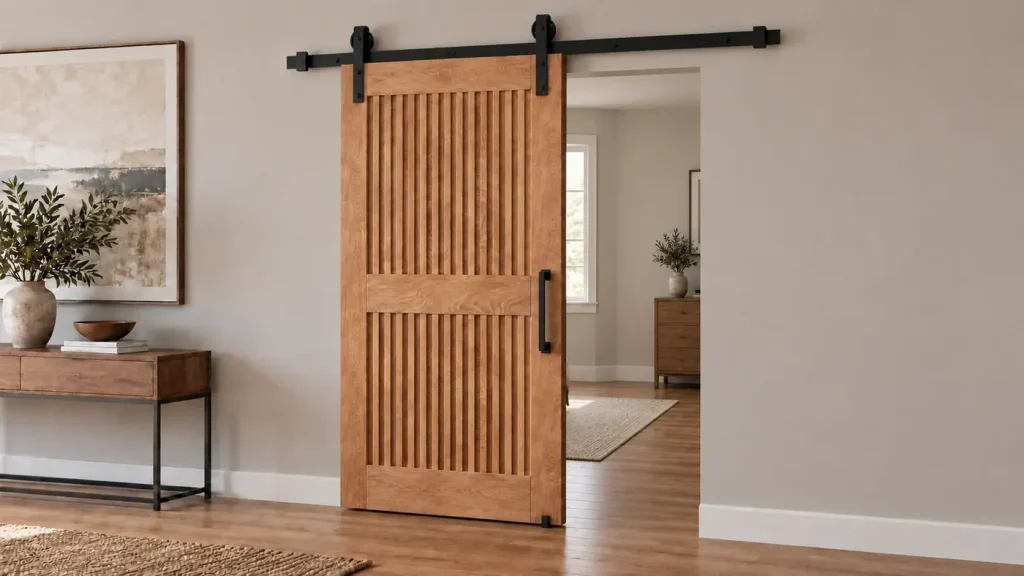
While strength is the priority, the visual impact of the hardware is why most people choose barn doors in the first place. Fortunately, heavy duty hardware is available in a variety of styles, from industrial raw steel to sleek modern matte black. The scale of the hardware should match the scale of the door. A massive twelve foot door will look unbalanced with small, dainty rollers.
Large spoke wheels or horseshoe hangers are popular choices for heavy doors because their larger surface area provides both a visual anchor and a mechanical advantage. The goal is to find a balance where the hardware looks as strong as it actually is, creating a cohesive architectural statement.
Long Term Maintenance and Performance Optimization
Even the best hardware requires occasional maintenance to handle heavy loads effectively. Every six months, you should inspect the lag bolts to ensure they remain tight. The vibration from moving a heavy door can occasionally loosen fasteners over time.
Cleaning the track is also vital. A small pebble or a buildup of pet hair can create a significant bump that stresses the rollers. Use a dry cloth to wipe the top of the rail and a small amount of silicone based lubricant on the bearings if they begin to squeak. Avoid using WD40 or other petroleum based lubricants, as these can attract dust and eventually create a sticky paste that hinders movement.
Mastering the Art of Heavy Door Operation
Operating a heavy sliding door is different than a standard swing door. Because of the mass involved, users should be taught to move the door steadily rather than throwing it. High end hardware kits are designed to manage this momentum, but user behavior still plays a role in the longevity of the system.
1. Always check that the floor guide is clear of obstructions before moving the door.
2. Listen for any grinding sounds which may indicate a bearing failure or a misaligned track.
3. Ensure that children understand the door is not a toy, as the weight can pose a pinching hazard.
4. Periodically check the anti jump disks to ensure they have not shifted during use.
By following these guidelines and selecting a professional grade kit from a reputable source like Dusty’s Rustic Rolling Doors, you can ensure that your heavy sliding door remains a beautiful, functional, and safe part of your home for decades to come. The investment in quality hardware is an investment in the safety of your household and the structural integrity of your property.