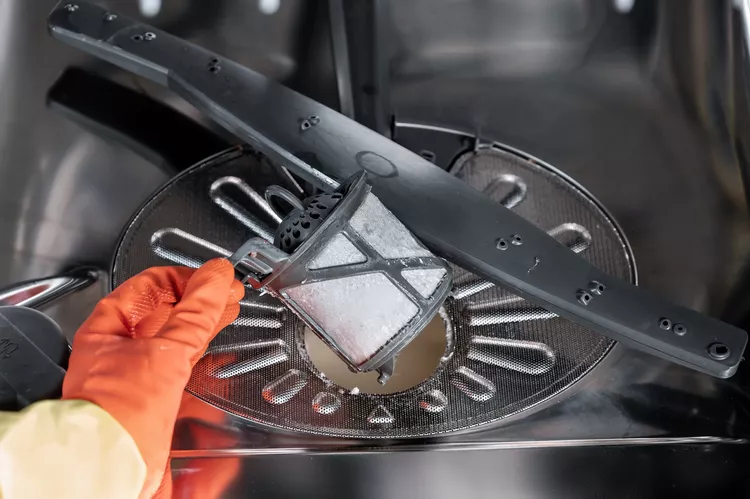
You pull out a clean glass and find tiny bits of food stuck to the rim. The plates look dull too, even though the dishwasher ran a full cycle. Before you buy a new detergent or call for a repair, check the small filter at the bottom of the tub. It may be holding yesterday’s dinner.
Dishwasher filter cleaning is a quick home task on many models. It can help when dishes feel gritty, food bits keep coming back, or the machine smells stale. The key is to find out what kind of filter you have, clean it with care, and lock it back in place. You should not have to guess how the parts fit.
Set aside a few calm minutes when the machine is cool and empty. A soft brush, a sink, and the owner’s guide are usually all you need. The goal is a clean filter and a dishwasher that is ready for the next load, not a major repair project.
Start With the Filter Your Machine Actually Has
Pull out the lower rack and look at the floor of the tub. Many models have a round mesh filter near the lower spray arm. Some use two pieces, with a small round part that sits inside a flat screen. Others have a different setup or a system that does not need the same kind of routine filter care.
That difference matters. A filter that twists out by hand should not need force. A part that stays fixed may not be meant to come out at all. Find the model number on the door edge or inside the frame, then check its use and care guide before you lift or turn anything.
If you can see a loose piece of glass, a sharp bone, or a metal clip, stop before you reach in. Protect your hands and follow the guide for safe removal. The filter area can hide small, sharp items that are hard to spot under cloudy water.
Both Whirlpool’s filter guide and Bosch’s filter care advice point readers back to their own model instructions. That is a better starting point than a video of a dishwasher that only looks like yours.
The Clean-Up That Takes Less Work Than You Think
Wait until the wash is over and the inside has cooled. Slide the lower rack out and set it where it will not tip. Take a quick photo of the filter before you move it. That photo gives you a clear view of how the parts sit when it is time to put them back.
On a common twist-lock design, you turn the upper piece as the manual shows and lift it free. If a flat lower screen comes out too, lift it by its edge and note how it fits under the tabs. Do not pry a part loose just because it feels stuck. Check the manual again.
Take the pieces to the sink. Rinse them with warm running water so the loose food washes away. Use a soft brush on the mesh if grease or bits cling to it. A little mild dish soap may help if your model’s care guide allows it. Avoid steel wool, a wire brush, and hard scraping. They can harm the fine screen.
Look at the folds and rim while you rinse. A piece of rice can sit in a crease even when the front looks clean. Keep the water gentle enough that you can see what is coming off. There is no need to blast the filter with a harsh spray.
Check for a torn screen, cracked plastic, or a broken latch before you put the parts back. A damaged filter may need a matching replacement. It should not be taped, bent into shape, or put back in service as a quick fix.
Put It Back Before You Load a Single Plate
Now use that photo you took. Set the flat screen in its proper spot, if your model has one. Place the round filter in the opening and turn it in the lock direction shown in the guide. On many twist-lock models, the filter drops into place and then turns until it is secure.
Give the part a light check. It should not lift out with no effort or spin freely when it is meant to lock. If it feels wrong, take it out and try again. Do not start a wash with the filter loose or missing. The filter helps keep food and hard bits away from the pump.
Slide the rack back and make sure the spray arm can turn without hitting a tall pan or utensil. You have now dealt with the filter, but a blocked spray arm can still leave food on dishes. These two checks work well together.
Run the next normal load as you usually would. Look at a glass, a bowl, and a plate when the cycle ends. If they come out clean, you have a good sign that the simple fix helped. If not, keep looking instead of washing the same dishes over and over.
How Often Is Often Enough?
There is no one date that fits every home. A family that runs the dishwasher twice a day and only scrapes plates may need more filter care than someone who runs two light loads a week. Hard water can also leave mineral marks that need attention.
Whirlpool gives a range of cleaning times based on load count and how much food is left on dishes. Bosch says to check and clean its filters every few months. Your model guide should win if it gives a different plan. Use the advice as a starting point, then adjust if you see bits of food or poor wash results.
Try linking the check to something you already do. When you wipe the kitchen sink and clear the counters at the end of the month, take a look inside the dishwasher. If the filter is clean, leave it alone. If it has a layer of food, give it a rinse.
A home routine should make life easier, not add a long list of chores. For a kitchen that stays ready to use, pair this small task with a few ideas from our small kitchen counter organization guide. A clear sink area gives you a place to wash the filter without moving half the room.
Gritty Dishes Can Have More Than One Cause
Suppose you clean the filter and still find crumbs on the top rack. Look at the way you load the machine. A large cutting board can block the spray arm. A bowl that faces the wrong way may catch water instead of letting it drain. A pan can hide a cup from the spray.
Try a smaller load and leave space for water to reach each dish. Check that the spray arms can turn before you close the door. If the guide allows it, inspect the spray holes for bits that block the flow. Use the maker’s steps for cleaning them, not a sharp tool that may damage the holes.
Cloudy glasses are another clue, but they do not always mean the filter is dirty. Hard water, detergent, and rinse aid can change how glass looks after a wash. A white film needs a different fix from crumbs that you can brush off with a finger.
A bad smell can also have more than one source. Food may sit in the filter, but grime can build up on the door seal or in the tub. Wipe the seal with a soft cloth and use a dishwasher cleaner only as the machine’s care guide directs. Do not mix cleaners or pour strong chemicals into the filter well.
When Cleaning Is Not the Right Fix
Standing water at the end of a cycle, a leak on the floor, or a loud new sound deserves more care. A dirty filter can be part of a drain issue, but the pump, hose, or drain path may also be at fault. If water remains after you clean the filter, follow the model’s trouble guide or contact a qualified repair service.
Do not put your hand into the pump area or remove a cover unless the maker gives clear steps and you can follow them safely. Hidden glass and sharp metal can be there. Never work on powered parts or take apart wiring as part of a simple filter clean.
If the filter will not lock, do not run the dishwasher and hope it settles. Find the right part for your exact model. A small replacement costs less trouble than damage caused by a filter that cannot do its job.
It is also worth noting what changed before the problem began. Did the wash start leaving grit after a broken glass? Did you switch detergent? Did the machine stop draining after a big dinner? That detail can help you choose the next step instead of trying random fixes.
Make the Next Load Easier
Before the next wash, scrape large food scraps into the trash. You do not need to scrub every plate spotless first. Keep tall items out of the spray arm’s path, use the right amount of detergent, and leave room for water to move.
Then forget about the filter until your next planned check, unless the dishes give you a reason to look sooner. Dishwasher filter cleaning should feel like a small bit of care that keeps the kitchen moving, not a task you dread.
The next time a glass comes out with a stray crumb, you will know where to start. Check the simple part you can reach, treat it gently, and let the results guide you. For more easy fixes that save space and time in a real kitchen, keep reading at Turquoise Moon Homes.
