You open the washer to move a fresh load into the dryer, but the drum smells damp and sour. The clothes are clean on paper, yet the room smells as if a wet towel sat in a gym bag. Before you pour in more soap or run the same cycle again, check the parts that stay wet after the machine stops.
A front-load washer can hold water in the rubber door seal, soap drawer, and other small spaces. Soap film and trapped lint can add to the smell. The fix starts with finding where the odor is coming from, then cleaning the right spot in a way that suits your model. You do not need a shelf full of scented products.
Start With a Two-Minute Smell Check
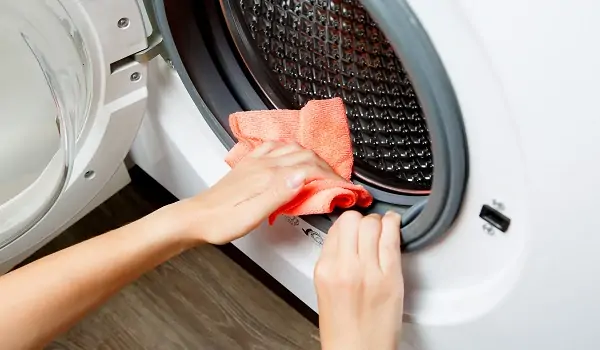
Open the door and look at the gray rubber ring around it. Gently pull back the loose fold with clean fingers. Is there lint, hair, a sock, or dark residue in the groove? A damp seal can smell worse than the steel drum. Wipe up any loose debris and note any tears before you do more.
Next, pull out the soap drawer as far as your manual allows. Look for thick liquid detergent, fabric softener film, or water pooled in the corners. Then smell the empty drum. This quick check tells you where to spend your time. If the room smells like sewer gas rather than stale laundry, stop and check for a drain or plumbing issue instead of masking it with fragrance.
The Door Seal Is Often the First Clue
The flexible gasket helps keep wash water inside. Its folds also catch bits of lint and drops of water. Wipe the glass and the gasket after a wash. Pay close attention to the low point of the seal, where small items can collect. Use a soft cloth and the cleaning method in your washer manual; rough tools can harm the rubber.
If you find black marks, don’t assume one quick wipe will remove every stain. Clean as the maker directs, dry the area, and see whether the smell fades. A split seal or a leak around the door is not a cleaning job. Arrange service if the rubber is torn or the door still leaks after the seal is clean. LG’s gasket guidance explains why trapped damp air matters.
Don’t Forget the Soap Drawer
A soap drawer looks harmless until you lift it out and see what sits behind it. Old detergent can form a sticky coat. Softener may cling to the corners. Some models let you remove the tray with a release tab; others use a different setup. Check the manual before pulling hard.
Rinse removable parts with warm water and use a soft brush where the maker permits. Wipe the drawer housing without forcing water into controls or wiring. Let the pieces dry before you put them back. If the drawer stays wet, leave it slightly open between loads when that is safe in your home. This step is small, but it stops the same residue from building up right away.
Run the Cycle Made to Clean the Machine
A hot wash with towels is not always the same as a washer-clean cycle. Many machines have a Tub Clean, Clean Washer, or similar setting that is made to rinse residue from the drum. Run it with no clothes inside and use only the cleaner and amount the maker calls for. More cleaner is not a stronger fix.
The steps vary by brand. Some call for a tablet in the drum. Others direct you to a dispenser. Read the product label and your manual before starting. LG’s September 2026 cleaning guide covers its own tub-clean steps and also points owners to the seal, dispenser, and drain filter. Follow your model’s instructions if they differ.
The Drain Filter Needs Care, Not Guesswork
Some front-load machines have a user-cleanable pump filter behind a small panel near the floor. It may trap coins, hair, and lint. A clogged filter can leave water behind or cause poor drainage. Other machines are built differently, so do not assume every washer has the same access door.
If your manual shows a filter you can clean, switch off and unplug the washer first. Have towels and a shallow tray ready, because water may drain out. Follow the maker’s steps for any small drain hose and the filter cap. Never force a stuck cap. Put each part back firmly and check for leaks after the next cycle. If the machine has a drain error or standing water and you are unsure, call a service technician.
Why Extra Detergent Can Make Things Worse
When clothes smell dull, it is tempting to pour in more detergent. Yet too much soap may leave more film in the drum, seal, and clothes. The right dose depends on the product, load, soil level, water, and washer. A high-efficiency machine should use detergent marked for that type of washer.
Look at the dosing lines instead of filling the cap by habit. A lightly worn load often needs less than a pile of muddy work clothes. If you use pods, follow the package and machine directions. Do not add a second pod just because the first load smelled off. Cleaning the machine and using the right dose usually makes more sense than hiding the smell with stronger scent.
The Load You Forgot Overnight
A washer can be spotless at noon and smell stale by morning if damp clothes stay inside all night. Move the load soon after the cycle ends. If you cannot get to it at once, check whether your machine has a safe fresh-hold or tumble feature and use it as directed.
If a forgotten load smells musty, do not put it straight in the dryer and hope the heat will solve the problem. Rewash it with the right amount of detergent, then dry it fully. A drying rack needs airflow around each item. Thick towels and hoodies take longer than thin shirts. If the clothes are still damp when folded, the smell can return in the closet.
Leave Space for Air After the Last Load
When the wash is done, wipe the damp spots you can reach and let the empty drum air out. Many makers advise leaving the door and soap drawer ajar once the machine is not in use. This helps the moisture dry instead of sitting in a closed space. Whirlpool’s washer-odor guide also points to trapped moisture and detergent film.
Keep safety in mind. An open washer can be a risk where small children or pets may climb inside. Follow the maker’s child-safety advice, supervise the area, and never leave a child near an open appliance. The goal is a dry machine, not an unsafe laundry room. If you must close the door, dry the seal and drum well first.
A Small Laundry Room Changes the Routine
In a tight laundry closet, the washer door may hit a wall or block the path. You may not be able to leave it wide open. Try drying the gasket with a clean cloth and opening the door for a short, supervised period while the room is in use. If the space has a vent or fan, make sure it works as intended.
Keep detergent bottles off the machine’s controls. Give wet rags a place to dry rather than tossing them into a basket. If your laundry room also holds cleaning tools, set up one small bin for soft cloths and a brush. The easier it is to wipe the seal, the more likely the task will get done after a busy evening.
When the Smell Points to Something Else
A musty odor is one thing. A burning smell, smoke, repeated electrical faults, or water on the floor is another. Stop using the washer and seek qualified help if you notice those signs. Do not open panels or work on live parts to chase a smell.
If the drain hose is installed wrong or a standpipe has a plumbing fault, a cleaning tablet will not fix it. Strong sewer odors, backups, or water that stays in the drum call for a closer look at the drain system. A plumber or appliance technician can help work out which system needs attention. It is better to find the cause than to run cycle after cycle.
Make a Routine That Fits Real Life
After each load, take the clothes out, look for trapped items, and wipe obvious water from the seal. Once a week, give the drawer a quick check. About once a month, or at the rate your manual calls for, clean the gasket, dispenser, and filter if the filter is user-serviceable. Run the washer-clean cycle as directed.
You do not need a long cleaning session every Sunday. Pair the quick wipe with the last load of the day. Keep one clean cloth close by. Put a note on your phone for the monthly cycle if you tend to forget. The routine should feel like putting away the detergent, not like a new household project.
Don’t Confuse a Fresh Smell With a Clean Machine
A strong fragrance can make the laundry room seem fresh while damp residue remains behind the seal. Judge the result by the clean gasket, clear drain, and clothes that smell normal once dry. If the smell returns right after cleaning, check the same spots again and look for a leak or a drainage issue.
This is a useful habit after moving into a new place too. Before the first load, inspect the washer, clean it as the manual allows, and make sure the hoses and drain are sound. Our move-in cleaning guide can help you plan the rest of the room without trying to do every chore in one day.
Final Thoughts
A fresh laundry room does not need to smell like perfume. It should smell like almost nothing at all. When the door seal is dry, the soap drawer is clean, and the wash cycle can drain well, the next load has a better start.
Begin with the simple check today. Find the damp spot, clean it the right way, and make the last two minutes of laundry count. That small habit is easier to keep than a big rescue clean every time the washer starts to smell.
