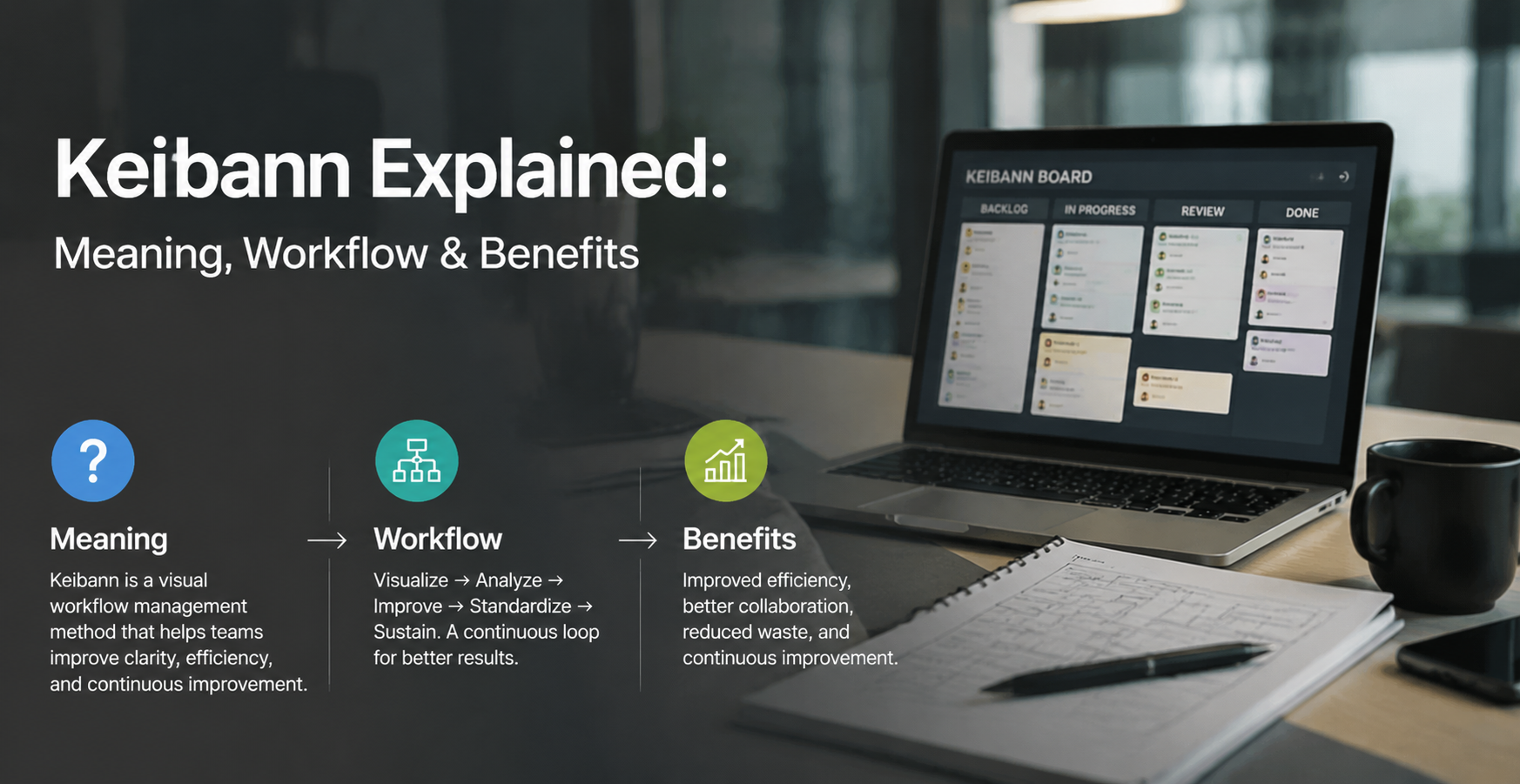
Keibann is a visual workflow approach that helps people organize tasks using boards, cards, and progress stages. It makes work easier to track by showing what needs to be done, what is in progress, and what is completed. People use it for personal planning, team projects, and daily task management.
In this guide, you will learn what Keibann means, how it works, who can use it, its benefits, examples, and how it compares with traditional Kanban methods.
What Is Keibann?
Keibann is a workflow approach that helps people organize tasks in a clear visual format. Instead of keeping tasks only in a notebook or a simple list, users place tasks on a board and move them through different stages.
A simple board may include:
| Stage | Meaning |
|---|---|
| To Do | Tasks that need attention |
| In Progress | Tasks currently being worked on |
| Review | Tasks waiting for checking or approval |
| Done | Finished tasks |
The main idea is simple: make work easier to see.
When people can see their tasks clearly, they can understand priorities, avoid confusion, and manage their time better.
Why Are People Talking About Keibann?
Many people struggle with too many tasks, unclear priorities, and unfinished work. Modern work often involves many small activities happening at the same time.
A visual workflow system helps solve this problem by showing:
- What work is waiting
- What work is active
- What work is completed
- Where delays are happening
People use these systems because they want a simple way to control their workload without making work complicated.
How Does Keibann Work?
The process is based on moving tasks through clear steps.
1. Create a Task Board
Start with a simple board. You can use paper, a whiteboard, or a digital tool.
Add sections such as:
- Ideas
- Planned tasks
- Active work
- Completed work
2. Add Tasks as Cards
Each task gets its own card.
A task card may include:
- Task name
- Deadline
- Person responsible
- Notes
- Priority level
For example:
Task: Write a blog article
Deadline: Friday
Status: In Progress
3. Move Tasks Through Stages
As work moves forward, the task card moves from one section to another.
Example:
Idea
↓
Planning
↓
Writing
↓
Editing
↓
Published
This gives a quick view of progress.
4. Improve the Workflow
Users can check their board regularly and ask:
- Which tasks are taking too long?
- What work needs attention first?
- Are too many tasks active at once?
This helps create a smoother working process.
Key Features of a Good Workflow Board
A useful board usually has these features:
Visual Task Tracking
A board makes work visible. People do not need to remember every detail because they can see their progress.
Clear Work Stages
Each task has a place. This reduces confusion and helps users understand what happens next.
Easy Updates
Moving a card is often faster than rewriting a complete task list.
Better Focus
A clear view of tasks helps people focus on important work instead of feeling overwhelmed.
Who Can Use Keibann?
A visual task system can help many types of users.
Students
Students can organize:
- Homework
- Research projects
- Exam preparation
- Study goals
Example:
| Stage | Task |
|---|---|
| To Do | Read chapter |
| Doing | Make notes |
| Done | Complete review |
Freelancers
Freelancers can manage:
- Client requests
- Projects
- Revisions
- Payments
Example workflow:
New Request
↓
Proposal Sent
↓
Working
↓
Client Review
↓
Completed
Businesses and Teams
Teams can use visual boards for:
- Marketing campaigns
- Product planning
- Software projects
- Customer support tasks
Everyone gets a clearer view of the work.
Keibann vs Kanban: What Is the Difference?
Many people compare Keibann with Kanban because both focus on visual work management.
| Feature | Keibann | Kanban |
|---|---|---|
| Main purpose | Task organization and visibility | Workflow improvement |
| Background | Newer online term | Established work method |
| Main idea | Visual task tracking | Managing work flow |
| Common use | Personal and team planning | Business and agile teams |
Kanban has a longer history and comes from lean manufacturing ideas used by Toyota. Modern teams use Kanban in software development, business operations, and project management.
Keibann is often discussed as a simpler, modern way to describe similar visual organization ideas.
Benefits of Using a Visual Workflow System
A clear workflow can help people in several ways.
Better Organization
You can see all important tasks in one place.
Improved Planning
You can decide what needs attention first.
Less Stress
A visual system reduces the need to remember every small detail.
Better Team Communication
Teams can quickly understand who is working on what.
Easier Progress Tracking
People can see completed work and remaining tasks.
Tools You Can Use for This Type of Workflow
Many digital tools support board-based task management.
Popular options include:
| Tool | Best For |
|---|---|
| Trello | Simple task boards |
| Notion | Personal and team planning |
| Jira | Software teams |
| ClickUp | Project management |
| Asana | Team collaboration |
The best tool depends on your needs. Some people prefer simple boards, while others need advanced project features.
How to Create Your Own Board
Follow these simple steps:
- Choose a place for your board.
- Create basic work stages.
- Add your tasks.
- Set priorities.
- Move tasks as progress happens.
- Review the board regularly.
Start small. A simple system is often easier to maintain than a complicated one.
Common Mistakes People Make
Avoid these problems:
Adding Too Many Tasks
A crowded board becomes difficult to manage.
Creating Too Many Categories
Keep stages simple so the workflow stays clear.
Not Updating Progress
A board only works when tasks show their real status.
Ignoring Old Tasks
Review unfinished work and decide whether it still matters.
Frequently Asked Questions
Is Keibann the same as Kanban?
No. They share similar ideas about visual task organization, but Kanban is a well-known method with a longer history. Keibann is a newer term often connected with similar workflow concepts.
Is Keibann useful for personal tasks?
Yes. People can use this type of system for daily planning, study goals, personal projects, and habits.
Do I need special software?
No. You can create a board with paper, a whiteboard, or digital tools.
Can teams use it?
Yes. Teams can use visual boards to track projects, assign tasks, and improve communication.
Final Thoughts
Keibann represents a simple idea: make your work visible so you can manage it better. By using boards, task cards, and clear stages, people can organize activities and understand their progress more easily.
Whether you are a student, freelancer, or team member, a visual workflow system can help you stay organized and focused. If you want more helpful guides about smart living, organization, and better planning, explore more resources from Turquoise Moon Homes.
