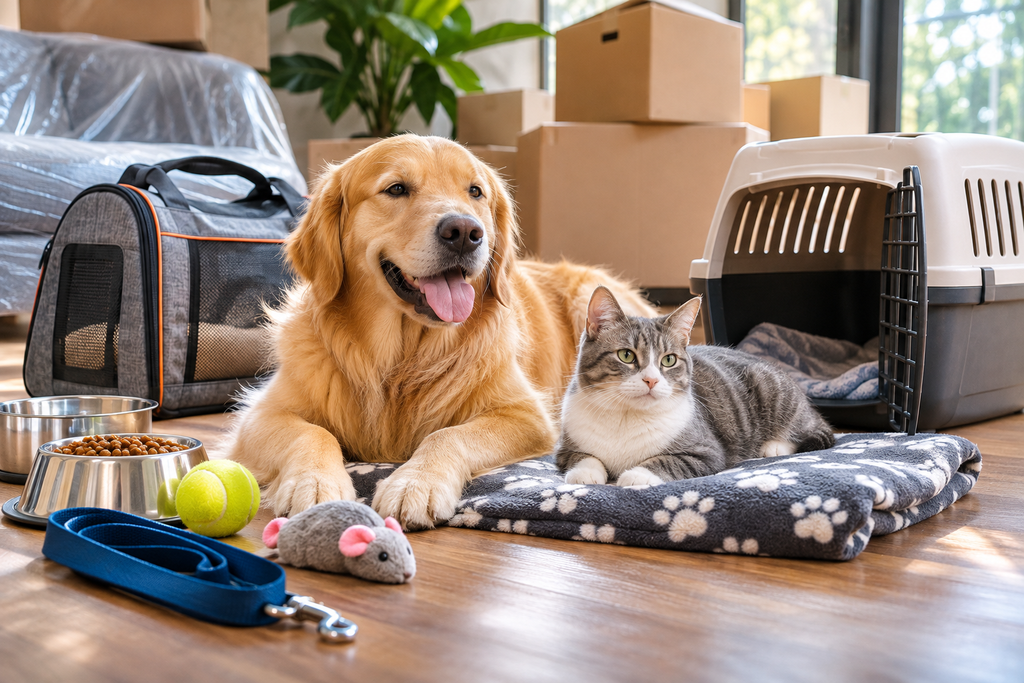
The front door has been open for an hour. Strangers carry boxes past the couch, the tape gun screeches, and your cat has vanished somewhere between the third and fourth trip to the truck. This is the moment most pet owners wish they had planned for.
The short answer to moving with a dog or cat to a new home is to keep your pet in a closed, quiet room during the loading, make sure their ID is current, and introduce the new house one room at a time. Everything below explains how to do each of those well.
Why Moving Day Is Harder on Pets Than You Think
Pets read the chaos of a move as danger, not progress. Doors stand open, routines disappear, and familiar smells get packed into boxes.
Cats usually respond by hiding. Dogs may pace, bark, or try to follow you out the door. In both cases the real risk is escape, because a frightened animal in unfamiliar surroundings can bolt faster than you can react.
The good news is that most of the risk is manageable with a few decisions made before the first box leaves the house. The rest of this guide is ordered the way a move actually unfolds: preparation, identification, moving day, travel, and settling in.
Planning Your Move With a Dog or Cat to a New Home
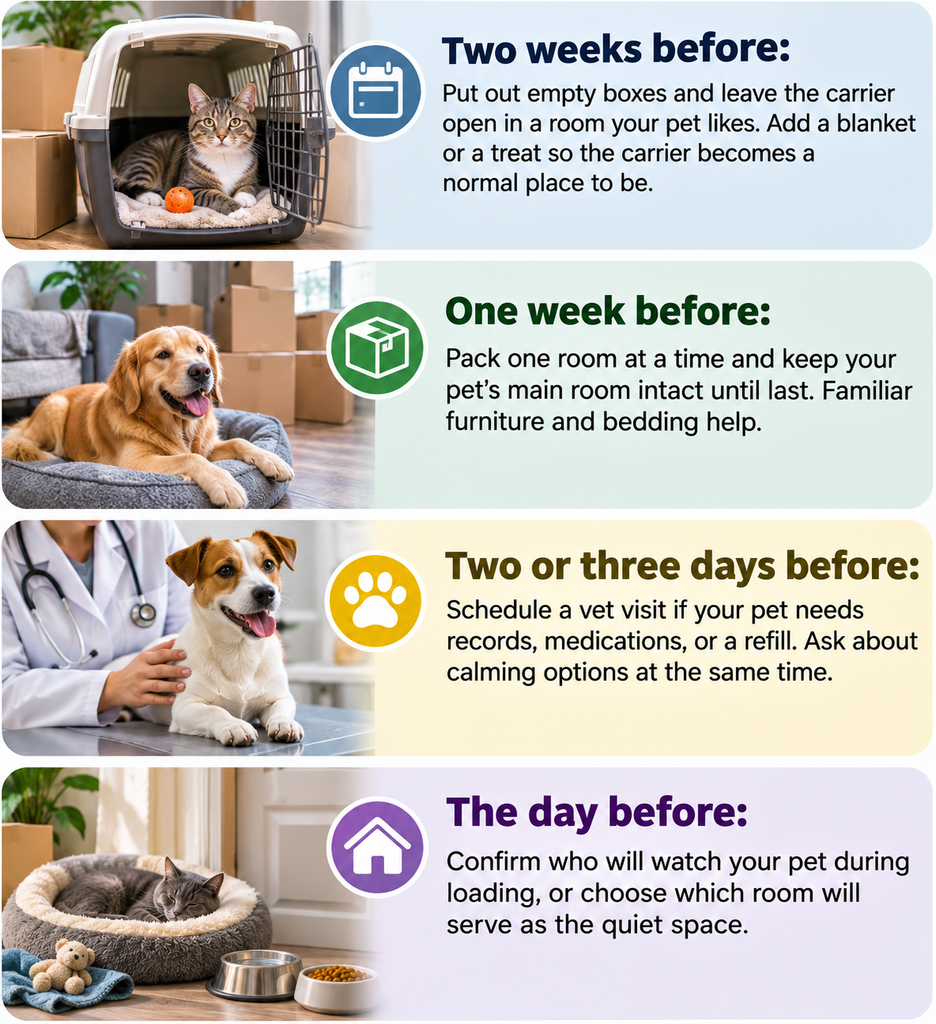
Start about two weeks out. The goal of this stage is to make the changes feel gradual rather than sudden.
The ASPCA suggests bringing in moving boxes a couple of weeks before packing begins so pets can get used to them. If your cat tends to crawl inside boxes, plan to keep her confined while you pack, so she does not get taped in by accident.
Here is a simple timeline you can adapt:
A note on calming products: supplements, sprays, and especially medications should come from your veterinarian’s advice, not from a store shelf or a friend’s recommendation. Every animal reacts differently, and some pets should not be sedated at all.
Update Your Pet’s ID Before Anything Else
Updating ID tags and microchip details is the single most useful thing you can do before moving day. It costs little and protects you if your pet slips out.
A microchip is a tiny implant about the size of a grain of rice that stores an identification number. According to the American Veterinary Medical Association, it is not a GPS device and cannot track a lost pet. It only works when someone scans the chip and finds a phone number in the registry that still connects to you.
That last part is where owners go wrong. A large study of more than 7,700 stray animals in shelters, published in 2009 and summarized by Ohio State University, found that microchipped dogs were returned to their owners about 52 percent of the time, compared with about 22 percent for all stray dogs. For cats the gap was much larger: roughly 38 percent for microchipped cats versus under 2 percent for all strays. The most common reason microchipped pets were not returned home was an incorrect or disconnected phone number in the registry.
A short checklist makes this easy:
- Log in to the microchip registry and enter your new address and a phone number you will answer during the move.
- Order a new collar tag with your current cell number. Put it on before moving day, not after.
- Take a clear, recent photo of your pet from the front and the side, in case you need to make a flyer.
- Keep a copy of the microchip number on your phone.
Set Up a Quiet Room for Moving Day
On the day itself, the safest place for your pet is a closed room away from the work, or a friend’s home. The ASPCA recommends exactly this: a quiet room with the door shut, so that a scared animal cannot dash out while movers load the truck.
If you pick a room, choose a small one with a solid door. A bathroom, a spare bedroom, or a walk-in closet works well. The San Francisco SPCA describes the ideal space as a small, quiet room and advises confining a cat before and after the move, which is especially helpful for shy or fearful animals.
Stock the room with everything your pet needs:
- Water, food, and a favorite bed or blanket
- A litter box for cats, placed away from the food and water
- A few toys or a chew
- A sign on the door that reads “Pet inside. Do not open.”
That sign matters more than it seems. Movers go through many doors in a day, and a sign is the fastest way to prevent a mistake. Tape it at eye level and mention it out loud when the crew arrives.
If your dog is social and calm, a trusted friend can also take them for the day. A dog who barks nonstop behind a door will usually be happier somewhere else entirely.
Talk to Your Movers Before They Start
Movers cannot protect your pet if they do not know where your pet is. A two-minute briefing at the start of the day solves most problems.
Tell the crew lead which room is off limits, ask that the door stay closed, and agree on how you will signal when the room needs to be opened. If you are hiring local movers in New Haven, ask about the loading order too, since many crews can leave the pet room for last, which keeps the quiet space intact until the end.
It also helps to keep the front door closed between trips where you can, or to have one person watch it. Propped-open doors are the most common way a pet gets out during a move.
When the last box is on the truck, you can empty the quiet room, clean it, and bring your pet out in their carrier or on a leash. That is the signal that travel day is beginning.
Carriers, Car Rides, and the Trip Itself
Dogs and cats should travel in a way that keeps them contained and calm. For cats, that means a secure carrier. For dogs, a crate or a harness designed for car use is a sensible choice.
Place the carrier on the floor or secure it on the back seat so it will not slide when you brake. Keep the car at a comfortable temperature, and never leave your pet in a parked car, even for a short stop. If the drive is long, plan breaks for water and a quick walk for dogs, with the leash clipped on before the door opens.
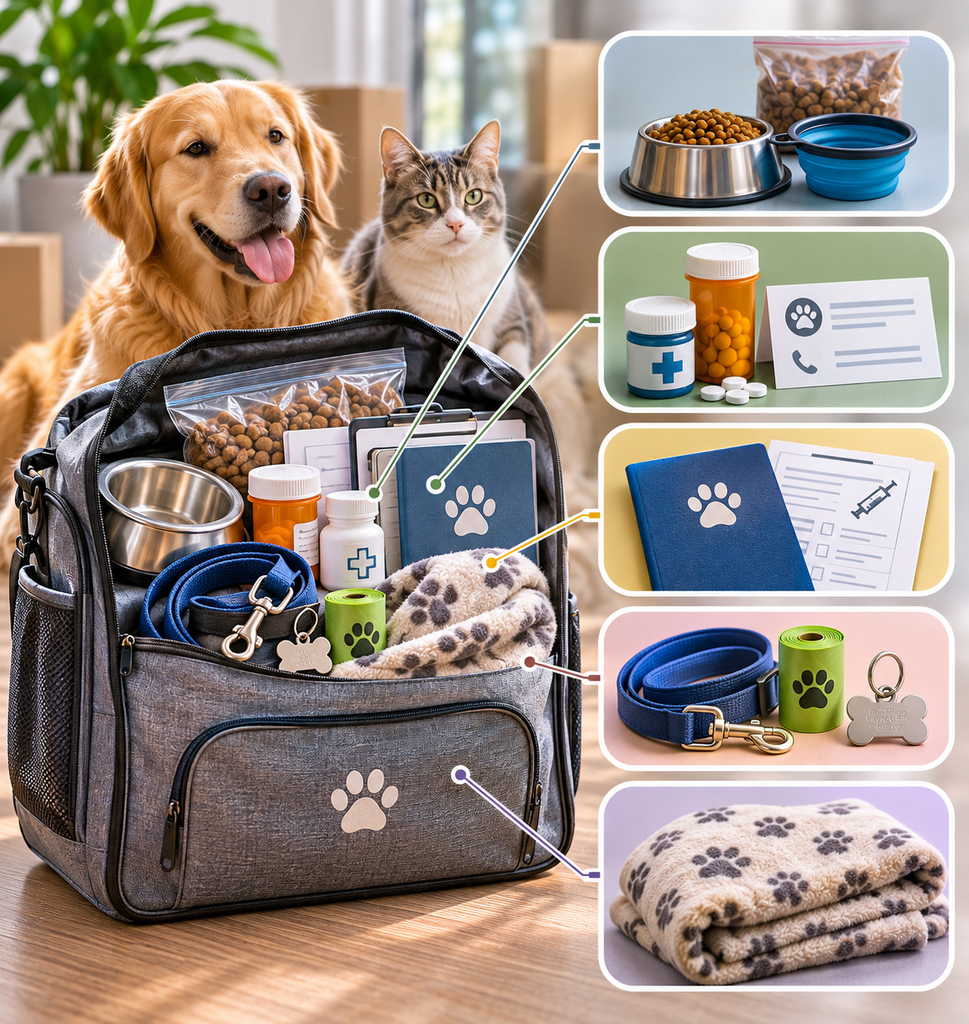
Many owners forget the vet paperwork. If your move involves a new veterinarian, ask your current clinic to send records ahead, or request a copy at your last visit.
Settling Into the New Home: The First Few Days
The best way to settle a pet is to shrink their world first, then grow it slowly. Resist the urge to let them roam the moment you arrive.
Before you open the carrier, check the new space for hazards. The ASPCA suggests looking for poisonous plants, loose window screens, and small gaps where a pet could get stuck. Then pick one room as a home base and set up the food, water, bed, litter box, and toys before anything else.
For cats, keep them in that room for at least a few days, then open one more room at a time. A cat who is allowed to explore at her own pace is far less likely to hide behind an appliance for a week.
Dogs usually adjust faster but still need structure. Walk them around the yard or block on a leash, keep feeding times the same, and allow them to explore the house room by room with treats and praise.
Watch for signs that stress is lasting longer than expected:
- A pet who refuses food for more than a day or so
- Constant hiding, vocalizing, or house soiling that does not improve
- Excessive licking, scratching, or pacing
None of these automatically means something is wrong, but they are good reasons to call your veterinarian. Health problems and stress can look alike, and only a vet can tell them apart.
Frequently Asked Questions
How do I keep my cat calm during a move?
Keep your cat in a closed, quiet room with her litter box, food, and bedding while the movers work. Get her used to the carrier in the weeks before, and set up a similar room in the new home. Keep her there for a few days before she explores.
Should I board my dog or leave him with a friend on moving day?
Either is a good choice if your dog gets anxious around strangers or constant activity. A familiar friend’s home is calmer than a loud house full of movers. If you keep him home, use a closed room with water, a chew, and a sign on the door.
When should I update my pet’s microchip after moving?
Update it as soon as you have your new address, ideally before moving day, and double-check it afterward. The registry needs a current phone number as much as an address. A microchip with outdated contact details cannot reunite you with a lost pet.
Can I give my pet a sedative for the move?
Talk to your veterinarian before giving any sedative or calming product. Some pets react badly to medication, and the right choice depends on age, health, and temperament. Never use a human medication or a leftover prescription without your vet’s direct approval.
How long does it take a pet to settle into a new home?
It varies. Many pets relax within a few days, while others need a few weeks. Keep feeding times and routines steady, give them a home base room, and let them explore gradually. If stress behaviors last or get worse, check in with your veterinarian.
A Gentler Way to Think About the Move
You cannot remove all the stress from a move, but you can limit the part your pet feels. A closed door, a current phone number on a microchip, and a quiet room at both ends of the trip do more than any gadget or product.
Start planning early, brief everyone who will be in your home, and give your pet time to catch up once you arrive. A few small decisions made now are what make the first night in the new place peaceful instead of frantic.

Nike Carkarel
Nike Carkarel writes about home decor, interior design, and practical ways to make living spaces more beautiful and comfortable. At Turquoise Moon Homes, Nike shares ideas for decorating rooms, choosing furniture, improving home layouts, and making everyday spaces work better. With an interest in thoughtful design and simple home improvements, Nike helps readers find inspiration for homes that feel welcoming, stylish, and easy to live in.