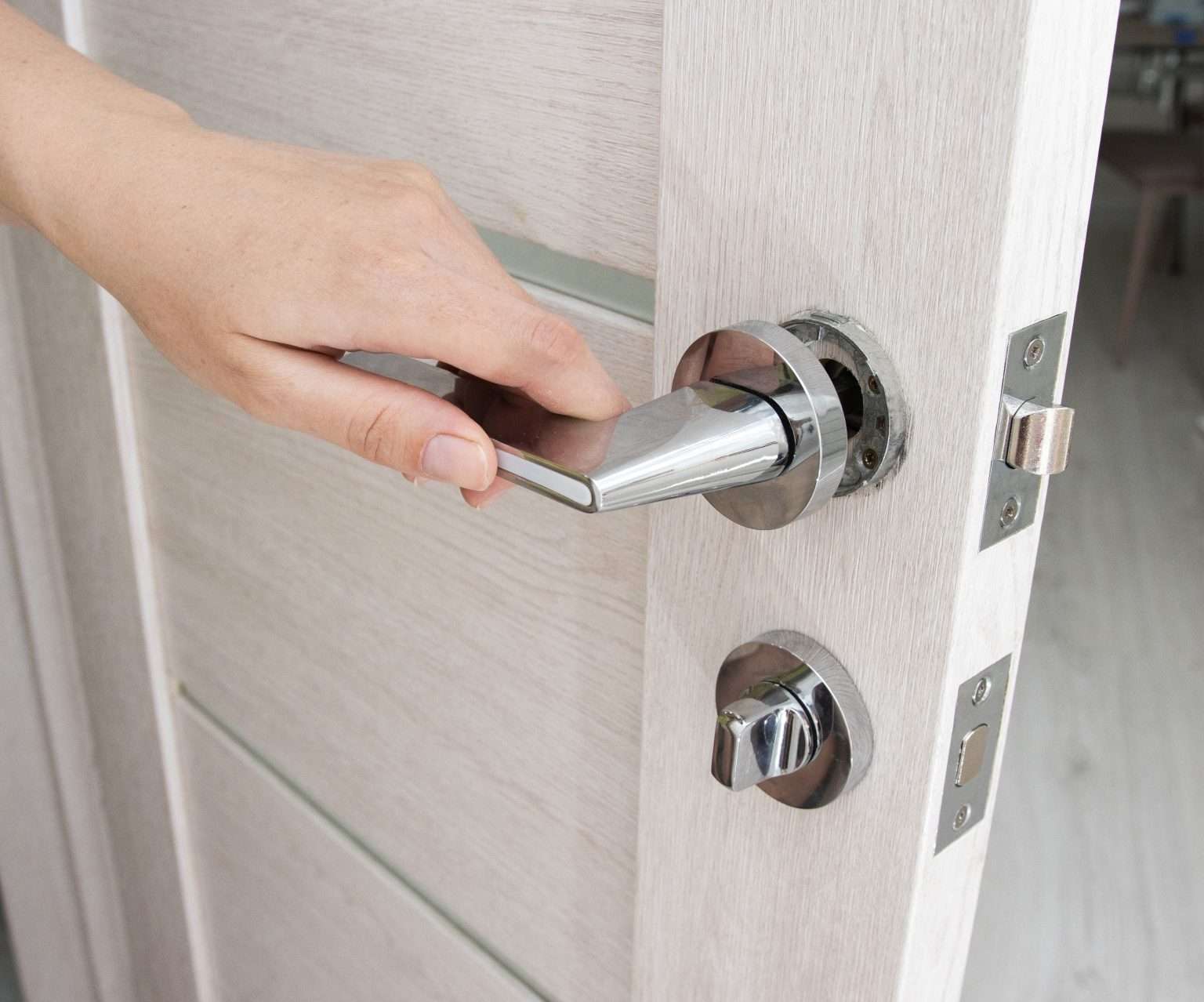
The bedroom door closed smoothly all winter. Now it catches at the top corner, needs a shoulder to latch, and leaves a faint mark on the painted frame. It is tempting to grab sandpaper and shave the edge until it swings again. That can work in the right situation, but it can also turn a seasonal swelling problem into a door that rattles when the weather changes.
A sticking interior door usually points to one of a few causes: a loose or misaligned hinge, a shifted frame, moisture-related swelling, or a latch that no longer lines up. Find the exact contact point first. The smallest correct adjustment often looks better and lasts longer than removing wood without knowing why the gap changed.
Find where the sticking interior door rubs
Open the door and look for shiny rub marks, scraped paint and compressed weatherstripping, if present. Close it slowly while watching the gap along the top, latch side and hinge side. Does it catch before the latch reaches the strike plate, or does the door move freely until the latch hits metal? Those are different problems. If the latch is the only obstacle, sanding the door edge will not solve the real issue.
Try sliding a thin piece of paper around the perimeter where the door nearly closes. Resistance can help identify a tight area, though this is a rough check rather than a precise measurement. Mark the contact point lightly with removable tape. Then open the door and inspect both sides of the same location. A single top corner suggests a different repair from an entire vertical edge that feels swollen.
A loose hinge can change the whole swing
Interior doors are heavy enough that a loose upper hinge can let the latch side sag. Look for screws that turn without tightening, hinge leaves pulling away from the jamb, or a visible gap between metal and wood. Support the door before working on hardware so the weight does not twist the hinge. Tightening sound screws may be enough to restore alignment.
If a screw hole is stripped, the correct repair depends on the jamb construction and how much solid wood remains. A longer screw into suitable framing can sometimes improve support, but it must not strike concealed wiring or damage the frame. Filling a damaged hole and redrilling may be more appropriate for a lightweight door. Do not keep driving progressively larger screws into split wood. That can make a small hinge problem harder to repair.
When the latch is the problem
A door that swings freely but will not click shut may have a misaligned strike plate, a loose latch, or paint buildup around the opening. Close the door slowly and watch where the latch touches. If it strikes the plate too high or too low, first check whether hinge movement explains the shift. Filing or moving the strike plate before checking the hinge can hide the cause rather than correct it.
A tiny adjustment may be all that is needed, but avoid enlarging the strike opening blindly. You want the latch to engage securely without needing to slam the door. On a bedroom or bathroom door, that is mostly a comfort and privacy issue. On a fire-rated door or an opening with special hardware, do not alter the assembly without following its listing and professional guidance.
Humidity and a sticking interior door
Wood absorbs and releases moisture as indoor conditions change. In a damp summer or after a plumbing leak, a wood door can swell enough to rub at a narrow gap. This Old House’s door-repair guidance describes checking humidity and allowing swollen wood to dry before making permanent alterations. That advice matters when the same door behaves differently across seasons.
Ask when the trouble began. Did the sticking start after a long spell of muggy weather, a bathroom exhaust fan failure, a new humidifier, or a roof leak? If several wood doors feel tight at once, indoor moisture may be the shared factor. If only one door suddenly catches after a heavy object hit the frame, hardware or structural movement may be more likely. These clues help narrow the diagnosis before you remove material.
Measure moisture instead of guessing
A basic indoor humidity monitor can help you understand conditions in the affected room. The U.S. Environmental Protection Agency’s moisture-control guidance emphasizes managing indoor moisture sources and using ventilation where needed. High humidity may come from showers, cooking, leaks or insufficient air exchange. Reducing the source is more useful than repeatedly shaving a door that swells every wet season.
If you notice a musty smell, wet trim, staining or soft drywall around the opening, pause the door adjustment and investigate. A door that sticks after water damage may be a symptom of a larger problem. Do not seal over damp wood or repaint stained surfaces before the moisture source is corrected and the area has dried.
Sanding a sticking interior door: what it fixes
Sanding or planing can be appropriate when the door itself is consistently oversized, the hinges and frame are sound, and moisture conditions are stable. Work slowly and remove the smallest amount needed from the confirmed contact area. Protect nearby finishes, wear suitable eye and dust protection, and follow safe tool instructions. On painted older doors, assess possible lead paint before disturbing the coating; homes built before 1978 deserve particular care.
Removing too much wood can leave a wide gap that lets light, sound and drafts through. It can also expose raw edges that absorb moisture if they are not properly finished. If the door is hollow-core, its edge has limited solid material and may not tolerate much trimming. Check the manufacturer’s construction and allowable modification before cutting. A professional carpenter can evaluate a badly warped slab or out-of-square frame.
A simple example: the upstairs bathroom door
Imagine a bathroom door that rubs near the upper latch corner only after long hot showers. The fan is noisy, the room stays steamy, and the door works better after a dry weekend away. Start by checking hinge tightness and the bathroom’s ventilation, not by sanding the corner. If moisture is the cause, the swelling may ease once conditions improve. Permanent trimming should wait until the door has stabilized.
Now imagine a hallway door that catches every day, regardless of weather, and has a loose top hinge with a visible gap. Here, a careful hardware repair is the logical first move. Both doors feel the same when you push them, but the right fix is different. That is why a five-minute diagnosis can save an hour of unnecessary sanding and repainting.
When the frame has moved
A house can settle, and seasonal changes can alter small gaps. A visibly skewed frame, fresh cracks at the corners, or several nearby doors becoming difficult to operate may call for closer inspection. Most sticky doors are not signs of major structural failure, but a sudden change accompanied by new cracks or floor movement deserves professional evaluation. Do not force the door shut so hard that the latch or jamb breaks.
If the jamb is badly out of square, moving the hinge may create new contact points elsewhere. A carpenter can determine whether adjusting the hinges, rehanging the slab or correcting the frame is appropriate. Ask what changed and why the proposed repair will hold. An explanation that begins and ends with ‘we will shave the door’ is not enough if the frame itself is moving.
Finish the repair so it stays repaired
After a small approved trim, smooth the edge and seal any exposed wood according to the door manufacturer’s instructions. Rehang and test the door several times, including the latch and any privacy lock. Check that the gap is even and that the door does not swing open or closed unexpectedly because of alignment. Clean up sanding dust safely and keep the area ventilated during finishing.
If excess household moisture contributed, address it as part of the repair. A bathroom fan that exhausts into an attic instead of outdoors can create hidden problems, so confirm that the exhaust route actually reaches outside. For another maintenance issue where moisture and cleaning both matter, see our front-load washer odor guide.
Final Thoughts
A sticking interior door is annoying precisely because the fix looks so simple. But the visible rub is not always the cause. Check the gap, hinge and latch, then consider humidity and frame movement before reaching for sandpaper. When you correct the actual problem and remove as little material as possible, the door is more likely to close quietly through the next change of season.
