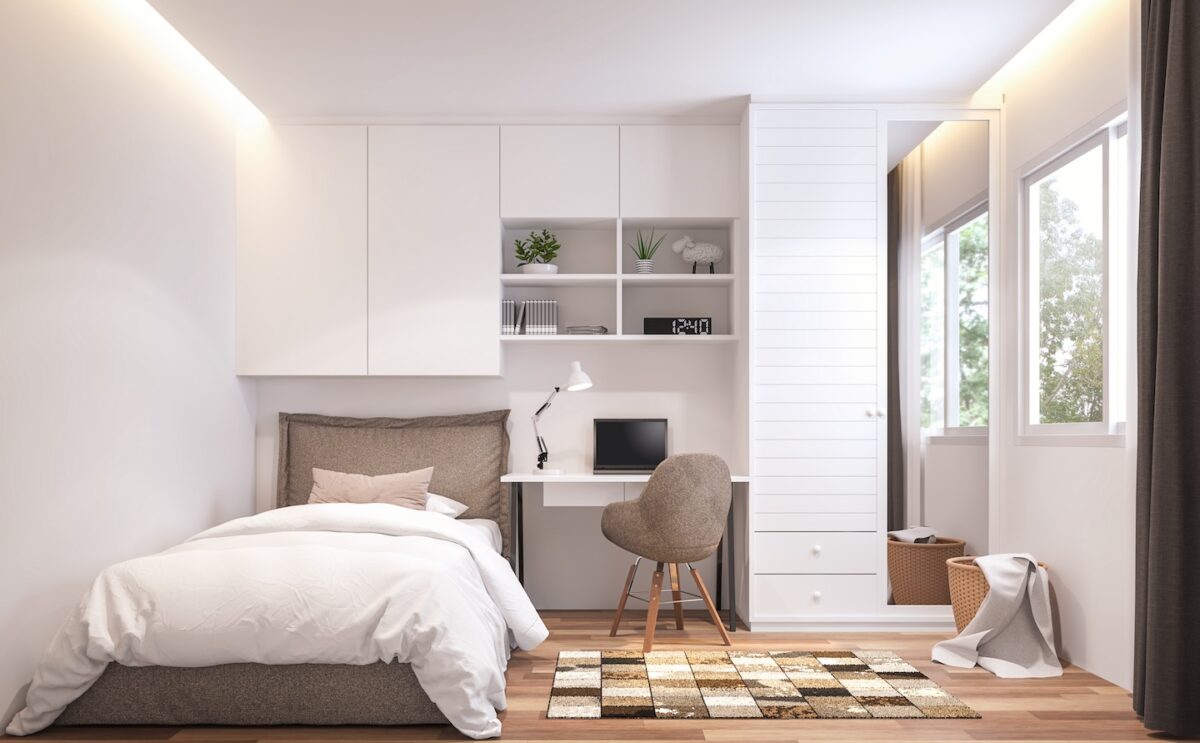
A laptop on the bed works for ten minutes. By the second video call, your shoulders ache, papers are sliding toward the pillows, and the room feels less like a bedroom than an unfinished office. The answer is not always a bigger desk. In a tight room, the better move is to give work a clear, modest footprint while keeping the bed, closet and walking route usable.
A practical small bedroom desk layout begins with the way you actually work. Someone who writes for an hour each evening needs a different setup from someone using a monitor, keyboard and files all day. Start with the minimum equipment, then choose a wall, corner or concealed workstation that supports comfortable posture without making the bedroom feel crowded.
Measure paths for a small bedroom desk layout
Use a tape measure to record the room’s usable wall lengths, door swings, closet access and the distance between the bed and surrounding furniture. Include baseboards, radiators, floor vents and outlets. Then mark the area a chair occupies when you pull it back, not just the desk footprint. A table that fits on paper can still block a closet if the chair needs to live in the same narrow passage.
Tape a rectangle on the floor where you imagine the desk. Sit in an ordinary chair and mimic standing up, turning toward the door and opening drawers. Walk from the bed to the bathroom at night. If you have to twist around a sharp desk corner every time, the layout is not working. In a small bedroom, comfort comes from preserving a predictable route more than from squeezing in extra storage.
Choose the desk depth for the work
A shallow writing desk can suit a laptop, notebook and lamp. A separate monitor usually needs more depth so you can sit at a comfortable viewing distance. The U.S. Occupational Safety and Health Administration’s monitor guidance recommends positioning the screen directly in front of the user and generally at least 20 inches away, with the top of the display at or below eye level. This makes an extremely shallow shelf a poor choice for long hours at a full-size monitor.
If your desk cannot provide that distance, consider a monitor arm compatible with the furniture and wall conditions, a compact flat-panel screen, or a different corner. Avoid putting a screen so far to one side that your neck stays twisted. For a laptop used daily, a separate keyboard and mouse may help you position the screen and hands more comfortably. A tiny desk is not a bargain if it forces an uncomfortable posture.
The quiet corner layout
A corner beside a window can make good use of space that is awkward for larger furniture. Position the screen so direct window light does not create glare. A small desk with a slim drawer may be enough for everyday supplies, while a wall shelf above can hold items you reach for only occasionally. Keep the wall space directly behind the chair clear so you can sit and stand without scraping furniture.
A corner layout works best when the bed does not crowd the chair. If the bed’s side is within arm’s reach, consider a rounded desk corner and a chair that tucks fully under the surface. Do not choose a swivel chair with a wide base before checking its turning circle. In a narrow bedroom, the chair can consume more usable floor than the desk itself.
The straight-wall desk that disappears visually
A simple desk against one wall can feel calmer than a bulky corner unit, especially if the furniture finish blends with the wall color. Use a closed drawer for chargers and papers so the surface can return to a restful state after work. A wall-mounted lamp can free desk space, but only if the mounting method suits the wall and electrical setup. Do not overload floating furniture or install anchors without confirming their rated capacity.
If you need a larger work surface occasionally, a folding table or extendable design may offer flexibility. Test how it opens while the chair and bed are in place. Some fold-down desks look compact when closed but project farther than expected during use. A fold-down worktop also needs reliable wall attachment and enough leg clearance to be comfortable.
Hide the office when the day is done
Work equipment can make a bedroom feel mentally busy even when the floor is tidy. A curtain, sliding panel or shallow cabinet can separate the work zone from the sleeping area. IKEA’s bedroom workspace ideas show how a desk can be integrated into the room or concealed behind a simple screen. The useful principle is visual closure: when work ends, the space should stop asking for your attention.
A curtain is easier to install than a built-in cabinet in many rentals, but it should not block ventilation, a heater or an exit route. Keep cords organized so fabric cannot catch on them. If you use a cabinet desk, make sure electronics have suitable ventilation and that doors do not interfere with the keyboard or screen while you work. The goal is a calmer room, not a hidden tangle of equipment.
A small bedroom desk layout for a ten-by-twelve-foot room
Suppose the bed occupies the long wall, the closet is opposite, and a window sits near the far corner. A 36-inch-wide writing desk along the short wall might fit, but the deciding measurement is the chair clearance between desk and bed. Tape out the desk, place a chair, then open the closet fully. If that route is tight, move the desk closer to the window corner or choose a narrower surface with a wall shelf.
If you need a 24-inch-deep desk for a monitor, the extra depth may matter more than width. You might prefer a 36-by-24-inch desk to a 48-by-16-inch console that leaves the screen too close. The example is not a universal prescription. It shows why the equipment, chair and door movements should determine dimensions before you fall in love with a particular furniture style.
Lighting that supports both work and sleep
Use a task light aimed at the keyboard or papers rather than flooding the whole bedroom with harsh overhead light. Position the monitor to avoid reflections from windows and lamps. A warm bedside light can remain separate from the desk light, helping the room shift back to rest in the evening. If daylight is strong, adjustable window shades may make screen work easier without turning the room dark all day.
A useful internal companion is our guide to window shades for privacy and light. It covers how to balance daylight and screening in rooms that need both. If the bedroom already has several lamps, test whether moving one to the desk is sufficient before buying another fixture.
Storage should match how often you reach for things
Keep daily tools within easy reach: laptop, charger, pen and notebook. Store occasional supplies higher or farther away, but avoid stacking heavy objects over your head or near the bed. A narrow rolling cart can work if it has a place to park without blocking a door. Closed storage helps a work corner feel less cluttered, but it should not become a hiding place for tangled cords or forgotten paperwork.
Do not assume vertical storage is free space. A tall bookcase needs appropriate anchoring, and shelves near the desk should not be mounted where you will strike your head when standing. If you rent, check what installation methods are allowed. Small improvements such as a cable tray, one drawer organizer and a hook for headphones often have more impact than a wall full of storage units.
Make the small bedroom desk layout work for sleep
A bedroom desk is successful when the room still works for sleep. Keep work papers off the bed and create a simple shutdown habit: save files, clear the surface, dim the desk lamp and move the chair in. If possible, place the screen where it is not the first thing you see from the pillow. You do not need a perfect office boundary; even a small visual separation can make the room feel less crowded.
If the desk is shared by two people, prioritize adjustability and storage for each person’s essentials. A chair that fits one person may not support the other. Try the setup for several days before committing to permanent shelving or a built-in unit. Pay attention to the daily friction: where bags land, whether cords stretch across the floor, and how easily you can reach the closet.
Final Thoughts
A small bedroom desk layout should make work easier without asking the whole room to become an office. Measure the chair and walking space, choose enough depth for your equipment, control glare and give supplies a simple home. When the work surface can be cleared and the bed remains inviting, even a modest corner can feel like a thoughtful, complete workspace.
