You reach under the kitchen sink for a fresh sponge and pull out three bottles, a roll of trash bags, and a mystery container with no lid. The sponge is somewhere behind the drainpipe. Worse, you can’t see the cabinet floor well enough to know whether that dark patch is a spill or a slow leak.
Under-sink cabinet organization works best when the plumbing comes first. This isn’t a regular storage shelf. The drain, water lines, disposal, and shutoff valves need room, and the cabinet may get wet. The smartest layout makes daily supplies easy to grab while leaving you a clear view of the parts that might need attention.
You can make a real change without custom cabinets or a cart full of matching bins. Start with what the space must do, then give the leftover room a job. The goal is a cabinet you can use on a busy Tuesday, not one that looks good for five minutes after you tidy it.
Empty the Space and Look for Trouble First
Pull everything out and put it on a towel or the kitchen floor. Sort as you go, but don’t start shopping yet. Look at the base, the back wall, and the corners. Do you see swollen wood, peeling finish, a damp ring, or a musty smell? Check around the drain trap and supply connections without twisting them.
If you find active water, stop the organizing project. Move supplies out of the wet area, protect the floor, and arrange a repair. A tray can catch a small drip while you respond, but it cannot fix the source. If you rent, tell maintenance. If you own the home and can’t locate the leak, call a qualified plumber.
The U.S. Environmental Protection Agency notes that leaking pipes beneath kitchen sinks can lead to mold in cabinets and nearby materials. That is a good reason to make the pipe area visible instead of hiding it behind a tall wall of bottles.
Once the cabinet is dry and sound, wipe it clean and let the surface dry before you add a liner or bins. If there has been major water damage, staining, or mold, deal with that first. A neat storage system won’t make a wet cabinet healthy.
Give the Pipes Their Own Breathing Room
The most useful storage rule here is simple: don’t pack around the plumbing so tightly that you can’t reach it. You should be able to see the shutoff valves, reach them without unloading a tower of supplies, and remove a bin if a plumber needs to work on the trap.
Stand in front of the open cabinet and picture someone trying to shut off the water in a hurry. Could they do it with one hand? Would a deep drawer block the valve? If the answer is yes, shift that drawer to the other side or choose a lower bin. A few inches of empty space can be worth more than an extra shelf.
Leave access to the disposal and its electrical connection too, if your sink has one. Don’t run cords under containers or push cleaning products against the unit. If you notice a loose connection or damaged wire, leave it alone and call the right professional. Storage should never make a service problem harder to spot.
Measure the Awkward Parts, Not Just the Cabinet
Two sink cabinets can have the same outside width and still need very different organizers. One has a deep bowl and a low drain trap. Another has a disposal taking up most of the left side. A shelf that fits the empty cabinet on a product page may collide with a pipe at home.
Measure the clear floor width on each side of the plumbing. Then check the depth from the cabinet door to the nearest pipe or hose. Measure height under the sink bowl, not only at the front edge. Open both doors and note where hinges swing. If you plan to use a pull-out bin, test how far it can move before it hits a door or a pipe.
A cardboard box makes a handy trial organizer. Cut it to roughly the size you want, set it in the cabinet, and slide it out as if you were grabbing dish soap. If the box scrapes the trap, the real organizer will too. This little test can save a return trip to the store.
Keep the Everyday Supplies on the Easy Side
Think about what happens after dinner. You want a sponge, dish soap refill, trash bag, or a cloth. You don’t want to kneel and move four bottles to find them. Put those daily items in a small caddy near the door on the side that feels natural to reach.
If you clean more than one room, a carry caddy may be more useful than a fixed drawer. You can lift it out, take it where you need it, and put it back in one move. For dish tools, a washable bin can keep spare sponges and brushes together. Keep wet items dry between uses rather than sealing them in a closed container.
The back of the cabinet is a better home for a few backup supplies, not a forgotten stockpile. If you have six bottles of the same cleaner, use the open ones before buying more. A single visible spare is often easier to manage than a pile of half-used products.
Choose Bins That Come Out in One Move
A shallow tray or sturdy open bin makes it easier to see what is stored and to clear the cabinet fast if you spot water. Smooth surfaces wipe clean after a spill. Clear sides help, but they are not required; an ordinary washable bin can work just as well if it fits the space.
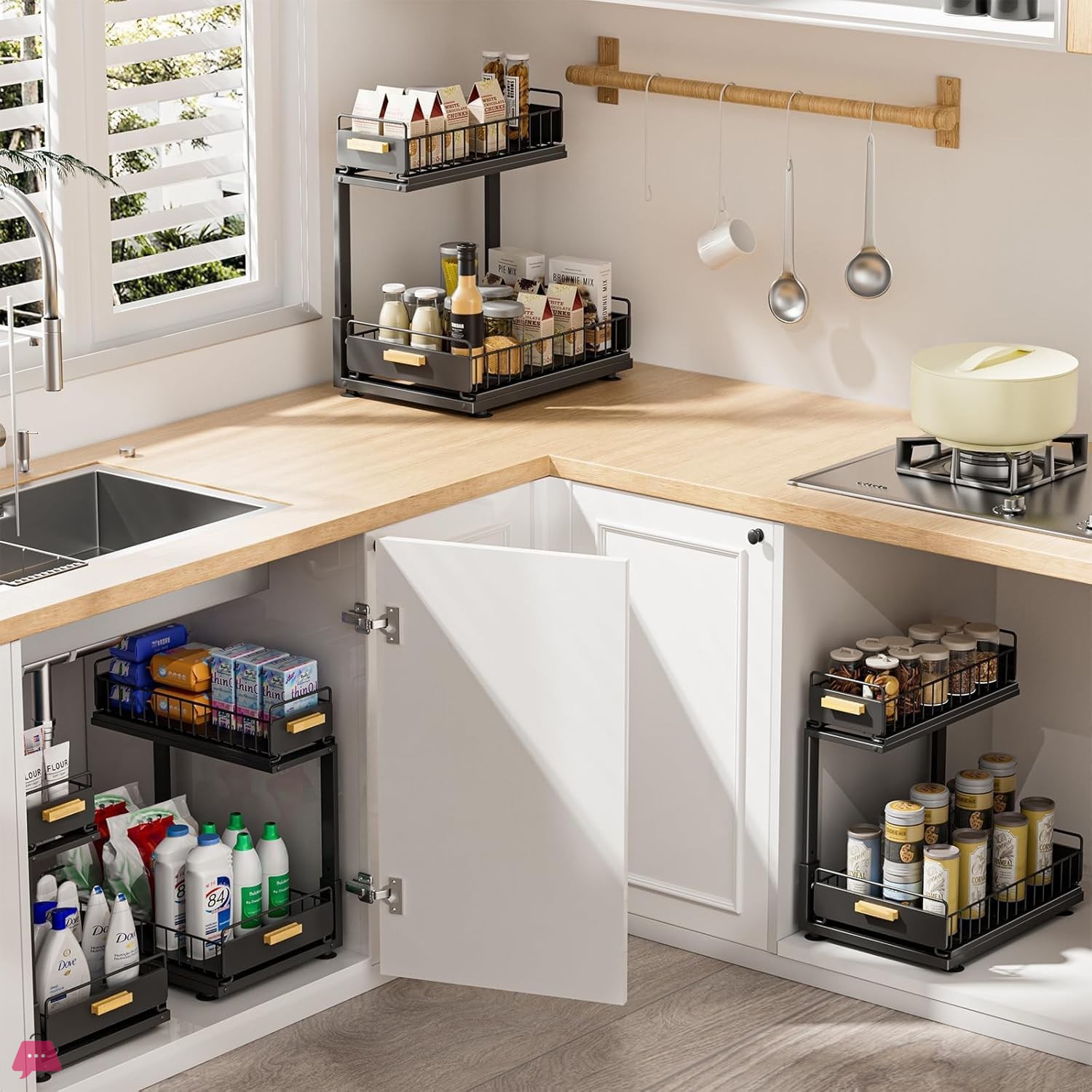
A two-tier unit may be useful beside the plumbing, where it has room to stand and the lower level can slide out. But don’t buy one just because the shelves look efficient. If the top tier blocks a shutoff valve or the bottom tier catches on a pipe, it has failed the real test. One low bin is better than a complicated unit that jams.
Door racks can hold light items, such as gloves or a small brush, if they clear the pipes when the door closes. Heavy bottles can strain a rack or swing into the drain. Check the door’s weight limit and the way it closes. In a rental, choose options that don’t damage the cabinet finish or need holes unless your lease allows them.
A Cabinet Liner Should Reveal Leaks, Not Hide Them
A removable, water-resistant mat can protect the cabinet floor from a small spill and make cleanup easier. Choose one you can lift out. A deep tray may catch drips, but a full tray can also hide a leak until the water has been sitting there for too long. Inspect beneath it from time to time.
Don’t seal a wet wooden base beneath a liner. Moisture needs to be found and dealt with, not trapped out of sight. If you keep a tray under bottles, look for pooled liquid, sticky residue, or a cleaner cap that has worked loose. Some leaks come from products, not from pipes.
Keep household chemicals in their original labeled containers and follow the storage warnings. If children or pets can open the cabinet, use a suitable child-resistant lock and move hazardous products to a safer location as needed. Never combine cleaners to save space. The neatest shelf isn’t worth a safety risk.
What About a Tiny Cabinet With a Garbage Disposal?
In a tight sink base, you may only have one useful side and a narrow strip in front. That is fine. Put a short caddy in the clear area and move overflow to a nearby pantry shelf or utility closet. Not every cleaning item needs to live under the sink.
For a cabinet with a low trap, choose a shallow basket that slides beneath it without rubbing. For one with a disposal, leave the machine and its connections open to view. If a bulky organizer makes the cabinet door hard to close, remove the organizer rather than pushing it into place.
The same idea works in a rental kitchen: keep the system portable. When you move, the bins come with you, and the plumbing stays easy for maintenance to reach. You can still make the cabinet feel cared for without drilling or custom fittings.
The Five-Minute Reset That Keeps It Useful
A month from now, open the cabinet and look for the things that have drifted. Did extra bags cover the shutoff? Are three empty bottles taking up the front row? Is the caddy still easy to lift out? Put back only what earns its spot and check the floor for moisture while you’re there.
If you want the whole kitchen to work more smoothly, pair this hidden-space fix with our small kitchen counter organization guide. For a separate task that often begins beneath the sink, see how to clean a dishwasher filter without guessing at the parts.
A good under-sink cabinet isn’t packed to the ceiling. It’s a small working space where you can find a sponge, spot a drip, and reach the water shutoff without a scramble. Once it does those jobs well, the clutter has much less chance to come back.
