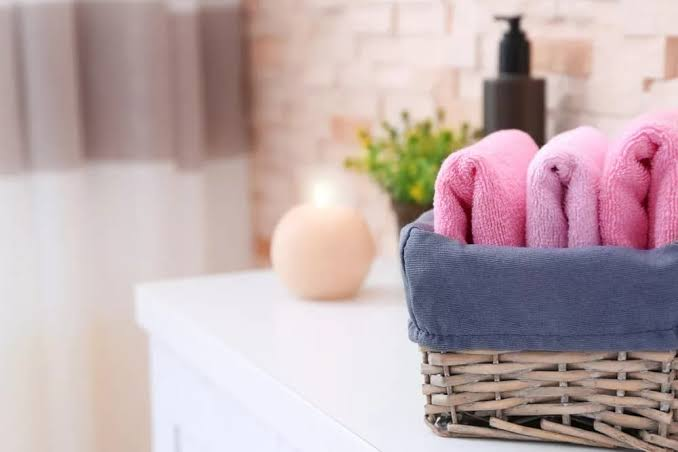
A small bathroom can hold the essentials and still feel crowded by one extra bath towel. The towel bar is full, the door swings into a hamper, and the cabinet under the sink already belongs to plumbing and cleaning supplies. Good small bathroom towel storage is not about squeezing the most towels into the room. It is about giving clean towels a dry home and used towels enough space to air out.
That difference changes what you buy. A deep basket may hold six fluffy towels but keep damp ones piled together. A slim wall rack may hold fewer, yet make daily life easier. Start by counting how many towels are in use, how many need to stay in the bathroom, and which surfaces are actually available.
Separate clean storage from drying space
Clean towels can live folded in a cabinet, basket, or closed shelf when the area stays dry. Used towels need open air and room to spread out. Putting a wet towel straight into a tightly packed basket creates a different problem than simply having too little storage.
Give each regular bathroom user a predictable drying place. A wide bar can allow a bath towel to hang more open than a small hook, although hooks may be the only practical option in a narrow room. If hooks are used, avoid bunching several thick towels on one peg.
Before installing new hardware, notice where water splashes and where steam lingers. A rack that looks tidy next to the shower may keep clean towels damp if it sits directly in the spray zone.
Use the door without making it harder to open
The back of a bathroom door is often the most overlooked surface. An over-door rack can hold towels without taking floor space, provided it clears the top jamb and does not strike the wall, toilet, or shower screen.
Measure the door thickness, top gap, and full swing. Some metal hooks stop a door from closing smoothly or scrape the paint. A rack with shallow hooks may work better than a bulky organizer with deep baskets.
Do not overload a hollow-core door or hang a heavy shelf from a thin over-door bracket. Check the product’s weight limit and make sure the door still opens completely, especially in a bathroom with only one exit.
Choose a bar when drying matters most
A towel bar takes wall width, but it lets fabric spread out. In a bathroom used by several people, two short bars placed on separate wall sections may be more practical than one decorative ladder crammed into a corner.
Look for unused wall beside the vanity or on the back wall away from direct spray. Check for electrical switches, plumbing, and door clearance before drilling. Use suitable anchors and follow the fixture’s mounting instructions rather than relying on a small adhesive pad for a heavy, wet towel.
If the room is especially narrow, a swing-arm rack can let towels extend for drying and fold inward when not in use. Test its arc with a cardboard template so it does not hit someone walking past.
Make the most of a narrow wall beside the vanity
A vertical row of hooks can work where a full-width bar will not. Put the lowest hook where children can reach it if appropriate, and keep the upper hooks away from light fixtures and outlets. A short rail with multiple pegs may feel neater than unrelated hooks scattered at different heights.
For clean towels, a shallow open shelf can use wall height without projecting far into the room. Fold towels to match the shelf depth instead of letting edges hang over. This makes the storage look intentional and reduces the chance of a towel being knocked into the sink.
Measure how far the shelf extends from the wall. A five-inch projection may be comfortable in one location and awkward beside a doorway. In small rooms, inches matter because people pass the same pinch points several times a day.
Use the space above the toilet carefully
The wall above the toilet can hold clean towels on a well-secured shelf, but it is not a good place for loose heavy objects that could fall. Keep baskets light and stable, and make sure the shelf does not interfere with the tank lid or maintenance access.
Freestanding over-toilet units may look like a quick fix, but tall furniture must be stable and secured as directed. The U.S. Consumer Product Safety Commission’s Anchor It! campaign emphasizes securing furniture with drawers, doors, and shelves to prevent tip-over injuries. That principle matters in a bathroom too, especially around children.
If you rent and cannot anchor a tall unit properly, choose a lower, more stable alternative or ask the property owner about approved mounting. “No drilling” should never mean ignoring a tip-over risk.
Why a towel ladder is not always the space saver it appears to be
A leaning ladder can look lovely in a large styled bathroom, but it uses floor depth and needs a stable position. In a narrow room, its lower feet may sit directly in the walkway, while the upper rungs are hard to reach without brushing against other towels.
Use one only if it can be secured appropriately, stays out of traffic, and gives each damp towel enough separation. It may be better for a few decorative or lightly used textiles than for several thick wet bath towels.
A wall-mounted rack often wins when every inch of floor is already spoken for. Choose based on movement and drying, not just the photograph on the product listing.
Fold clean towels to suit the shelf, not the other way around
A shallow shelf works better with compact folds than with large, loose rectangles. Measure the usable depth and fold one towel to test. Rolled towels can fit narrow baskets, but tight rolls may be less practical for everyday use when everyone is in a hurry.
Store the most-used towels at an easy height. Put spare guest towels or seasonal extras higher or outside the bathroom. A small bathroom does not need to hold the household’s entire linen inventory.
Our guide to under-sink cabinet organization explains why plumbing access should stay clear. Avoid stuffing bulky towels around supply lines and drains where leaks may go unnoticed.
Let ventilation shape the storage plan
Bathrooms are humid by design, and damp towels add to the moisture load. The U.S. Environmental Protection Agency’s bathroom guidance stresses the role of effective ventilation in removing moisture and reducing conditions that favor mold and mildew.
If towels remain damp long after use, storage is not the only issue. Check whether the exhaust fan works properly and vents outdoors. Our article on bathroom exhaust fan venting explains why simply hearing a fan run does not prove that moist air is leaving the home.
Do not seal damp towels inside a cabinet to make the bathroom look tidy. Let them dry first, and address persistent moisture or condensation rather than masking it with fragrance or decorative baskets.
What to do when there is no spare wall
In a truly tight bathroom, think beyond the room. A linen closet in the hall can hold clean spares, while the bathroom keeps only the towels currently in use. A small basket just outside the door may be easier to reach than a crowded cabinet over the toilet.
For a household of two, one bath towel per person drying in the bathroom and a small stack of clean hand towels may be enough. Extra bath towels can live in a bedroom closet until needed. This reduces visual clutter and helps the room dry.
If the bathroom has a recessed niche or a built-in ledge away from splashes, use it for neatly folded clean towels. Avoid blocking ventilation grilles, access panels, or windows to gain storage.
Renter-friendly choices that still feel finished
Over-door hooks, removable baskets, and low freestanding organizers can work well when wall mounting is restricted. Check door clearances and product limits. Some adhesive hooks perform poorly on textured tile, damp surfaces, or peeling paint, so follow the manufacturer rather than trusting a generic weight claim.
For a temporary setup, choose matching hooks or one compact rack rather than several unrelated organizers. A consistent finish makes the room feel calmer without requiring a full renovation.
If a secure wall-mounted solution would clearly work better, ask the landlord for permission. A properly installed small towel bar can be more useful and safer than an unstable tall unit that technically avoids drilling.
A worked plan for a five-foot-wide bathroom
Imagine a bathroom with a 60-inch-wide back wall, a toilet beneath part of it, a vanity on the opposite side, and a door that swings inward. The space behind the door is narrow, and there is no room for a storage tower.
Place two shallow hooks on the door for everyday bath towels only if the door still clears the wall. Put a short bar or swing-arm rack on the wall beside the vanity if studs and plumbing allow secure mounting. Store three clean spares in a hall closet and a few hand towels in a small, dry basket on an existing shelf.
This plan does not maximize the number of towels visible in the room. It gives every towel a job and leaves the floor clear. That is the point of useful small bathroom towel storage.
What to avoid buying on impulse
Skip a deep woven basket for wet towels if it sits on the floor in a splash-prone corner. Avoid over-toilet units that wobble or cannot be anchored. Be wary of shelves with sharp corners beside the only walking path, and do not place clean linens directly under a leaking pipe.
Also question the idea that every surface needs a container. A few towels folded neatly on one shelf can look better than six little baskets, each holding one item. Containers should solve access and drying problems, not simply create more objects to clean.
Before ordering, tape the proposed rack outline to the wall and open the door fully. If the layout fails that test, it will not improve after installation.
Final thoughts
The strongest small bathroom towel storage plan keeps used towels spread out, clean towels away from splashes, and daily movement easy. It may use a bar, a few hooks, a shallow shelf, or a closet just outside the room.
When storage follows how the bathroom is actually used, the room feels less crowded without asking you to own fewer towels than you need. Dry, reachable, and out of the way is a far better standard than simply fitting everything inside.
