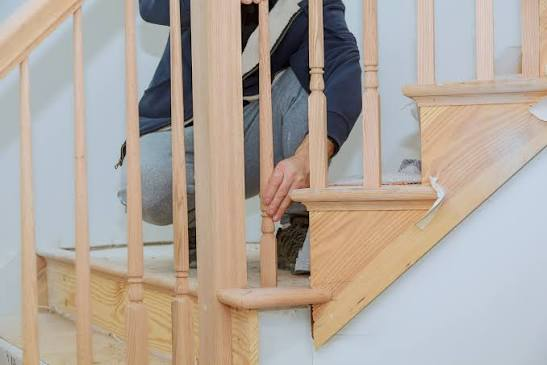
A stair handrail that shifts under your palm is not a harmless little rattle. It is the support you expect to find when a foot slips or someone carries laundry downstairs. Loose stair handrail repair starts with identifying exactly what moves: the rail itself, a metal wall bracket, the screws in the wall, or a newel post at the end of the staircase. Tightening the first visible screw may help, but it will not repair a bracket that never reached solid framing.
Do not keep using a visibly unstable railing while you work out the fix. Restrict access to the stairs if possible, especially for children or anyone who depends on the rail for balance. If the entire balustrade moves, a newel post is loose, or the stairs are open on one side, arrange professional assessment. A wall-mounted handrail with one slightly loose bracket is a different problem from a guard that prevents a fall.
First locate the movement
Stand on a secure tread and gently test the rail without putting your full weight on it. Watch whether the wood twists inside the bracket saddle, the bracket plate rocks against the drywall, or the whole wall surface moves. Ask another adult to observe from a safe position if necessary. Do not yank hard to prove it is weak. The goal is to locate the joint that has failed without creating a dangerous break.
Look at every support along the rail. Sometimes one loose bracket causes a long section to flex, while others remain sound. In another case, several brackets were fastened into drywall instead of studs. Photograph each connection and mark the one that moves. If the handrail is cracked, split, or soft from water damage, replacing screws will not restore the wood’s strength.
A bracket needs solid backing
Most wall-mounted handrail brackets rely on secure attachment to wall framing or engineered backing. A screw that bites only into drywall may feel tight for a while and then work loose under repeated use. Popular Mechanics’ handrail repair advice emphasizes checking that bracket fasteners actually reach solid lumber. That is the essential test before choosing a longer screw or a replacement bracket.
Use a stud finder as a starting point, then verify the stud location carefully. A small pilot hole can help confirm solid wood, but do not drill where electrical cables or plumbing may run. A bracket near a switch, outlet, or plumbing wall deserves extra caution. If you cannot confidently locate suitable backing, stop rather than experimenting with increasingly large holes. Hidden services and structural fastening are not places to guess.
Why simply tightening can fail
If the existing screw threads have stripped the wood, the head may turn without drawing the bracket firmly against the wall. A larger or longer fastener can sometimes reach sound framing, but it must fit the bracket hole and be appropriate for the load and substrate. A random oversized screw may crack the bracket or fail to seat. A wall anchor chosen for a picture frame is not automatically appropriate for a safety handrail.
The product information for a RELIABILT handrail bracket at Lowe’s specifies fastening to walls and studs and gives manufacturer guidance on bracket spacing. That does not set the rules for every staircase, but it shows why hardware selection is a system decision. Check the exact bracket instructions and local requirements instead of copying dimensions from a different product.
Separate the rail-to-bracket joint from the wall joint
Some brackets have small screws securing the handrail to the saddle. Those can loosen even when the wall plate is sound. If the wood is intact and the bracket is firmly attached to framing, the correct replacement fastener may restore the connection. Inspect for split wood around the old screw holes. A rail that has cracked through the fastening point may need repair or replacement rather than another screw in the same damaged spot.
Metal brackets can also bend or crack. Look for a hairline fracture at the arm, a distorted saddle, or a plate that no longer sits flat. A bracket damaged by impact should be replaced with a suitable part. Avoid trying to bend it back into shape and declaring it safe. Metal fatigue is not visible in the same way as a loose screw, and the rail may be called on to take sudden force.
What a careful small repair looks like
For an otherwise sound wall-mounted rail, a qualified repairer will identify the framing, remove the loose bracket fasteners, assess the holes, and choose hardware compatible with the bracket and supporting material. The bracket is then seated firmly without crushing drywall or splitting wood. After all connections are secured, the rail is checked along its full length for movement. The final test is stability, not simply whether the screw heads look flush.
If the wall is plaster over lath, masonry, or a special assembly rather than modern drywall over wood studs, the fastening method changes. Do not assume a wood screw that worked elsewhere in the house belongs in brick or concrete. Historic homes may also have irregular framing. In those situations, asking a carpenter to identify proper anchors or blocking is often faster than patching a series of failed holes.
Handrail height and shape still matter
A rail that is solid but awkward to grasp may not give reliable support. Building rules address height, continuity, graspability, and clearances, and local requirements can differ. If you are moving brackets, replacing a rail, or changing its profile, check the rules that apply to your home and work. Do not shift the rail several inches just because a stud is easier to reach there. The support needs to remain usable along the stairs.
A decorative cap or oversized shelf-like rail can look attractive but be difficult to grip during a stumble. Likewise, a bracket that protrudes into the walking path may create a snag. When replacing hardware, think about the hand moving continuously from bottom to top. Comfort, secure attachment, and a clear path are all part of the repair, not finishing details.
Newel posts and open-side guards are a different job
If the railing is supported by posts rather than wall brackets, check whether the post moves at its base. Loose newel posts may involve hidden bolts, damaged framing, or poor attachment beneath the stair treads. A guard at an open stair edge is also intended to prevent falls. These assemblies deserve a carpenter or stair specialist when movement is noticeable. Cosmetic glue or a surface screw is not a substitute for a proper structural connection.
Do not confuse squeaking wood with loose structural support. A stair tread can squeak while the rail is firm, and a rail can be dangerously loose while the stairs make no noise. Diagnose them separately. Our sticking interior door guide uses a similar first principle: find the point of movement or rubbing before removing material or buying hardware. The actual repair methods are different, but careful observation saves damage.
Know when to stop the DIY attempt
Call a professional if you find rotten wood, cracked masonry, crumbling plaster, hidden electrical hazards, a moving post, or repeated fastener failure. Also get help if someone in the household needs dependable handrail support immediately. A short repair visit is preferable to leaving a partly dismantled rail in use. Ask the contractor to explain how the new fasteners connect to structural backing and what was changed.
For a rental home, notify the property manager promptly and document the looseness rather than modifying a safety feature without authorization. If the staircase is shared or in a common area, it may fall under different maintenance responsibilities and code rules. Keep photographs and the repair record. That makes it easier to confirm that the actual failed connection was addressed rather than hidden behind fresh paint.
A repair is finished when the rail is dependable
Loose stair handrail repair should leave every bracket, rail connection, and support post secure, with no new damage to the wall or wood. Work from the moving joint toward the framing, use appropriate hardware, and verify the full run before normal use resumes. For more practical home fixes, the DIY & Repairs section covers other small jobs where a sound diagnosis matters. A handrail is one place where careful work is worth more than a quick cosmetic win.
