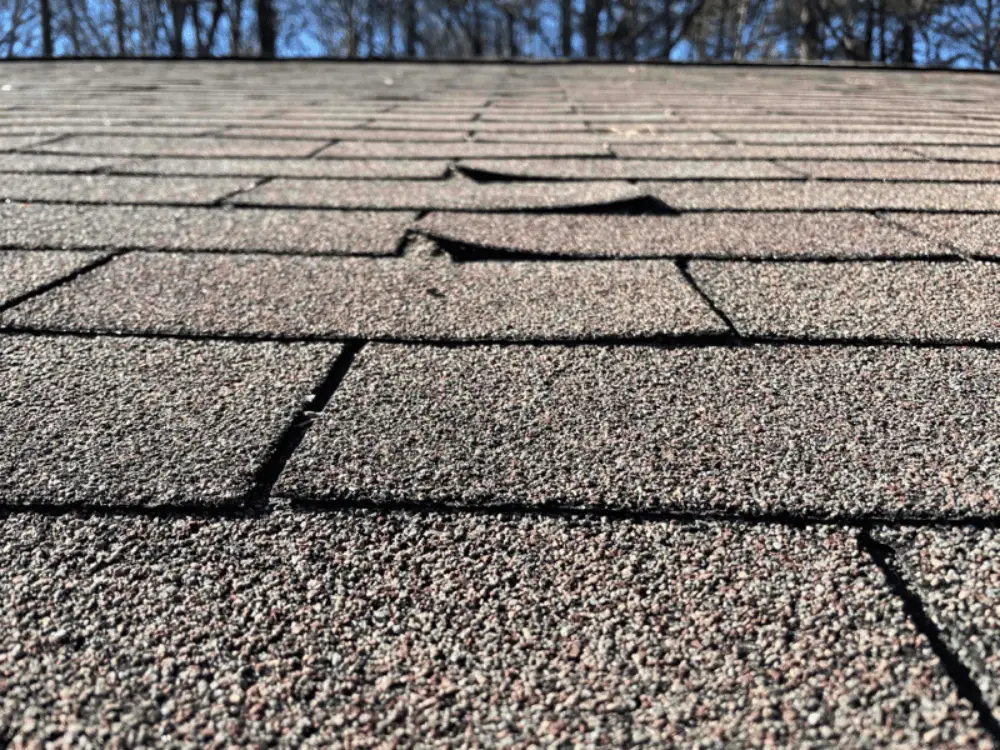
A tiny raised spot on an asphalt roof can be easy to dismiss until rain leaves a mark on the ceiling. Roof nail pops happen when fasteners sit high or loosen beneath shingles. Some are local workmanship problems; others expose a broken seal or poor fastening that needs a roofer’s attention.
The useful question is not how to flatten the bump from outside. It is whether the nail still holds, whether water can get beneath the shingle, and whether nearby courses can be repaired without damage.
Those answers can save a homeowner from both a flimsy caulk patch and an unnecessary whole-roof estimate.
The Tiny Roof Bump That Deserves a Closer Look
A faint raised square in a shingle may be easier to spot when late afternoon light skims the roof. From the sidewalk it can look like a harmless wrinkle. If a fastener has pushed up beneath the surface, however, the shingle may no longer sit or seal as its maker intended.
Roof nail pops describe nails that sit proud of the roof deck or work upward after installation. They can create a small tent in the covering, break the seal between courses, or leave an opening for rain. The bump alone cannot prove which of those things has happened.
Start with photographs taken from the ground, not a ladder leaned against wet gutters. Note the slope, the number of bumps, and whether a stain has appeared inside. A roofer can then check the actual fastening and surrounding material without turning a minor concern into a risky inspection.
Why a Nail Can Rise Beneath an Otherwise Sound Shingle
Some trouble begins on installation day. A fastener driven at an angle or left high can hold the next shingle away from its sealing strip. That creates a small raised spot even on a roof that is only a season old.
Movement can add to the problem. Roof decking and framing respond to moisture and temperature changes, while wind works on edges that have not bonded well. A nail with poor purchase may loosen. That does not mean every bump points to widespread structural movement.
Fastener placement and depth matter. GAF’s roofing-nail guidance explains that raised fasteners can interfere with shingle sealing and may back out. It also distinguishes properly driven nails from overdriven ones that damage the shingle itself.
Separate Nail Pops From Ordinary Shingle Texture
Architectural shingles have overlapping layers and shadows. A ridge, slight color shift, or uneven edge is not automatically a nail problem. Look for a localized, hard-looking peak rather than the regular pattern that repeats across a whole roof.
A shingle that curls broadly at its corners may be aging or reacting to other conditions. A raised line near a ridge vent might involve the vent fasteners or cap installation. Treat those as different inspection questions instead of assuming the same fix fits each shape.
Photograph the spot on a dry day and again after a storm if you can do so safely from the same place. A change in shape or a new water mark gives the contractor a useful clue. The goal is not to diagnose through a phone zoom; it is to describe what changed.
Follow the Water Path Instead of Guessing From a Ceiling Stain
Water does not always drip straight down. It can run along the underside of roof decking or a framing member before showing up as a brown ring over a hallway. A nail bump directly above the stain may be unrelated.
Check the attic only if it has safe flooring and lighting. From a secure location, look for damp insulation, darkened wood, or fresh staining after rain. Do not step between joists, move electrical wiring, or disturb suspected mold to chase a drip.
If the moisture appears near a vent or chimney, the real cause could be flashing rather than fasteners. Our guide to roof flashing leaks explains why joints deserve their own inspection. Give the roofer both observations instead of ordering a nail-only patch.
Why Caulk Over a Nail Head Is Not a Lasting Plan
A tube of sealant looks inexpensive beside a roofing estimate. The problem is that a dab over the visible head may leave the shingle lifted, its bond broken, and the fastener hole unchanged underneath. Sun and seasonal movement can also work against a surface patch.
GAF’s technical bulletin on exposed nails advises replacing affected face-nailed shingles and says roof cement or caulk is not a permanent repair. Exposed heads and hidden raised fasteners are not identical, but both require attention to the underlying fastening.
A professional repair may involve carefully lifting nearby courses, removing the faulty nail, checking the deck’s grip, fastening in the correct location, and replacing damaged material. Simply hammering the nail flush can hide the symptom while leaving the original fastening problem unresolved.
What a Roofer Should Inspect Before Quoting a Repair
Ask whether the affected shingles are flexible enough to lift without cracking. On an older roof, disturbing one course may damage the course above it. That changes the scope from a quick correction to a larger section replacement.
The roofer should inspect the nail location, penetration, deck condition, seal strip, and adjacent shingle edges. If several fasteners have risen in a pattern, ask whether the issue reflects installation, moisture in the decking, or an aging roof system.
Request photos of the exposed area before it is covered again. A clear proposal should say which shingles will be replaced, whether underlayment or deck work is needed, and how the repair will be made weather-tight. A single vague line for ‘roof sealant’ is not much of a plan.
The Difference Between One Bad Fastener and a Roof-Wide Pattern
One raised nail near a repair may be a local workmanship issue. Dozens of bumps across several slopes suggest the contractor should look for a common cause. The cost and durability of the repair depend on that distinction more than on the size of the first visible bump.
Pay attention to where the marks cluster. Rows near the eaves, around a ridge, or alongside a previous patch can reveal different installation details. Ask for a written explanation of the pattern rather than accepting a claim that every bump means the roof must be replaced.
If the roof is relatively new, find the installation paperwork and product information before agreeing to major work. Workmanship guarantees and material warranties cover different things, and the exact terms matter. Keep photographs and dates so the installer can evaluate the concern fairly.
When Decking Changes the Repair Decision
A fastener needs sound material to hold it. If the wood beneath has softened from repeated leaks, driving another nail nearby may not create a dependable repair. That is why a roofer should inspect the substrate when several fasteners no longer hold.
Do not confuse a dark attic mark with confirmed rot. Older staining can remain after a past leak has been fixed. Active softness, moisture, or crumbling material is a different concern and may require opening a section of the roof.
Our article on roof decking rot covers the warning signs that change a shingle job into a structural-material repair. Ask for the damaged area to be documented before replacement, especially if the contractor recommends a much larger project.
What to Do After a Windy Night
Walk the yard first. A shingle fragment on the grass, debris against the gutter, or a newly lifted edge may indicate more than a nail pop. Keep clear of fallen electrical lines and unstable branches, and never inspect a roof during a storm.
From the ground, photograph the roof edges and the suspect bump. Check ceilings and attic access areas for new moisture, but avoid opening a ceiling or climbing into an unsafe space just to confirm a theory.
If active water is entering a room, move valuables away and arrange prompt professional protection. Do not wait for the next clear weekend to make a cosmetic repair. The immediate priority is limiting water damage, not proving whether a particular nail caused the leak.
A Practical Repair Quote Comparison
Imagine two quotes for a three-bump area over a porch. The first offers to dab roof cement over each spot. The second identifies lifted courses, proposes replacing affected shingles, and includes photographs of fastener placement and deck condition.
The second quote may cost more today but answers the questions that determine whether the repair will hold. It also gives you a way to compare materials and scope. Price alone cannot tell you whether a roofer has corrected the cause.
Ask both contractors about disposal, matching shingle color, expected weather conditions, and what happens if hidden damage appears. An older roof may not match perfectly after a small patch; that is an appearance tradeoff, not automatically a reason for full replacement.
Small Prevention Habits That Actually Help
Keep a simple roof photo record after major storms and once during the dry season. Wide shots of each slope help you notice changes without repeated trips onto the roof. Use the same viewing point where possible.
Trim branches that scrape the roof through a qualified tree service and keep drainage clear. Neither step fixes poor nailing, but both reduce extra wear and make it easier to notice new problems before stains spread indoors.
After any roofing work, save the invoice, product names, installation date, and warranty. Ask the contractor to photograph repaired fasteners and sealed courses. Those records are more useful than a general promise that the roof ‘looks fine.’
When to Stop Watching and Book an Inspection
Schedule a roofer when a raised spot is growing, shingles have separated, fastener heads are visible, or a ceiling stain appears after rain. Multiple bumps on a young roof also deserve a workmanship review even if the rooms below are dry.
Treat active dripping, a sagging ceiling, or a soft roof deck as urgent. Keep people out of the affected area and arrange professional help. A small exterior bump can coexist with a much larger moisture problem, but you cannot judge that from the yard.
If there is no leak and only one stable mark, a prompt planned inspection may be more sensible than an emergency call. Share photos, roof age, and recent weather. That lets the roofer arrive ready to distinguish a nail issue from a harmless shingle contour.
Final Thoughts
A roof is made of many small overlaps, and one loose fastener can interrupt the way those overlaps shed rain. Good repair restores that sequence, not just the surface appearance.
When the next storm passes, a careful ground-level photo and a specific inspection request will do more for your home than guessing from a ladder. The smallest visible problem deserves the right question, not the biggest sales pitch.
