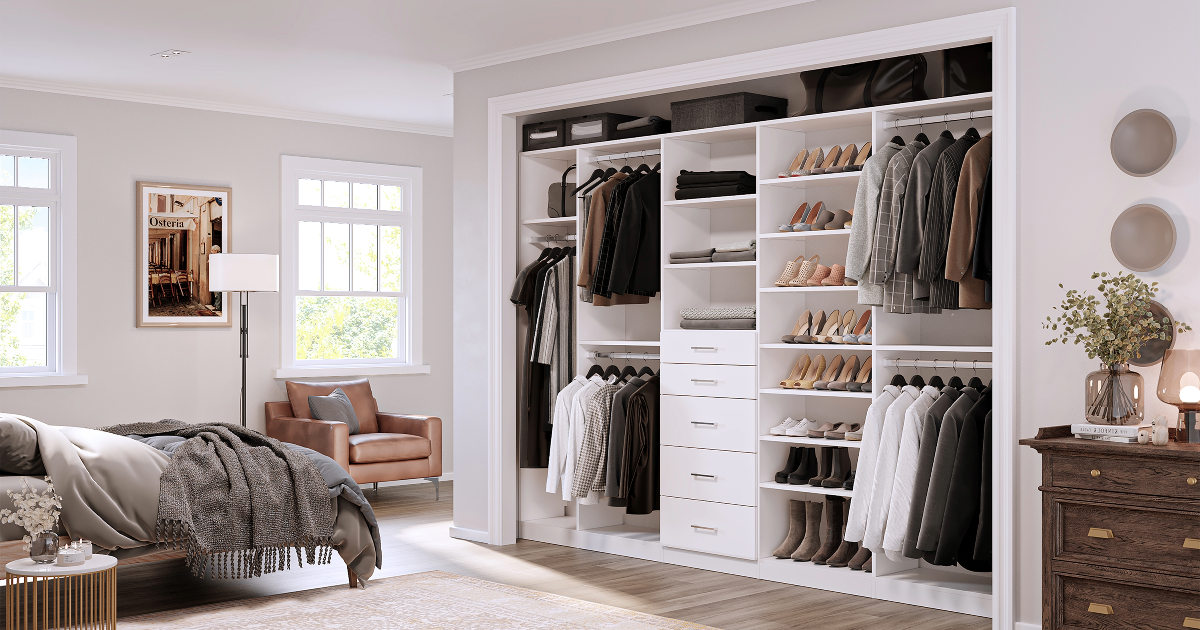
Reach-in closet organization works best when you stop treating the closet as one long hanging rod and divide it into useful zones. Short clothes can hang in two levels, long coats need their own clear section, and folded items are easier to reach on shelves or in drawers that actually clear the doors.
A reach-in closet often looks bigger when it is empty than it feels on a busy weekday morning. Sliding doors hide one side, shoes collect behind the frame, and the top shelf becomes a place where things disappear. Buying matching bins may make the space look tidy for a photograph, but it will not solve a poor layout.
Before buying an organizer kit, measure the opening, sort what you own, and decide which items you reach for every day. These steps help turn a cramped closet into storage you can use without digging through piles.
Measure the opening, not just the back wall
Record the inside width, depth and height of the closet. Then measure the clear door opening and the width of any sections hidden behind sliding doors or a center jamb. A 60-inch-wide closet may offer much less than 60 inches of easy access when the doors overlap.
Note the door style: hinged, bifold, sliding, pocket or no door. Drawers that look perfect in a catalog may not open fully if a sliding panel blocks them. Likewise, a pull-out shoe rack needs clear space in front of the closet.
Mark baseboards, light switches, outlets, vents and uneven corners. Measure twice at different heights if the walls are not square. A modular kit can adjust for some differences, but you still need enough clearance for the parts you plan to install.
Take inventory before choosing shelves
Count your short-hanging clothes such as shirts, blouses and folded pants. Then count long items such as dresses, coats and robes. Measure the length of the longest garment on its hanger so the hem will not rest on a drawer or shoe rack.
Sort folded clothing into groups: sweaters, jeans, workout gear, pajamas and seasonal pieces. Shoes need a separate count because a few boots can take the floor space of many flats. Small accessories such as belts and scarves often need shallow storage rather than a deep bin.
This inventory tells you whether you need more hanging width or more shelves. A closet packed with dresses will not benefit from double rods everywhere, while a wardrobe made mostly of shirts may gain a lot from two hanging levels.
Use double hanging where the clothes are short
Two rods can make a big difference for short garments. One common closet-system arrangement places an upper shelf and rod near 84 to 85 inches from the floor and a lower level near 42 inches. Those figures are product-layout examples, not universal dimensions for every home.
The ClosetMaid closet-planning guide shows double-hang and long-hang arrangements. Use the actual garment lengths, ceiling height and product instructions to refine those positions.
Keep one section for long clothes if you own them. A floor-length dress crushed against the lower rod defeats the purpose of a neat organizer. In a small wardrobe, even a narrow long-hang bay can be more useful than forcing every item into a double stack.
Build a shelf stack for folded items
A vertical stack of adjustable shelves can hold sweaters, jeans, bags and storage boxes without consuming the whole closet width. Place everyday folded clothing between waist and shoulder height. Reserve the highest shelf for seasonal items you can safely retrieve with a stable step stool.
Deep shelves can become clutter traps because items at the back disappear. Use shallow baskets or dividers to keep categories separate. If you have to remove three piles to reach one sweater, the shelf is not doing its job.
For knitwear, folded storage is often gentler than hanging. The Elfa wardrobe-planning advice recommends flexible shelving and drawer arrangements and notes that sweaters can lose shape on hangers. This is a useful reminder to design around the clothes, not just the available rods.
Keep shoes visible without wasting the floor
Shoes often collect in a tangled layer beneath hanging clothes. Start by removing pairs you no longer wear, then choose storage based on how often each pair is used. Daily shoes should be easy to grab; occasional footwear can live higher or farther back.
A low angled rack makes pairs visible, but it may not fit boots or chunky sneakers. Flat shelves offer more flexibility and can also hold boxes. Over-door shoe pockets work for lightweight accessories when the door and hardware allow them, but they may interfere with closing or scratch nearby trim.
Leave enough room for a vacuum or cleaning cloth to reach the floor. A shoe rack that fills every inch but traps dust underneath is likely to become frustrating over time.
Choose drawers only where they can open
Drawers are wonderful for socks, underwear and small items, but they require clear travel space. Before purchasing a drawer tower, hold a cardboard template at the intended height and open the closet doors fully. Check whether the drawer front will hit a door panel or frame.
Sliding doors are a common problem. A tower placed at the center may be partly blocked no matter which door is open. It can be better to place drawers near an accessible end or use open baskets instead.
Compare fixed drawers with removable bins. Drawers are tidy and easy to sort; bins are cheaper and can move when your storage needs change. Reach-in closet organization should favor the option you can actually access on a rushed morning.
Make the upper shelf useful rather than mysterious
The top shelf is valuable for extra bedding, seasonal clothing and keepsakes, but it is often too deep for casual stacking. Use clearly labeled containers with handles that you can grip safely. Avoid overloading the shelf with heavy boxes that are difficult to lift down.
Store the lightest and least-used items highest. Keep heavier bags and everyday belongings lower. If the closet is tall, use a stable step stool on a level floor rather than standing on a chair or climbing the organizer itself.
Leave a little open space. A top shelf filled so tightly that every box scrapes the ceiling will be hard to maintain, and it may encourage you to leave items on the floor instead.
Wire shelves versus solid shelves
Wire shelves allow airflow and can be economical, especially in adjustable track systems. Their gaps can let small items tip or leave marks on soft folded clothing. Shelf liners and bins can make them more practical for smaller belongings.
Solid shelves provide a smooth surface for stacks and can look more built-in. They may be heavier and need careful support, especially across a wide span. Moisture-sensitive materials should not be used where dampness is an ongoing problem.
Think about cleaning as well as appearance. Dust can collect on both styles. A system with removable baskets or accessible shelf surfaces may be easier to maintain than deep fixed compartments with awkward corners.
Fixed organizer or adjustable track system?
A fixed wood organizer can look polished and may suit a closet with stable long-term needs. The downside is less flexibility if you change wardrobes, add a second user or move house. Installation may also require precise cutting and leveling.
An adjustable track system allows shelves and rods to move as needs change. It can be particularly useful for children whose clothing sizes change quickly or for renters who can install approved wall-mounted systems. The appearance may be more utilitarian, but good baskets and consistent finishes can soften it.
Compare total costs, including anchors, brackets, shelf liners and labor. A bargain kit that needs many add-ons may cost more than a complete system with the features you need.
Do not overload the wall or the hardware
Closet rods and shelves carry more weight than they appear to. Heavy winter coats, shoe boxes and stacked bins can stress brackets or weak drywall anchors. Follow the manufacturer’s load limits and fastening requirements for the actual wall material.
Locate studs where required, and use the correct anchors for other approved mounting points. If the wall is crumbling or shows water damage, repair it before installing a loaded organizer. A secure support system is more important than a perfectly symmetrical shelf layout.
Never assume that hardware from one brand fits another brand’s tracks. Mixed parts may look compatible while failing to lock properly. Keep installation instructions and spare parts together for future adjustments.
Plan around awkward doors and shallow depth
A shallow closet may not accommodate standard hangers facing outward without clothing rubbing against the doors. Check hanger depth and the thickness of bulky coats. If the closet is especially shallow, consider a different rod orientation or more folded storage rather than forcing the doors closed.
With bifold doors, test how far the panels fold into the opening. With hinged doors, check nearby furniture and wall clearance. A storage solution that blocks the bedroom walkway is not a win, even if it increases shelf space inside the closet.
When possible, use the door itself for lightweight accessories. But avoid adding heavy racks to a door that is already loose or out of alignment, and make sure any organizer does not prevent the latch from closing.
Keep the daily-use zone easy to reach
Put frequently worn clothing where you can see it without bending or stretching. Group items by type or routine: work clothes together, casual shirts together, exercise gear in one bin. This makes getting dressed faster than a color-coded arrangement that scatters outfits across several sections.
Leave some breathing room between hangers. If the rod is packed so tightly that you cannot slide a shirt aside, it may be time to move out-of-season clothing elsewhere. A closet should support the current season rather than store every garment you own at once.
For bedrooms with limited storage, combine closet planning with our under-bed storage ideas for small bedrooms. Keeping spare linens and seasonal pieces beneath the bed can free the closet for clothing you use every week.
A practical layout for a 5-foot reach-in closet
Imagine a closet about 60 inches wide with sliding doors. One possible plan uses a 24-inch shelf tower at one end and approximately 36 inches of hanging space beside it. The hanging section could be divided into two levels for shirts, or kept partly full-height for dresses.
That is only a starting sketch. If the door overlap blocks the tower, shift it to the more accessible side or choose open shelves. If you own many coats, give more width to long hanging. If shoes are the main issue, trade a lower shelf for a rack.
Test the plan with painter’s tape on the wall and floor before ordering materials. Mark the rod heights and door swing. A simple sketch catches more problems than buying a kit based on its box photo.
Make the system easy to keep tidy
Give every category a clear home and avoid tiny bins for items that change often. A labeled basket for workout gear is more forgiving than six miniature compartments that need constant sorting. Leave a small empty zone for new purchases or laundry that has not yet been put away.
Revisit the layout at the change of seasons. Move winter coats forward when temperatures drop, and store summer extras where they do not crowd daily clothes. Adjustable shelves make those changes easier, but even fixed closets benefit from a quick seasonal reset.
Good reach-in closet organization is not about squeezing the maximum number of objects into a rectangle. It is about finding what you need without moving everything else first.
Can I double-hang clothes in a short closet?
Only if there is enough vertical clearance for both sets of garments and the rods. Measure your longest short-hanging clothes before choosing rod heights.
Are drawers better than baskets in a reach-in closet?
Drawers organize small items well, but they need room to open. Baskets are often easier behind sliding doors and can be rearranged as needs change.
What should go on the top closet shelf?
Lightweight, infrequently used items in easy-to-grip labeled containers. Keep heavy belongings lower and follow the shelf’s load rating.
