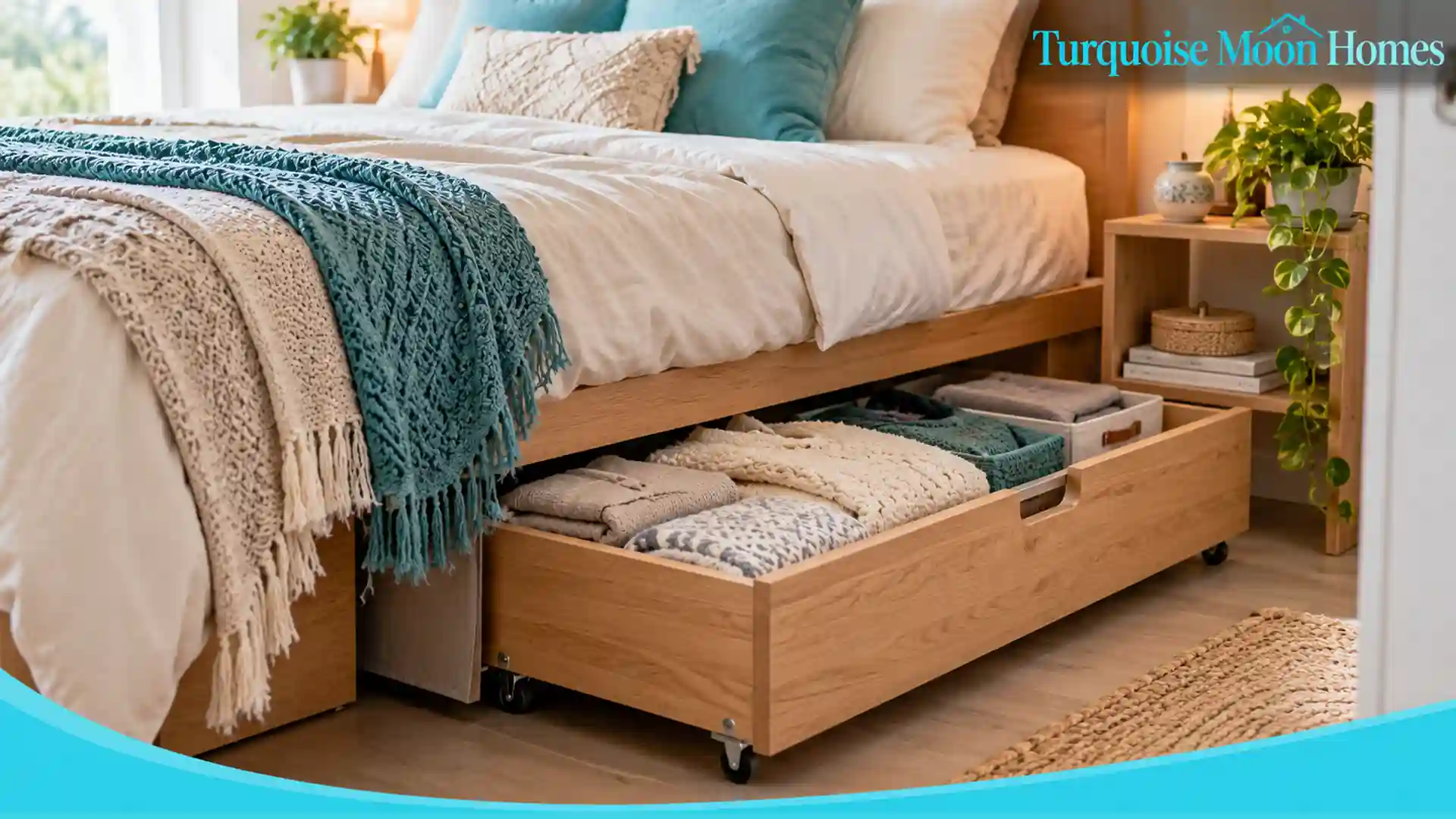
The most useful under bed storage ideas for small bedrooms turn empty floor space into a home for items you do not need every day. Low rolling drawers, covered bins, and purpose-built bed frames can work well, but the best choice depends on bed clearance, floor type, access, and how often you need the contents.
In a tight bedroom, one extra dresser can block a closet door or make the path to the bed feel cramped. The space beneath the mattress may offer a simpler answer, provided you can pull things out without wrestling the furniture.
In this article, we will compare storage formats, measure the space properly, decide what belongs below the bed, and keep the setup clean, practical, and pleasant to use.
Measure the Space Before Shopping for Bins
Measure from the floor to the lowest solid part of the bed frame, not just to the mattress edge. Center rails, slats, support legs, and low-hanging fabric can reduce the usable height in different spots.
Next, measure the width and depth of the opening on each side. A long bin may fit beneath the frame but be impossible to pull out if a wall, nightstand, or dresser blocks the route.
Leave room for the lid, wheels, or handles. A container that technically fits with a quarter inch to spare may scrape the bed every time you use it. A little extra clearance makes storage less frustrating.
Take note of the floor surface. Rolling drawers behave differently on carpet, hardwood, and uneven tile. A bin that slides easily on a showroom floor may catch on a thick rug in your own room.
Rolling Drawers Make Frequent Access Easier
Low drawers on casters are useful for clothing, spare linens, or children’s toys that you reach for regularly. They pull out in one motion, and the open top makes it easy to see what is inside.
The drawback is dust exposure. An open drawer beneath a bed can collect lint and pet hair, especially when the room has carpet or a shedding pet. A fitted lid or a washable fabric cover may help protect the contents.
Check the wheel height and whether the casters swivel smoothly. Tiny wheels may struggle over a rug edge, while large wheels can raise the drawer enough to hit the frame. Try the full travel before loading it.
For a small room, one or two drawers on the accessible side may be better than filling every inch. You need enough space to pull the drawer out and reach inside without shifting the bed or moving other furniture.
Covered Low Bins Suit Seasonal Items
Flat, lidded bins work well for off-season sweaters, spare pillowcases, and lightweight accessories. They keep categories together and can be labeled on the end so you do not have to open each one to find what you need.
Clear plastic makes the contents visible, while opaque containers can look calmer if the space is exposed. Choose a lid that stays on when the bin is pulled, and avoid stacking so high that the upper box rubs against the bed.
Store clean, completely dry items. Packing damp towels or clothing into a closed bin can create odors and moisture problems. If a room already feels humid, address that condition before filling hidden spaces with fabric.
Resist using every container as a miscellaneous catchall. One bin for winter accessories and another for guest bedding is easier to manage than six boxes of mixed things you have forgotten about.
Storage Beds and Lift-Up Frames: More Capacity, More Tradeoffs
A bed with built-in drawers can make storage look intentional. The drawers often match the frame, so the bedroom feels less cluttered than it would with several unrelated plastic bins peeking out below.
However, drawer beds need side clearance. A nightstand or wall can block access, and some designs leave little room for a rug. Check how far each drawer opens and whether the handles are comfortable to reach.
Lift-up storage beds offer a larger hidden compartment beneath the mattress platform. They can be useful in rooms where there is not enough side clearance for drawers, but the lifting mechanism must be safe and easy for the intended user to operate.
Compare weight limits, ventilation details, assembly instructions, and how the mattress platform is supported. A lift-up frame is not automatically the right choice for someone who struggles to raise heavy furniture or needs daily access to the stored items.
What Should Actually Go Under the Bed?
Think of the space as secondary storage. Seasonal clothes, spare bedding, gift wrap, and keepsakes in protective containers are often good candidates. They are useful to keep, but they do not need to live at eye level.
Everyday shoes, school bags, or frequently used workout gear may be less convenient. If you must kneel, move a nightstand, and drag out a box each morning, the system is working against you.
Avoid storing food, damp textiles, cleaning chemicals, or anything that could leak. Important papers and irreplaceable items may need a more secure, climate-appropriate location than the floor beneath a bed.
Use a simple test: can you name what is in the container and reach it in under a minute? If not, reduce the number of categories or move frequently used items to a more accessible shelf.
Keep Dust and Moisture From Taking Over
The floor beneath a bed gathers dust because it is easy to overlook during cleaning. Storage boxes can make that worse if they create narrow gaps that a vacuum or cloth cannot reach.
The American Lung Association’s dust mite guidance recommends reducing dust-holding clutter, cleaning regularly, and controlling humidity. Those habits matter in a bedroom because bedding and soft materials can collect allergens.
Choose containers with smooth, wipeable surfaces and enough clearance to clean the floor. Vacuum or damp-dust around the boxes on a regular schedule. If anyone in the home is sensitive to dust, avoid loose piles of blankets directly on the floor.
Moisture is another concern. The U.S. Environmental Protection Agency’s home moisture guidance warns that high humidity can encourage mold on bedroom furnishings and clothing. Keep the room dry, investigate leaks, and never pack away damp fabric.
Make the Storage Work With Your Bedroom Layout
In a room with the bed against one wall, plan storage access from the open side. Do not buy matching drawers for both sides if one will be trapped against the wall and never used.
If the bed sits between two nightstands, check whether the drawer handles can clear their legs. A small shift in nightstand position may solve the problem, but it should not narrow the main walkway.
For a shared bedroom, give each person a defined storage zone. Labels and separate bins prevent one person’s items from drifting into the other’s space. It also makes seasonal cleanouts easier.
In a child’s room, prioritize easy, low-risk access and avoid heavy lids or complicated lifting mechanisms. Follow the furniture maker’s safety instructions and do not allow children to crawl into enclosed storage compartments.
Use Soft Bags Only When They Fit the Job
Fabric under-bed bags are lightweight and can be useful for bedding or soft clothes. Handles make them easy to pull, and a zippered cover keeps the contents together.
But soft bags can collapse, snag on rough bed frames, or drag on carpet. They may also hold dust if the fabric is difficult to clean. Choose a washable or wipeable design where possible.
Vacuum-compression bags can reduce the volume of some textiles, but they are not ideal for every material. Check care labels, especially for delicate fabrics or items that need loft to retain their shape.
Do not overfill a bag until it becomes a heavy brick. Several smaller, clearly labeled bags are often easier to lift and sort than one giant container that must be emptied to find a single item.
A Simple Plan for Organizing the Space in One Afternoon
First, clear the floor and measure the actual opening. Then sort potential contents into daily, occasional, seasonal, and keep-for-later groups. Only the last two groups should be your default under-bed candidates.
Next, choose one container style and test it before buying several. Fill it with a realistic load, slide it into place, and pull it out again. Check that the lid stays shut and the path remains clear.
Label the short end that faces the room. Use specific names such as “winter scarves” or “guest pillowcases” rather than “miscellaneous.” Put the items you reach for most often closest to the accessible edge.
Finally, take a photo or make a short note of what is stored. Revisit the setup when the seasons change. If you have not opened a box for years, consider whether it deserves valuable storage space at all.
Common Under-Bed Storage Mistakes to Avoid
One common mistake is buying containers before measuring the bed. Another is choosing tall bins that scrape the frame or block airflow around stored fabrics. A third is ignoring the clearance needed to open drawers fully.
Overloading is another problem. A heavy drawer can be awkward to move and may strain cheap casters. Follow the container’s capacity limits and divide bulky items into manageable groups.
Do not let boxes cover heating vents, electrical cords, or access to outlets. Keep the space around the bed safe to walk through, and avoid storing items where they create a trip hazard when pulled out.
Finally, do not use under-bed storage as a reason to keep everything. The goal is to make a small bedroom easier to live in, not to create a hidden second closet full of things you cannot find.
Final Thoughts: Store Less, Reach It Faster
The best under bed storage ideas for small bedrooms make use of overlooked space without adding daily hassle. Measure carefully, match the container to the floor and bed frame, and choose items that do not need constant access.
A few well-sized drawers or bins can free up a dresser, clear a walkway, and make the room feel calmer. Leave enough room to clean and reach everything, and the system is far more likely to last.
Frequently Asked Questions
How much space should I leave above an under-bed bin?
Leave enough clearance for the lid, handles, and easy movement. A container that barely fits may scrape the frame, so measure the lowest support and allow a little spare room.
Are plastic bins or fabric bags better under a bed?
Plastic bins are often easier to wipe clean and stack neatly. Fabric bags can be lighter and more flexible for soft items. The best choice depends on dust, access, floor type, and what you store.
Can I store clothes under the bed all year?
Yes, if the clothes are clean and fully dry, the room stays dry, and the containers protect them from dust. Check stored fabrics periodically rather than forgetting them for years.
Is a storage bed worth it for a tiny room?
It can be, especially if it replaces another bulky piece of furniture. Check the opening mechanism, drawer clearance, frame support, and how often you need to access the storage.
You may also read: Small Bedroom Desk Layout: Work Comfortably Without Losing the Room.
