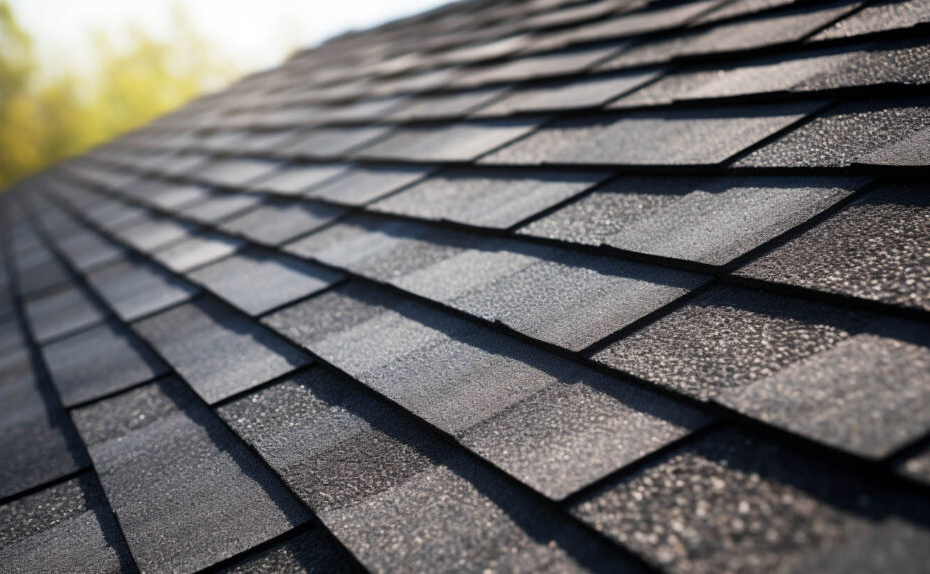
Roof ridge cap shingles cover the top line where two roof slopes meet. Specially made caps bend over the peak, shed water across that exposed joint, and give an asphalt roof a finished look. On a roof with ridge ventilation, the caps also protect the vent beneath them. They are small pieces in a large roof system, but mistakes at the peak can lead to wind damage and water entry.
If you are replacing a roof, repairing missing caps, or comparing a contractor’s estimate, it helps to understand how ridge caps differ from ordinary field shingles. This guide explains the choices, what a correct installation needs, when a cap can be repaired, and what to ask before paying for new materials.
The Roof Peak Takes a Different Kind of Weather
The long, raised line at the top of a gable roof is the ridge. Sloped lines that run from the ridge down toward the eaves are hips. Both locations are exposed to wind and weather from more than one direction, and both need a covering that can follow the change in roof angle.
Standard field shingles are made to lie across relatively flat roof planes. A ridge cap is designed to fold over a peak without leaving a poorly supported bend. Some caps are thin and discreet; others are thick and dimensional, creating a visible shadow line. Appearance matters, but the real job is to protect the joint.
Caps are not the same thing as the ridge vent. The vent is a ventilation component installed along an opening at the roof peak. Caps are the outer shingle covering that sits above a vent or a solid ridge, depending on the design. Mixing up those parts can make a quote confusing.
Dedicated Caps Versus Cut-Up Field Shingles
Years ago, crews commonly cut suitable three-tab shingles into pieces for use on hips and ridges. Some roofs still have that detail. Many modern laminated architectural shingles, however, are not intended to be bent and used as improvised caps. Their layered construction can make the fold bulky or unsuitable.
Dedicated hip and ridge products come in widths, thicknesses, colors, and exposures chosen for their purpose. The GAF ridge cap product guidance describes caps as protection for high-stress roof hips and ridges. Specific products also carry their own installation and warranty terms.
Ask your installer which cap product is included, not merely whether the proposal says “matching ridge.” A low bid may use a different accessory from the main shingle system. That choice can affect the appearance, wind performance, and eligibility for particular manufacturer warranty provisions.
How a Ridge Vent Changes the Installation
A vented ridge has an opening cut near the roof peak so warm, moist attic air can leave. A shingle-over vent is placed across that opening, and compatible ridge caps are fastened over it. A solid ridge without ventilation usually has caps installed over the prepared roof surface instead.
Ridge exhaust ventilation only works properly when there is adequate intake air, usually at the eaves, and when the vent system is designed as a whole. Owens Corning’s ridge vent information emphasizes the relationship between exhaust vents and intake ventilation. Adding a vent at the peak while blocking the soffits will not create a balanced system.
If the house has a musty attic, ice-dam history, or unusually hot upstairs rooms, ask the contractor to evaluate ventilation rather than promise that ridge caps alone will solve the problem. Our article on blocked soffit vents explains why the air path from the eaves matters.
What a Proper Cap Layout Looks Like
On a typical asphalt roof, ridge caps overlap in a consistent direction so exposed edges do not face the strongest prevailing weather. The exact starting point, exposure, and fastening locations come from the cap manufacturer’s instructions. Those directions may differ by product, especially for thick, folded, or impact-resistant caps.
The installer should keep the caps centered along the ridge or hip and maintain an even reveal. A wandering cap line is not merely cosmetic; it can signal hurried layout or poor fastening. On long, straight ridges, small alignment errors become obvious from the ground.
Fasteners should be the specified type and length and should penetrate the required substrate. A cap over a ridge vent may need longer nails than one placed directly on the deck. Reusing a short nail because it was already in the nail gun is not a sound substitution.
Color Matching Is More Subtle Than It Sounds
Manufacturers often offer ridge caps intended to coordinate with their field shingles, but a cap is a different shape and catches light at a different angle. The same color name may not look identical on a steep ridge at sunset. A darker dimensional cap can be an intentional architectural detail rather than a mismatch.
Ask to see a sample of the exact cap next to a sample of the shingle being installed. Compare them outdoors in daylight. Product photos on a phone can hide texture, gloss, and granule differences that become clear once the roof is finished.
For a house with several hips and dormers, a bold cap may add a lot of visual weight. A simple, lower-profile cap may look better on a clean roofline. There is no single best style for every home; choose the finish with the entire roof shape in mind.
Wind Damage: What Missing or Lifted Caps Tell You
Ridge caps sit at a highly exposed part of the roof, so a lifted edge deserves attention. From the ground, look for a piece sticking up, a gap in the cap line, or a patch of different color where a piece has blown away. Binoculars or a zoomed photograph can help you document the problem without climbing.
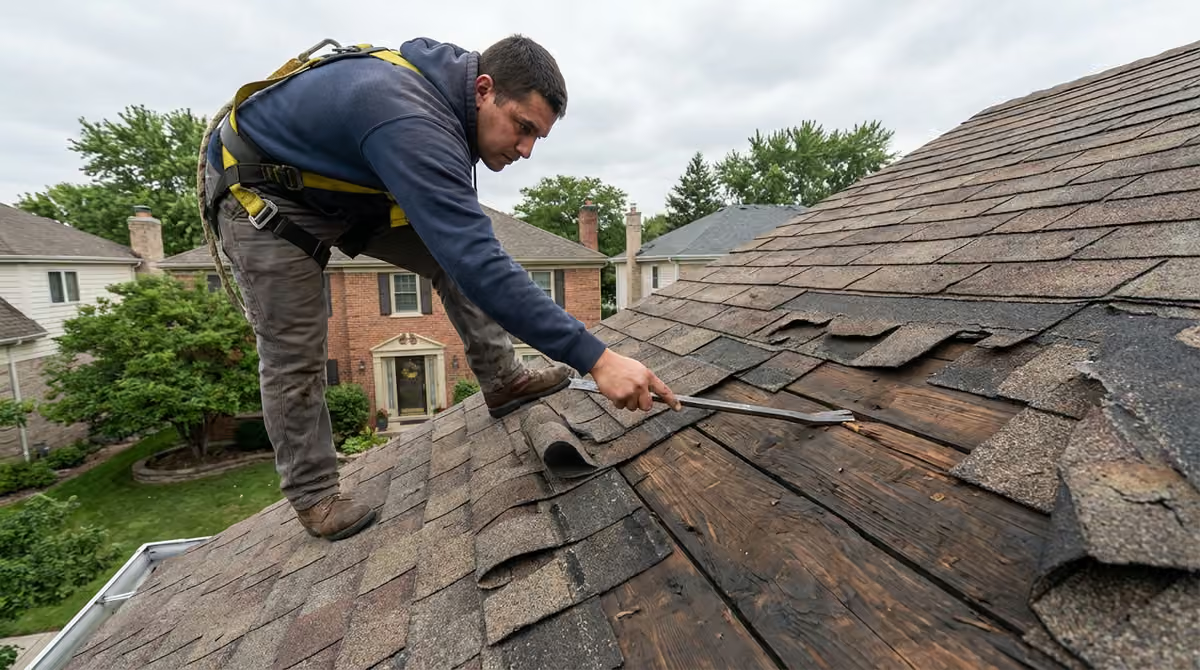
A single missing cap may be repairable if the surrounding material is sound and the underlying roof has not been damaged. Multiple loose caps along a long ridge can point to a broader fastening or sealing issue. A roofer should check whether the product, nails, and installation pattern were appropriate.
Do not use roofing cement as a catch-all fix for caps that were never properly attached. Sealant can sometimes be part of a manufacturer-approved repair, but it does not replace sound fastening or correct placement. Read our guide to wind-lifted roof shingles for the wider signs of storm damage.
Leaks Near the Ridge Are Not Always Cap Leaks
Water showing up on an upstairs ceiling near the roof peak may suggest a cap problem, but water can travel along framing before it becomes visible. A damaged vent, wind-driven rain, poor flashing farther uphill, or attic condensation can produce similar stains.
A roofer should inspect the cap line and the vent beneath it, then trace likely water paths. In a vented assembly, the cut opening, vent ends, and fasteners deserve special attention. Simply laying another row of caps over an unresolved defect may conceal the cause without stopping it.
Interior clues help. Note whether stains appear during wind-driven storms, snow melt, or long periods of humid weather. A pattern is more useful than a single photograph. Keep those notes with the roofer’s findings so the repair addresses the actual source.
Should You Replace Ridge Caps During a Reroof?
On a full asphalt-shingle replacement, the caps are generally replaced along with the field shingles. Removing old shingles can disturb the cap area, and a new roofing system is normally designed with compatible new accessories. Reusing old caps to save a small line item is rarely an attractive tradeoff.
Ask the contractor whether the quote includes all ridges and hips, new ventilation components where specified, and the proper cap accessory. A house with many intersecting roof planes may use more cap material than a simple gable roof of the same floor area.
Look for separate line items if you are comparing bids. “Shingles installed” is too broad to reveal whether a manufacturer-matched ridge cap, basic cap, or special impact-resistant product is included. Clear naming prevents last-minute substitutions.
Repairs, Warranties, and the Age of the Roof
Repair decisions change as the surrounding shingles age. New caps on a relatively young roof can blend well if matching materials are available. On an older roof, the existing granules may have faded, and nearby shingles may crack when lifted for a repair. The roofer needs to balance a localized fix against the condition of the whole ridge.
Product warranties are not the same as workmanship guarantees. A manufacturer’s coverage can depend on using specific components and following detailed installation rules. The installer’s warranty addresses a different set of responsibilities. Ask for both documents and read the exclusions rather than assuming the word “lifetime” covers every future leak.
If the ridge vent is being changed, ask whether intake ventilation was measured and whether the new vent suits the roof pitch. This is a good time to fix an attic airflow problem, but only after someone has checked the entire ventilation path.
Questions That Make a Roofing Estimate Clearer
Ask for the cap brand and model, the matching field shingle, the vent product if one is being installed, and the intended fastener length. Request confirmation that the cap and vent combination is approved by the relevant manufacturers. A well-prepared installer should be able to provide product sheets without a long debate.
Ask how the crew will handle ridge ends, intersections, and hips. Those transitions are easy to overlook in a generic proposal and can be vulnerable when treated casually. If a storm is expected during the project, ask how the roof will be kept weather-tight before the caps are complete.
Finally, request a few close photographs of the completed ridges. They can show alignment, terminations, and the finished accessory even if the roof is too high to inspect from the yard.
Final Thoughts
Roof ridge cap shingles do more than make a roof look finished. They cover an exposed change in roof direction, protect the peak, and often work with a shingle-over ventilation system. Choosing the right cap is about product compatibility and installation quality as much as color.
When reviewing a roof estimate, do not let the ridge become an unnamed afterthought. A specific cap product, a clear ventilation plan, and properly documented installation give you a much better basis for judging the work.

Nike Carkarel
Nike Carkarel writes about home decor, interior design, and practical ways to make living spaces more beautiful and comfortable. At Turquoise Moon Homes, Nike shares ideas for decorating rooms, choosing furniture, improving home layouts, and making everyday spaces work better. With an interest in thoughtful design and simple home improvements, Nike helps readers find inspiration for homes that feel welcoming, stylish, and easy to live in.