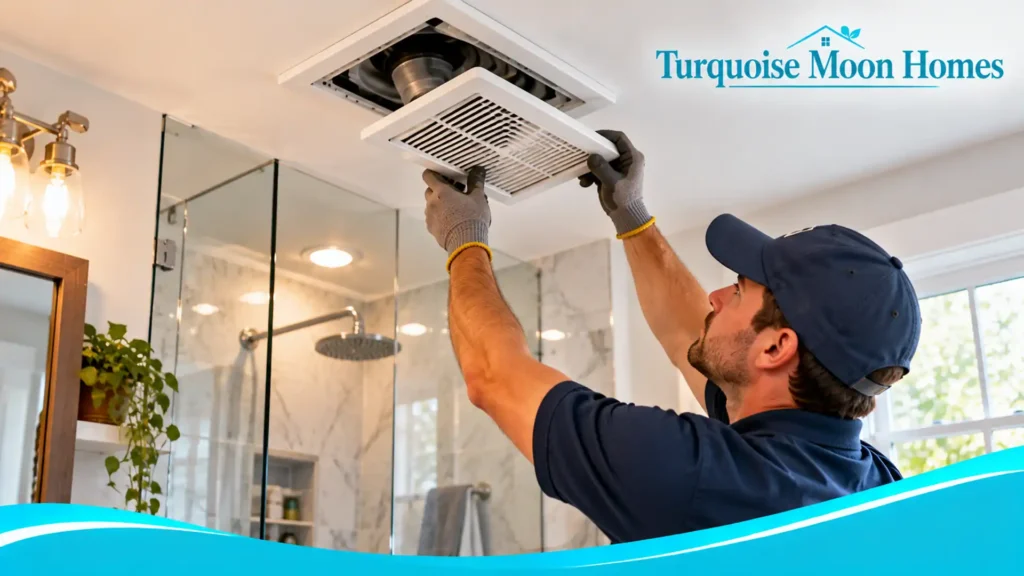
Bathroom exhaust fan size depends on room area, ceiling height, layout, and the resistance of the exhaust duct. For a typical bathroom with an eight-foot ceiling, roughly one CFM per square foot is a common starting point, but actual installed airflow matters more than the number on the box.
Use the steps below to narrow your choices and avoid buying a noisy fan that still leaves the room damp.
Start with the Size of the Room
Bathroom exhaust fan size is commonly expressed in cubic feet per minute, or CFM. The rating describes how much air the fan can move under a specified test condition. For many bathrooms with ceilings around eight feet high, a useful starting point is approximately one CFM per square foot, subject to applicable code and the guidance for the room. A 70-square-foot bathroom therefore points toward a nominal 70-CFM class fan, but that is not the entire decision. A long duct, several bends, and the fan’s tested performance can reduce actual airflow.
Measure the Bathroom You Really Have
Measure the usable floor area by multiplying length by width. If the room has an alcove or an irregular shape, break it into rectangles and add them. A bathroom that is 8 feet by 10 feet has 80 square feet of floor area. Do not base the calculation on the whole bedroom suite or count only the shower stall. Ceiling height matters as well because a taller room holds more air. In a large or unusually tall bathroom, consult the ventilation requirements that apply to that layout rather than relying on a single square-foot shortcut.
Why a Bigger Fan Is Not Always Better
An oversized fan can create more noise, use more electricity, and pull conditioned air out of the home faster than needed. It may also draw replacement air from undesirable places if the home lacks a suitable air path. A small fan, on the other hand, may leave the mirror wet and allow moisture to linger after showers. Choose capacity based on the room and duct system, not the largest number printed on the box. A properly sized, quiet fan that actually vents outdoors is often more useful than a powerful fan connected to a poor duct.
Understand the CFM Label
Two fans with the same advertised CFM may perform differently once connected to real ductwork. Bends, length, duct diameter, and exterior termination all create resistance. Look for performance information at the relevant static pressure when available. A fan marketed for a short, straight duct may disappoint when installed across an attic with multiple elbows. A contractor should evaluate the entire airflow path, including the exterior hood and backdraft damper, rather than treating the fan motor as an isolated appliance.
Noise Ratings Make a Daily Difference
Bathroom fan noise is often expressed in sones. Lower sones generally indicate quieter operation under the stated test conditions. A very loud fan encourages people to switch it off before moisture clears. A quieter model can make a real difference in a shared bathroom near bedrooms or a hallway. Still, an unusually quiet fan is not proof of good airflow. Compare both the sound rating and the ventilation performance, and ask whether the installed duct configuration will preserve the published results.
The Duct Should Lead Outdoors
Exhausting bathroom air into an attic, crawl space, or wall cavity moves moisture into a place where it can cause trouble. The duct needs a proper exterior termination. Its routing should avoid crushed flexible tubing, sharp turns, and unnecessary length. Where ducts cross unconditioned spaces, insulation and condensation management may be important. The exterior termination should resist weather entry and pests without choking airflow. For more on this specific issue, see our bathroom exhaust fan venting guide.
Think About the Shower and Toilet Locations
A single fan can work well in a compact bathroom with an open layout. A large bathroom with a separated toilet compartment or a shower behind a full-height partition may need a different arrangement. Placement should help capture moist air near its source while respecting the manufacturer’s instructions and electrical safety requirements. Fans located over a shower or tub require models and installation methods approved for that location. Never assume that a fan suitable for a dry ceiling location can automatically be placed in a wet area.
Why the Door Gap Matters
A fan cannot continuously exhaust air unless replacement air can enter the bathroom. In a tightly sealed room, a small door undercut or another approved transfer-air path may help the system work as intended. If the fan sounds strained when the door is closed, that can be a clue to investigate. Do not cut large holes or modify fire-rated doors based on a generic tip. The right solution depends on the door, the building, and local requirements. A ventilation professional can check airflow with the door in its normal operating position.
Run Time and Controls
Many bathrooms need ventilation after the shower ends, not just while someone is standing under the water. A timer switch helps users leave the fan running long enough to remove lingering moisture without remembering to turn it off. Humidity-sensing controls can also be useful, but they must be positioned and adjusted appropriately. A sensor near a supply register may respond differently from one near the shower. No control can compensate for a blocked duct or a fan that moves far less air than its rating suggests.
How to Check Whether the Fan Works
A fogged mirror that clears slowly, persistent condensation on walls, and peeling paint can suggest insufficient ventilation, although leaks and high indoor humidity may also be involved. A tissue held near the grille can show that air is being drawn in, but it does not measure CFM. For a reliable airflow check, ask a qualified technician to measure exhaust flow with appropriate equipment. Inspect the exterior outlet for obstructions and make sure the damper opens when the fan runs. Keep the grille clean because dust buildup can restrict airflow.
Replacing a Fan Without Replacing the Ceiling
Some replacement fans fit an existing housing, but many do not. Check the opening dimensions, joist position, duct connection, wiring, and whether the old housing can be accessed from above. A larger motor installed into a restrictive duct will not necessarily solve the problem. If the replacement requires electrical changes or work in a wet location, use a qualified installer. Ask the contractor whether the quoted work includes a new exterior termination, insulated duct where needed, and repair of any ceiling damage.
Costs and Tradeoffs to Compare
The shelf price of a fan is only part of the project. A simple same-size replacement with a suitable existing duct can be relatively straightforward. Adding a new duct route through an attic, cutting an exterior opening, or changing wiring may require more labor and coordination. Consider noise, energy use, access for cleaning, replacement parts, and the quality of the damper. An inexpensive fan with a poorly designed duct may cost less upfront but leave you with the same moisture problem. Request a scope that identifies both the fan and the airflow path.
Guidance Worth Checking
The Home Ventilating Institute provides guidance on bathroom exhaust fan selection, including capacity and sound. The ENERGY STAR ventilation fan information helps homeowners compare efficient products and understand performance considerations. Use these as starting points, then check the selected fan’s installation instructions and your local building requirements. Product ratings are meaningful only when the installed system allows the fan to deliver adequate airflow.
A Simple Selection Example
Imagine a bathroom measuring 9 by 8 feet with an eight-foot ceiling. The floor area is 72 square feet, so a fan in the neighborhood of 80 CFM may be a sensible starting point for discussion. If the duct runs across a long attic with several turns, the installer should verify whether that model can still deliver the needed flow. If the bathroom has a separate enclosed toilet area or a much higher ceiling, the layout deserves another look. The example is a planning aid, not a substitute for local code or a measured airflow test.
The Practical Takeaway
Choose a bathroom exhaust fan by matching airflow to the room, checking how the duct affects performance, and selecting a noise level that makes regular use comfortable. Make sure the air leaves the house, give replacement air a route into the room, and use controls that keep the fan running after moisture-producing activities. If a bathroom remains damp despite a new fan, investigate the complete system before buying an even larger motor. Good ventilation is a connected path from the room to outdoors.

Nike Carkarel
Nike Carkarel writes about home decor, interior design, and practical ways to make living spaces more beautiful and comfortable. At Turquoise Moon Homes, Nike shares ideas for decorating rooms, choosing furniture, improving home layouts, and making everyday spaces work better. With an interest in thoughtful design and simple home improvements, Nike helps readers find inspiration for homes that feel welcoming, stylish, and easy to live in.