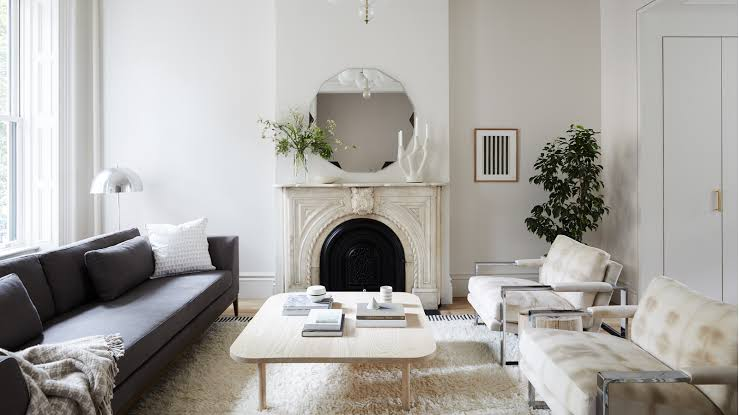
The sofa finally fits, the rug looks right, and then the coffee table arrives. Suddenly the room feels like an obstacle course. Or the table is so small that everyone leans forward to reach a mug. Choosing the right coffee table size is less about copying a showroom photograph and more about three measurements: sofa length, seat height, and the walking space around the table.
A useful starting point is a table roughly two-thirds as long as the sofa, with a top near the cushion height and enough room for knees and feet. Those are guides, not rules carved into stone. A chaise, a narrow apartment, or a room used by young children can change the choice. Here is how to test proportions before spending money.
Measure the sofa people actually sit on
Start with the overall width of the sofa, but also note the usable seating run. An 84-inch sofa with broad arms may feel smaller than its exterior dimensions suggest. A sectional needs a different reading: focus on the main seating section facing the table, not the combined length of every leg of the L.
Measure the seat height from the floor to the top of the cushion in normal use. Cushions compress, so note how the seat feels when someone sits down. A coffee table that looks perfect beside a showroom sofa may sit awkwardly high beside your softer, lower one.
Finally, measure the open floor in front of the sofa. Mark the route to the doorway, television, and other seats. A table must fit the movement of the room, not just the furniture diagram.
Use the two-thirds guideline without treating it as a command
The Pottery Barn coffee table buying guide suggests a table around two-thirds the sofa length and about 18 inches between the table and seating. For an 84-inch sofa, two-thirds is 56 inches. That is a useful visual starting point, not an instruction to buy exactly 56 inches.
In a tight room, a 44- or 48-inch table may make more sense if it preserves a doorway path. In a spacious room, a slightly longer piece can work when it does not crowd the ends. Try the shape on the floor with painter’s tape before choosing.
A good coffee table size should look connected to the seating without swallowing the space between it and the opposite wall.
Match height to the cushion, not the sofa back
The table top should generally be close to the seat height or a little lower. If the sofa seat is 18 inches high, a table around 16 to 18 inches often feels comfortable. A very low table may look elegant in a photograph but become tiresome when used for drinks, books, or board games.
The Crate & Barrel buying guide recommends keeping the top no more than about three inches below or one inch above the seat. Treat that as a practical comfort check rather than an exact design law.
For a sofa with deep, sink-in cushions, test the height while seated. If you have to bend sharply every time you set down a cup, the visual balance may not be worth the inconvenience.
Leave room for knees and a natural reach
A common starting clearance is about 14 to 18 inches between the sofa edge and table. That gives people space to stand while keeping the tabletop within reach. But a narrow room may need a smaller or shallower table rather than a reduced gap that traps knees.
Set a cardboard box or a stack of books where the table would go. Sit on the sofa, stand up, and walk past. If someone must twist sideways, the footprint is wrong even if the measurements look respectable on paper.
Remember that a soft ottoman can project farther when someone rests their feet on it, and nesting tables may spread wider during use. Test the room as it is lived in, not only when every piece is tucked neatly away.
Choose a shape that respects the traffic pattern
A rectangular table suits many straight sofas because it follows the seating line. An oval offers similar reach with softer corners, useful when people walk closely around both ends. A round table can be a smart choice for compact seating groups, especially when several chairs face the center.
Square tables often work with generous sectionals, but a large square can leave one side too far from the sofa. A narrow rectangular table may be better when the chaise occupies much of the floor.
Our sectional sofa rug size guide explains how the rug and seating footprint work together. The table should sit comfortably within that arrangement, not force the rug to carry an awkward shape.
Work through an 84-inch sofa example
Imagine a living room with an 84-inch sofa, an 18-inch seat height, and 64 inches of open floor between the sofa front and the media cabinet. A 56-inch-long table might be visually balanced, but its depth is the deciding factor.
If the table is 24 inches deep and you leave 16 inches between it and the sofa, only 24 inches remain on the far side. That may be too tight for the main route through the room. A shallower 18-inch table would leave 30 inches there, making the room easier to cross.
This is why coffee table size cannot be chosen by sofa length alone. Width, height, and circulation work as one set of decisions.
What changes when the sofa has a chaise?
With a chaise sectional, the table sits inside an L-shaped pocket. Measure the distance from the main sofa edge to the chaise side and the remaining path on the open side. A table that is ideal for a straight sofa may block access to the chaise.
A round or oval table can make the pocket feel less boxed in. Two smaller nesting tables can also help when one person wants a surface near the chaise while others need the center clear. Avoid choosing a giant square merely because the sectional looks large from above.
Place the table where the most seats can reach it without leaning over one another. That practical test matters more than matching the exact center of the rug.
Small living rooms benefit from less depth, not just less length
In a narrow room, shoppers often buy a shorter table but overlook its depth. A 42-inch-long table that is 30 inches deep can still pinch the walkway. A 48-inch-long table only 18 inches deep may work better.
Look for rounded corners, a slim base, or nesting pieces that can be separated when needed. A narrow bench-style table can provide a useful surface without creating a solid visual block, provided it is stable and appropriate for the household.
If the room has two paths crossing the seating area, consider skipping the central table and using side tables instead. The right answer is sometimes no coffee table at all.
How storage changes the choice
Drawers, lift tops, and lower shelves can help keep remotes and games from covering the tabletop. But storage furniture is often heavier and visually bulkier. Check whether drawers need extra clearance and whether a lift top can open without hitting knees.
A trunk-style table may be charming but frustrating if every access requires clearing the entire surface. A shelf can collect clutter unless it has a defined purpose. Choose storage for what you actually need to put away, not because “more storage” sounds automatically better.
In a family room, rounded edges and wipeable finishes may matter more than a delicate stone or glass surface. In a formal sitting room, a lighter frame may keep the space feeling open.
Test the finish in the room’s real light
A dark solid table can anchor a pale room, but it may feel heavy if the rug and media unit are also dark. Glass can make a small room feel more open, yet fingerprints and reflections may be annoying. Wood adds warmth and tends to disguise small everyday marks better than a mirror-like surface.
Bring home a material sample when possible and look at it beside the sofa in daylight and lamplight. Our guide to living room paint undertones explains why finishes can change character as light shifts during the day.
Remember that a tabletop is touched and cleaned often. The surface you enjoy maintaining is usually a better choice than the one that only photographs beautifully.
Make a paper footprint before ordering
Use painter’s tape to mark two or three possible sizes on the floor. Place a chair or box at the planned height if you can. Sit, reach, stand, and walk through the room with another person moving at the same time.
Check that the table does not interfere with recliner footrests, storage doors, floor vents, or the route from the entry. If the space feels crowded, reduce the table’s depth first and retest. A few inches can change how the whole room works.
For online orders, confirm the actual dimensions and delivery measurements. Product photos may make a table look slimmer than it is, especially when the camera angle hides a thick top or broad base.
Common mistakes worth avoiding
Do not buy by “standard size” alone. There is no single standard sofa height, and a standard table may not suit your room. Do not place a tall table in front of a low sofa merely to match a sideboard. And do not forget the clearance required for opening drawers or walking around chairs.
Another mistake is centering the table on the wall instead of the seating group. If the sofa sits off-center to preserve a doorway, the table usually belongs with the sofa, not the architecture.
Finally, avoid using the rug edge as the only measurement. The rug frames the seating area, but comfort is decided by actual seat positions and walkways.
Final thoughts: fit should feel effortless
The right coffee table size does not call attention to itself every time someone stands up. It gives a comfortable place for a cup, leaves room to pass, and looks at home beside the sofa.
Measure the seating, tape the footprint, and test the route through the room. Those few minutes are far more useful than guessing from a styled product photograph.
