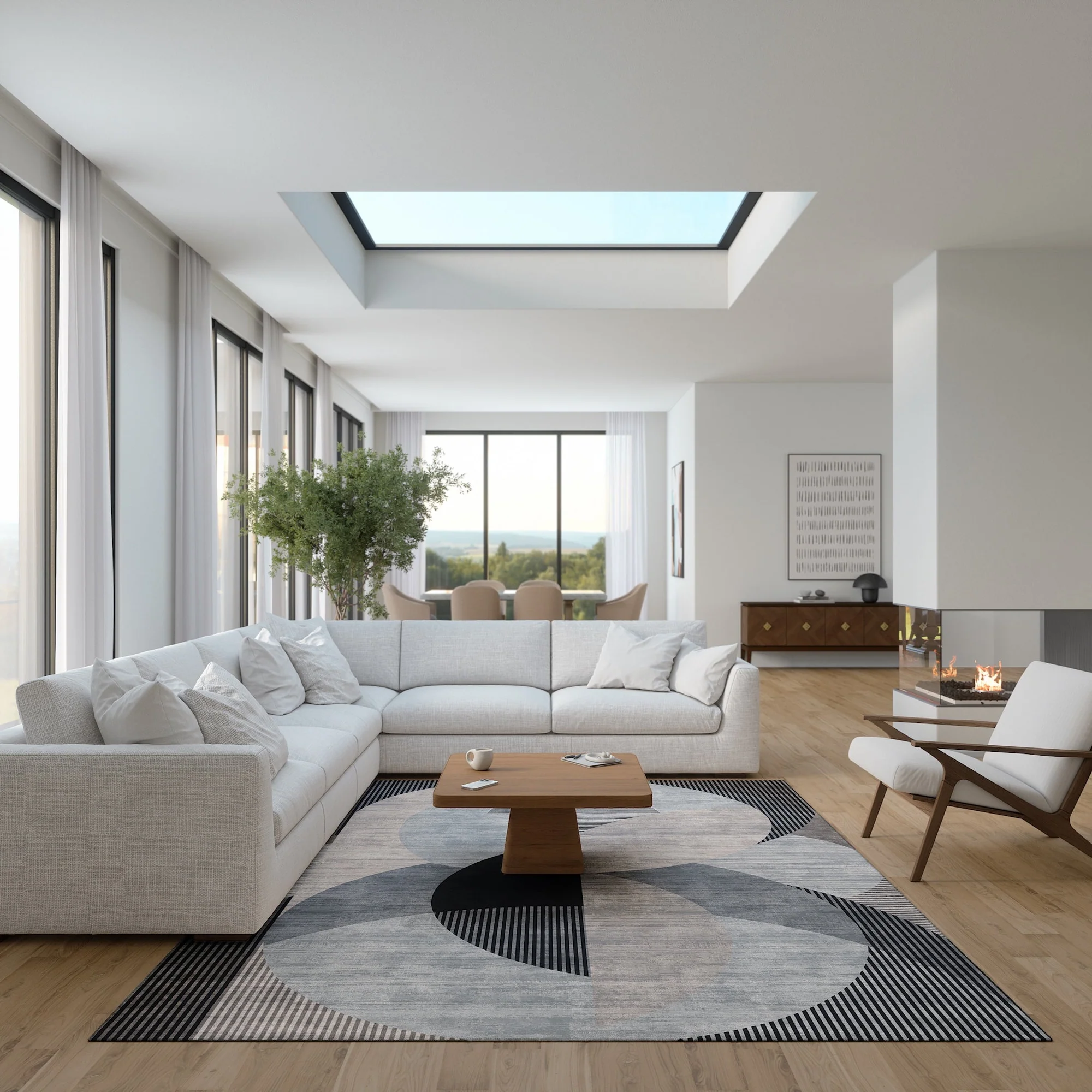
The sectional fits beautifully, the coffee table is in place, and then the new rug arrives. Suddenly the room looks like a sofa floating around a bath mat. The pattern may be perfect, but the rug is too small to connect the seating. This is a common decorating disappointment because shoppers measure the open floor instead of the furniture group that needs anchoring.
The right sectional sofa rug size usually lets the front legs of both arms of the sectional rest on the rug, with enough visible rug to feel intentional. Many rooms work with a 9-by-12-foot rug, while compact sectionals may suit an 8-by-10 and larger arrangements may need 10-by-14 or more. Those are starting points, not rules. Your room’s traffic paths, chaise direction and furniture dimensions decide the final fit.
Start with the sectional, not the room’s square footage
Measure the full outside width of the sectional and its deepest projection, including the chaise. Then note the position of any accent chair, ottoman and coffee table. A 100-inch sofa with a long chaise occupies a different footprint from a 100-inch straight sofa, even in the same room. Sketch the footprint on paper or mark it with painter’s tape so you can see which pieces should visually belong together.
Next, mark doors, floor vents, heating registers and the main route through the room. The rug should not turn a comfortable walkway into a narrow obstacle course. A larger rug can make furniture feel more settled, but buying the biggest size available is not automatically wise if it runs under a door swing or bunches against a threshold.
The front-leg layout is the flexible favorite
For many L-shaped sectionals, placing the front legs of both sofa sections on the rug creates a connected seating zone without hiding most of the rug beneath furniture. The coffee table stays fully on the rug. If there is an accent chair opposite the sectional, its front legs should ideally join the same area. This arrangement works especially well in rooms where you need some exposed floor around the seating.
Crate & Barrel’s rug sizing guide recommends choosing enough area for at least the front legs of the sofa and chairs and lists 9-by-12 feet as a common fit for sectionals. That is useful guidance, but do not order by label alone. Rug sizes can vary slightly by product, and the exact footprint of your sectional may call for a different orientation.
When all four legs belong on the rug
In a generous living room, a rug large enough to hold the whole sectional and nearby chairs can create a calm, furniture-on-one-island effect. This is especially effective in an open-plan space where the living area needs a clear boundary from the dining area. The tradeoff is cost, weight and the amount of floor covering hidden under heavy furniture.
If your sectional is deep and your room is wide, try outlining a 10-by-14-foot rectangle before shopping. Ask whether it leaves comfortable walking space around the outside and whether the rug edges remain visible. A rug swallowed almost entirely by the sofa may not deliver the design effect you expected. On the other hand, a rug that stops exactly at the sofa legs can look cramped.
Sectional sofa rug size: 8×10, 9×12 or 10×14
An 8-by-10-foot rug may work under a compact apartment sectional when the long side of the rug spans the seating width and both front-leg zones fit. A 9-by-12-foot rug gives more breathing room around many medium sectionals and often accommodates a chair. A 10-by-14-foot rug can unify a larger family-room arrangement, particularly when you want all legs supported. The best choice depends on the actual furniture measurements, not just whether the room is called small or large.
Imagine a sectional that measures 112 inches across, with a chaise projecting 68 inches into the room. A rug only 60 inches wide may leave the chaise area hanging outside the visual boundary. An 8-by-10 placed the wrong way may be nearly as awkward. Tape out both orientations and see where the sectional’s front feet land. That ten-minute test is more useful than choosing a size from a styled photograph.
How the chaise changes sectional sofa rug size
With a chaise on the left, you may want more rug visible toward the open right side where a chair or side table sits. With a right-hand chaise, the balance reverses. The rug does not always need to be perfectly centered under the entire sofa. It should center the conversation area, which may include a coffee table and an opposite chair. This subtle shift can make an asymmetrical sectional feel deliberately arranged.
A U-shaped sectional needs a different approach. The rug should connect the facing seats rather than sit like a tiny island in the middle. If a large enough rug will not fit the room, consider simplifying the furniture arrangement before buying. A smaller sofa plus movable chairs may serve a narrow room better than forcing an oversized sectional to work with a rug that cannot reach its feet.
Measure sectional sofa rug size before you order
First measure the sectional’s outside width and deepest side. Second, mark where the front feet touch the floor. Third, place painter’s tape around the proposed rug size. Fourth, set the coffee table and any chairs in their normal positions. Finally, walk the room as you would on an ordinary evening: enter with a laundry basket, open the balcony door, reach the lamp and sit on the chaise.
If a taped rug edge runs through a common walking route, adjust the layout. If the rug barely touches one leg, consider a larger size or a different orientation. Check whether the rug will block a door, cover a floor register or interfere with furniture that needs to move. These practical details rarely appear in catalog photography, but they determine whether the room feels easy to use.
Texture and material matter after size
A soft high-pile rug feels inviting under bare feet, but it may catch crumbs and make furniture legs harder to move. Low-pile wool or durable performance materials can suit a busy family room with pets, snacks and frequent vacuuming. Jute adds texture but may be less forgiving around spills. Ask what happens on an ordinary Tuesday, not just how the rug will look in a photograph.
A rug pad helps prevent shifting and can protect the floor, but it needs to suit the flooring finish and rug construction. Check both manufacturers’ instructions, especially for hardwood or luxury vinyl surfaces. Choose a pad slightly smaller than the rug so the edges lie flat. If someone in the household uses a walker or has limited mobility, prioritize secure edges and clear routes over a thick, plush underfoot feel.
How to handle a sectional near the wall
A sectional pushed into a corner can still look grounded when the rug extends beneath the front feet and out into the seating area. You do not need to drag the sofa away from the wall just to display more fabric. Instead, ensure the visible border feels balanced in front of the coffee table and toward the open side. If a chair faces the sectional, bring it close enough to join the same rug without crowding the table.
Pottery Barn’s living-room rug guide offers a useful reminder to think about material, scale and how the rug defines the room. Treat its styled examples as inspiration, then return to your own measurements. A family room with a play area needs a different amount of open floor than a formal sitting room with occasional guests.
Do not let the rug solve the wrong problem
If the room feels crowded, a bigger rug may not fix the furniture layout. A bulky coffee table, awkward chaise direction or blocked walkway can be the real issue. Try rearranging the seating before purchasing. Our living room furniture arrangement guide can help you test the conversation area and traffic paths first.
In a very compact room, leaving a deliberate strip of bare floor can make cleaning easier and help the rug read as a separate zone. If you are working with a small apartment living area, the small living room ideas guide offers complementary layout decisions. The rug should support the room’s plan, not become the plan.
Final Thoughts
A sectional is a large visual shape, so it needs a rug that speaks at the same scale. Measure the furniture, outline two candidate sizes and walk the room before you order. When the sectional’s feet, coffee table and nearby seating feel connected, the rug stops looking like a decorative afterthought. It becomes the quiet foundation that makes the whole living room feel finished.
