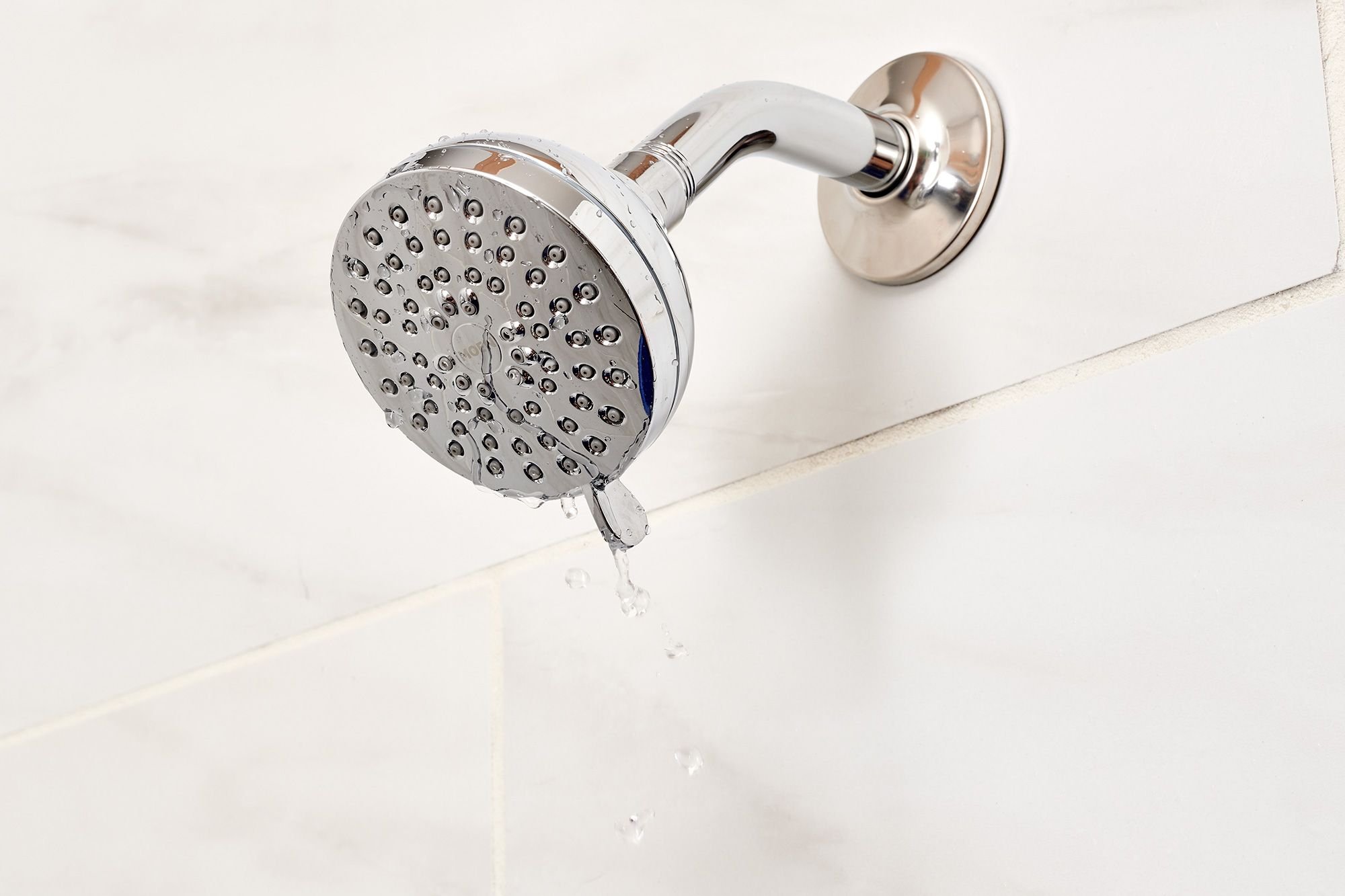
You turn off the shower, hang up the towel, and hear another drop hit the tub. A few drips right after use can simply be water draining from the showerhead and pipe. But a showerhead dripping when off for hours, or a steady trickle that never stops, can mean the shower valve is not sealing properly. The fix depends on where the water appears and how long it continues.
Before buying a new showerhead, watch the pattern. A leak at the threaded connection is different from water coming out of the spray holes. A drip that stops after several minutes is different from one that continues all night. These clues can save a trip to the hardware store and prevent unnecessary work behind the wall.
First, give leftover water time to drain
After a shower, water remains in the head, shower arm, and sometimes a handheld hose. It can escape in irregular drops as air enters and the water shifts. A short burst when the head is tilted or moved is also consistent with trapped water, not necessarily a failed valve.
Dry the tub, note the time you shut the water off, and listen again later. If dripping fades and stops, you may be seeing normal drainage. If drops keep coming at a similar pace after the system should have emptied, investigate the valve.
Do not diagnose a cartridge failure from the first few seconds of dripping. The duration and repeatability of the symptom are much more useful than the sound alone.
Identify where the water is actually coming from
Look closely without dismantling anything. Water emerging from the spray face after the control is off suggests drainage or water passing the closed valve. Water forming at the threaded connection between the shower arm and head points toward a joint seal. A leak behind the trim plate or inside the wall is a different, more urgent problem.
Dry the outside of the showerhead and connection with a towel, then observe. If the connection gets wet while the shower is running, that may indicate a poor seal at the threads. If water continues through the spray nozzles when the valve is off, replacing the head may not solve it.
A handheld shower adds another place for water to collect. Hang the hose in its usual position, then gently lower it over the tub to see whether residual water drains and stops.
Why a new showerhead may not stop an off-position leak
The showerhead controls the spray pattern; the valve behind the handle controls water flow. When a valve cartridge or sealing component wears, water may continue past it even though the handle looks fully closed. That water can emerge from a perfectly good showerhead.
Manufacturer-specific designs matter. For example, Moen’s guidance for its M-Core 4 Series shower valve distinguishes a continuous shutoff leak from installation-related handle calibration and cartridge issues. The correct part and procedure depend on the actual valve model, not just the brand name on the trim.
Do not order a random cartridge because it resembles a photo online. Identify the valve model and installation age, then consult its official instructions.
Try the simplest checks before opening the wall
Make sure the handle reaches its normal off position without forcing it. Some controls have stops or trim components that can interfere with full travel if installed incorrectly. If the handle feels loose or suddenly turns farther than usual, note that symptom.
Check whether the drip changes when someone else uses a sink or toilet. A pressure change may alter the rate, but it does not identify the faulty part by itself. Keep observations simple: time, drip frequency, control position, and whether hot or cold water seems involved.
Photograph the valve trim and any model markings. This makes it easier to find the correct parts and communicate with a plumber without guessing about the assembly behind the wall.
Repairing a leak at the shower arm connection
If water escapes around the joint while the shower runs, a worn gasket or improperly sealed threaded connection may be responsible. Shut off the water as appropriate, protect the finish, and follow the showerhead manufacturer’s instructions for removing and reseating it.
Some connections rely on a rubber washer; others use thread-sealing tape. Using both indiscriminately, overtightening a plastic nut, or twisting the shower arm inside the wall can create a larger leak. If the arm itself moves in the wall or shows corrosion, stop and have the connection assessed.
The U.S. EPA WaterSense leak guidance notes that leaky showerhead connections can often be corrected with proper tightening and sealing. That advice applies to the connection, not automatically to a valve that keeps sending water through the head.
When the cartridge or valve is the likely culprit
If the spray face keeps dripping long after the shower is off, the valve may be allowing water past worn seals. Mineral buildup, aging components, or a problem with handle positioning can contribute. Some systems use replaceable cartridges; others have different internal parts.
Replacing a cartridge usually requires turning off the water supply, relieving pressure, removing trim, and following model-specific instructions. Parts may be stuck or difficult to access, and incorrect reassembly can cause leaks or unsafe temperature control. If you cannot confidently identify the valve and isolate the supply, use a licensed plumber.
Never bypass an anti-scald or temperature-limiting feature to make the handle turn farther. The control protects users from dangerously hot water and must be restored to the manufacturer’s specification after service.
Use the water meter when the leak is persistent
For a steady unexplained drip, check whether water is being consumed when no fixtures or appliances should be running. A water meter can help identify ongoing use, although very slow leaks may not be obvious over a short observation period.
Turn off intentional water use, note the meter reading, and compare after a suitable interval. Do not interrupt equipment that requires water or assume every meter movement comes from the shower. Toilets, irrigation systems, and supply lines may also leak.
Our guide to a toilet that keeps running after a flush covers another common source of hidden water use. When several fixtures misbehave, isolate them one at a time instead of replacing multiple parts at once.
Hard water can complicate the symptoms
Mineral deposits can block spray nozzles, redirect water, or keep small pockets of water trapped inside a head. Cleaning according to the manufacturer’s instructions may improve the spray and drainage. It will not repair a valve that fails to shut off.
Avoid harsh chemicals or scraping finishes with metal tools. Some heads have rubber nozzles that can be gently wiped; others need a specific descaling procedure. Check the finish and gasket compatibility before soaking parts.
If a cleaned showerhead still releases a steady stream long after shutoff, shift attention back to the valve rather than repeating the same cleaning routine.
What a drip can cost over time
A single slow drop feels insignificant, but a persistent leak can waste a surprising amount of water. The EPA’s WaterSense materials give an example of a showerhead dripping ten times per minute wasting more than 500 gallons in a year. The exact amount depends on drop size and frequency.
That does not mean every brief post-shower drip represents an ongoing loss from the supply. Residual water already in the head is different. The important distinction is whether fresh water continues passing through the closed valve.
Fixing a persistent leak also reduces repeated wetting of the tub and surrounding surfaces, which can leave mineral marks and make cleaning harder.
When to call a plumber promptly
Seek professional help if water appears behind the wall, trim remains wet, the valve cannot shut off fully, or the handle becomes difficult to control. Also call if you cannot locate a reliable shutoff or if the repair involves unfamiliar plumbing connections.
Water stains on the ceiling below a shower deserve attention even if the visible drip seems minor. The source might be a supply connection, drain, or waterproofing problem rather than the showerhead itself.
Our article on bathroom exhaust fan venting addresses a separate moisture-control issue. Ventilation helps a bathroom dry, but it does not make an active plumbing leak safe to ignore.
Compare repair and replacement realistically
A worn showerhead gasket may be inexpensive to replace. A valve cartridge can cost more, and labor depends on accessibility and the model. Replacing the entire showerhead is worthwhile when the head itself is cracked, badly clogged, or worn, but it is not the default cure for a leaking valve.
Ask a plumber to identify the failing component and explain why it needs replacement. If the valve is older, discuss parts availability and whether a targeted repair is sensible. Avoid approving wall demolition before the accessible components have been assessed.
For a new showerhead, choose a compatible model with the spray pattern and flow you want. Do not assume a more expensive head will stop water passing through a faulty shutoff valve.
A simple observation log that makes diagnosis easier
On the next shower, record when the water is turned off and when dripping stops. Note whether drops emerge from the face or connection, whether the head is fixed or handheld, and whether the pattern changes after the hose is lowered.
If the leak continues for hours, record a short video showing the closed handle and the dripping head. A plumber can use this to narrow the likely cause before arriving, although an on-site assessment is still necessary.
Keep any old cartridge packaging or model numbers after repair. That small record can save time if the same fixture needs service years later.
Final thoughts: diagnose the path of the water
A showerhead dripping when off is not always a broken showerhead. Give residual water time to drain, identify the exact leak location, and determine whether the shutoff valve is still supplying water.
The right repair is usually the one that addresses the failed seal or component, not the most visible piece of chrome. A little patient observation can turn an annoying drip into a straightforward decision.
