A loose door handle fix often takes only a screwdriver or hex key, but first identify which part is moving. A wobbly lever, shifting backplate, and binding latch are different problems, and tightening the wrong screw can make the handle harder to use.
Follow this practical sequence to find the fastener, protect the door finish, and know when replacing the lockset makes more sense.
First Identify What Feels Loose
A loose door handle can mean several different problems. The lever may wobble on its spindle, the entire rose or backplate may shift against the door, or the latch itself may rattle in the edge of the door. Those symptoms call for different fixes. Hold the handle with one hand and gently move the decorative plate with the other. If only the lever moves, look for a set screw. If the plate moves too, the mounting screws may need attention. If the door still latches poorly after the handle is firm, inspect the strike and latch alignment separately.
Gather a Few Basic Tools
For most interior door handles, start with a small Phillips screwdriver, a flat screwdriver, and a set of correctly sized hex keys. A flashlight helps reveal a recessed screw beneath a lever. Put a towel on the floor to catch small parts. If the handle has a decorative cover, use a plastic pry tool or a thin screwdriver wrapped in tape to reduce scratches. Avoid a power driver at first because the small screws used in handle hardware strip easily. Check the manufacturer’s instructions if you know the brand or model.
Find the Hidden Set Screw
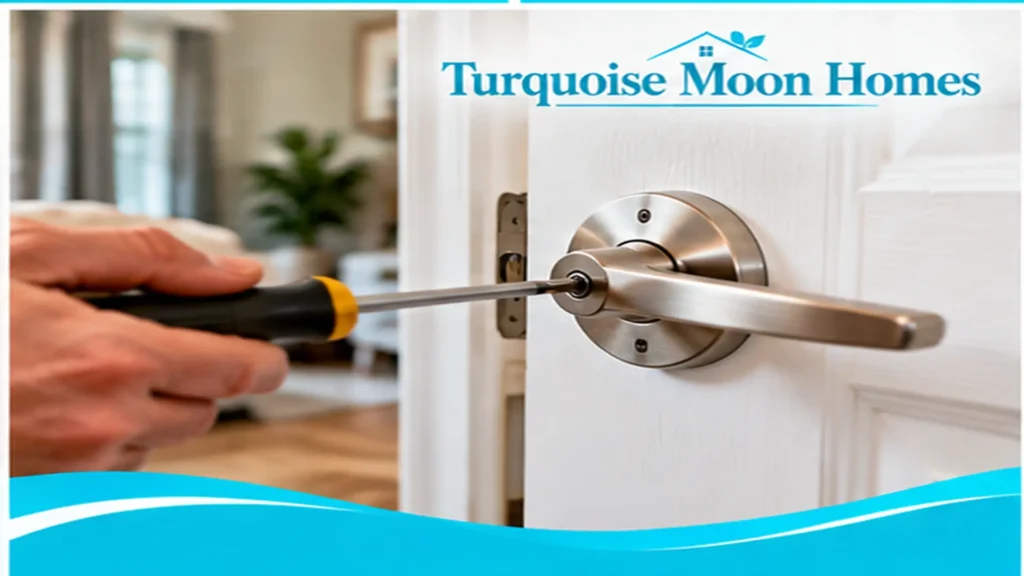
Many modern levers have a tiny screw on the underside or side of the handle near the round base. It may be a hex socket, a slotted screw, or another proprietary fastener. Turn the handle gently and inspect the stem with a flashlight. Insert the correct tool fully before tightening. If the tool rocks inside the socket, try a different size rather than forcing it. A rounded screw can be much harder to remove later. Tighten just enough to secure the lever and then test the handle through several normal turns.
When the Decorative Rose Is Loose
The round or rectangular plate against the door is often called the rose or escutcheon. Some roses snap over a mounting plate, hiding the screws that hold the lockset together. Look for a small notch along the edge of the cover. Carefully release the cover, support the handle on the opposite side, and tighten the exposed mounting screws evenly. Alternating between screws helps the plates sit flat. Do not keep tightening after the hardware is snug; overtightening can distort the mechanism or crush a soft door surface.
How Through-bolts Differ from Wood Screws
Many handle sets are secured by bolts that pass through the door and connect the two sides of the assembly. Others use screws into the door material. If a screw spins without gripping, first identify which system you have. A stripped through-bolt may need a matching replacement fastener or mounting component. A wood screw that no longer grips requires a repair appropriate to the door’s construction. Hollow-core doors, solid wood doors, and metal doors cannot all be treated the same way. Avoid filling a hole blindly with adhesive before understanding what the screw is meant to engage.
Check the Latch and Strike Plate
Sometimes a handle feels loose because the latch is binding when the door closes. Open the door and turn the lever. If it operates smoothly when open but requires force when closed, inspect where the latch meets the strike plate. Look for fresh scrape marks and changes in the door gap. Seasonal swelling, loose hinges, or a shifted strike plate can cause resistance. Tightening the handle alone will not correct that misalignment. Our sticking interior door guide covers how to locate rubbing before sanding or adjusting the door.
What to Do If the Handle Keeps Loosening
Repeated loosening often points to a damaged fastener, missing retaining component, incorrect installation, or vibration from frequent use. Remove the decorative cover and check that the mounting plate is seated flat. Look for stripped screw heads and cracks around the lever hub. If a set screw repeatedly backs out, the manufacturer may specify a replacement screw or approved thread-locking method. Do not apply permanent adhesive to a mechanism that may need future servicing. A correctly fitted replacement part is usually more dependable than an improvised fix.
Different Rules for Privacy Handles
Bathroom and bedroom privacy handles often include a push button or small locking mechanism. When opening the assembly, keep track of how the release pin and internal parts are positioned. Test the privacy function with the door open before closing it. A handle that turns but fails to release a privacy latch can leave someone locked in a room. If the mechanism is damaged, replacing the privacy lockset may be safer than repeatedly adjusting the exterior lever. Keep the emergency release tool in an accessible place outside the room.
Exterior Entry Doors Deserve Extra Care
A loose exterior handle can affect both convenience and security. If the deadbolt or latch does not engage reliably, prioritize a proper repair. Do not disassemble a front-door lock while you are alone without a way to secure the property afterward. Some smart locks also contain wiring, batteries, and alignment components that should not be pinched during reassembly. Follow the product instructions and test the door open and closed. If the latch binds or the cylinder turns unpredictably, a qualified locksmith may be the sensible choice.
How to Avoid Scratching the Finish
Door hardware often has a thin decorative finish that can be damaged by slipping tools. Use a screwdriver that fits the fastener head, keep the tool straight, and place a soft cloth beneath removable parts. When lifting a snap-on rose, start at the intended notch rather than prying around the entire edge. Avoid abrasive cleaners on plated finishes. If the handle has paint stuck to it from a previous renovation, carefully free the paint line before removing the cover so the wall of paint does not peel away with the hardware.
When a Replacement Is Better
Replacing a handle makes sense when the lever hub is cracked, the internal return spring fails, the latch is worn, or the mounting hardware is no longer available. Before shopping, measure the door thickness, backset, and existing bore-hole diameter. Note whether the handle is a passage, privacy, keyed entry, or dummy style. Check the swing and handing requirements for the replacement model. A new lockset that does not fit the existing holes can turn a quick repair into a door-modification project.
A Quick Diagnostic Sequence
Start with the door open. Wiggle the lever gently, then the decorative plate. Turn the handle several times and watch the latch retract. Tighten an accessible set screw if the lever alone moves. If the entire assembly shifts, remove the cover and inspect the mounting fasteners. Test again before replacing the cover. Next close the door gently and confirm the latch enters the strike without lifting or pulling the door. This order separates hardware looseness from alignment problems and reduces unnecessary disassembly.
Safety and Manufacturer Guidance
The Schlage support resources provide product-specific help for residential locks and handles. The Kwikset support center offers installation and troubleshooting information for its hardware. Because lever retention and trim removal vary by model, use the instructions that match your lockset when possible. General repair steps should never override a manufacturer’s safety or assembly requirements, especially for exterior locks and electronic hardware.
A Realistic Repair Example
Suppose a bedroom lever droops slightly and rattles when someone opens the door, but the latch still retracts freely. A flashlight reveals a small hex set screw under the lever. With the door open, support the handle, insert a correctly sized hex key, and tighten gently. Test the lever several times. If the wobble disappears and the rose remains stable, the repair may be complete. If the screw will not grip, stop rather than forcing it. The next step is to inspect the screw and lever hub for damage.
Keep the Repair from Becoming a Bigger Job
Work over a towel so screws cannot bounce away, and photograph the handle before removing any parts. Separate fasteners by location rather than dropping everything into one pile. Avoid lubricating the entire assembly unless the manufacturer recommends a suitable product; excess oil can collect dirt and stain the door. If you remove a latch, note its orientation before reinstalling it. Test the handle with the door open after every change. These habits make a straightforward adjustment easier to reverse if something does not fit.
The Bottom Line
A loose door handle fix usually begins with identifying whether the lever, mounting plate, or latch is moving. A hidden set screw or concealed mounting screw may be all that needs attention, but a stripped hub or failing mechanism deserves a proper replacement. Use the right tool, tighten gently, and test the door both open and closed. If the problem affects an exterior lock or a privacy latch that might trap someone, treat reliable operation as more important than saving a few minutes.

Nike Carkarel
Nike Carkarel writes about home decor, interior design, and practical ways to make living spaces more beautiful and comfortable. At Turquoise Moon Homes, Nike shares ideas for decorating rooms, choosing furniture, improving home layouts, and making everyday spaces work better. With an interest in thoughtful design and simple home improvements, Nike helps readers find inspiration for homes that feel welcoming, stylish, and easy to live in.