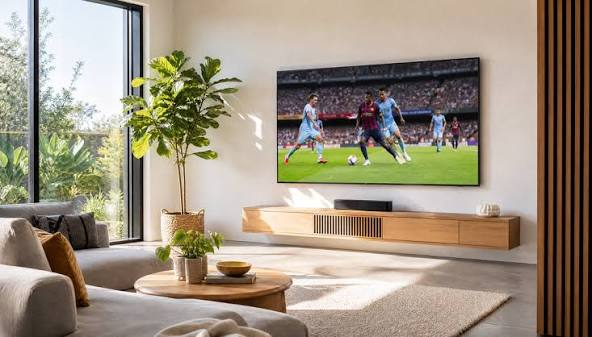
The living room looks bright and inviting until the afternoon sun turns the television into a mirror. Closing every curtain solves the reflection but makes the whole room feel gloomy. Living room TV glare is often a layout and light-control problem, not a reason to buy a more expensive screen. Start by finding where the bright reflection comes from and which hours are worst.
Trace the reflection before moving furniture
Sit where you normally watch television at the time glare is strongest. Look at the screen when it is off. A bright window reflected across the middle is a different problem from a lamp reflected near one corner. Note whether the sun reaches the screen directly or whether the reflection comes from the opposite wall. Take a photograph from the sofa so you can compare changes.
East-facing windows may be troublesome in the morning, while west-facing windows can cause an evening problem. The U.S. Department of Energy’s daylighting guidance
Change the angle before buying anything
A small screen rotation can move a reflection out of the main seating position. If the television sits directly opposite a large window, shifting the media console along the wall may help. Check that the new position still allows comfortable viewing from the main seats and does not obstruct a doorway. A wall mount can sometimes improve positioning, but use the manufacturer’s mounting instructions and a qualified installer when needed.
Do not place the screen where viewers must twist their necks for every show. A reflection-free television is not a success if the sofa arrangement becomes awkward. In a room with several seats, test the view from each one. The site’s living room furniture arrangement guide
Treat the window in layers
A light-filtering shade can soften harsh daylight while preserving a brighter room than blackout curtains. An adjustable blind may let you redirect light away from the screen. Heavier drapery can be useful for occasional movie nights, but it does not have to stay closed all afternoon. The site’s window shades for privacy and light guide
The Department of Energy’s window guidance
Remember the lamps after sunset
At night, glare may come from a floor lamp, pendant, or uncovered bulb behind the sofa. Move a lamp to the side of the screen rather than directly opposite it, and aim light toward a wall or reading surface. Soft background light can make the room more comfortable without placing a bright spot in the picture. Check the screen from your favorite chair after every change.
A glossy coffee table or framed artwork can also bounce bright light around the room. You do not need to remove everything reflective, but the surfaces closest to the television deserve a look. A small change to the lamp shade or table angle may do more than replacing all the curtains.
Build a daylight plan for the hours you actually use the room
The television may be unwatchable at four in the afternoon and perfectly clear at seven. That is a useful clue. Stand near the screen at different times and notice whether the bright patch moves across the wall. A south-facing window may behave differently through the seasons, while an east-facing window can create a short but intense morning reflection. Living room TV glare often has a predictable schedule once you watch it for a few days.
Try one change at a time. Lower a shade halfway, rotate the screen slightly, or move a lamp. Then sit in the same place and compare the picture. If you change the sofa, curtains, screen angle, and lamp at once, you may not know which improvement mattered. A simple phone photograph taken from the main seat helps you remember the before-and-after difference.
Put the screen where people can relax
A television positioned directly opposite a large window is likely to reflect that window. Moving it to a wall at right angles to the glass can reduce the problem, but the new position still has to suit the room. Check the path to the kitchen, the door swing, and whether people can see the screen without turning their necks. A layout that solves glare but blocks daily circulation is not a real improvement.
A swivel mount may let you adjust the screen for afternoon viewing, but it needs proper support and installation. Never assume drywall alone can carry a heavy television. Follow the mount and television instructions, and use a qualified installer when the wall construction is uncertain. If you rent, a movable media stand may be a better choice than drilling into the wall. Make sure the stand is stable and suitable for the screen’s size and weight.
Think about the people who use the room together. A screen angled perfectly for one chair may reflect the window for everyone on the sofa. Test from the seats used most often. Sometimes a modest compromise, paired with an adjustable shade, is more comfortable than a dramatic furniture rearrangement.
Sheer curtains, shades, and blinds do different work
Sheer curtains soften light but may not stop a bright window from appearing on a glossy screen. A light-filtering roller shade can reduce the intensity of the window reflection while keeping the room bright. Adjustable blinds can redirect daylight, though slats may create stripes of light if angled poorly. Blackout drapery is useful for a movie night, but it does not need to be the only treatment in a sunny living room.
For a room used all day, layering can be practical. Use a light-filtering shade for ordinary afternoons and a heavier curtain when you want a darker picture. Measure the window carefully, including the depth available for an inside mount. Check whether the fabric glows brightly when backlit; a sample held against a sunny window tells you more than its color on a store shelf.
Living room TV glare is not always solved by choosing the darkest fabric. Dark curtains can make the window itself less bright, but they may also make the rest of the room feel closed in. If you enjoy plants, reading, or daylight, choose a treatment that can change with the time of day. The most useful control is one you will actually adjust.
Reflections can come from surprising places
A glossy framed print opposite the television may bounce light toward the screen. A polished coffee table can reflect a bright lamp into a viewer’s eyes. Even a white wall hit by direct afternoon sun can become a large bright surface in the room. Walk around and look for those secondary reflections before blaming the television panel.
Matte finishes on nearby surfaces may help reduce distracting highlights, but you do not need to redecorate everything. A table runner, a different picture angle, or a lamp shade may solve a particular reflection. The site’s guide to wall paint finishes
At night, check whether a floor lamp is visible in the dark parts of the screen. Moving that lamp a few feet or turning it toward a wall can help. A reading lamp should illuminate the book or chair, not point straight at the television. Keeping some gentle room light can be more comfortable than watching in total darkness, provided it is not reflected in the picture.
Screen settings are the last adjustment, not the first
Modern televisions may offer brightness, backlight, or ambient-light settings. Consult the manufacturer’s instructions and adjust them conservatively for your room. A brighter screen can compete with daylight, but it does not remove a mirror-like reflection. Pushing every setting to maximum may also make evening viewing unpleasant. Test the picture with familiar content in both daylight and at night.
Some screens have more reflective surfaces than others. If you are replacing a television anyway, compare how candidate screens handle reflections in a bright setting, not just how vivid they look under showroom lights. Do not assume a marketing label will overcome a window directly opposite the screen. Room layout and light control remain important regardless of the model.
A worked example for a west-facing apartment
Imagine a rental living room with one west-facing window, a sofa opposite the television, and no permission to drill new holes. The screen becomes a mirror around sunset. Start by marking the worst hour. Move the media stand a little off the direct window axis, then test a removable or tension-mounted shade where safe and suitable. Keep the sofa where the walkway remains clear. The solution may be a combination of small changes rather than one expensive purchase.
Now imagine a family room with windows on two walls and a television above a fireplace. Rotating the screen may not be possible, and the high mounting position may already be uncomfortable. Consider whether a different wall or lower media console would improve both viewing angle and reflections. The right answer may involve furniture layout rather than another curtain panel.
Check the room after the change
Watch a daytime program, an evening movie, and something with dark scenes. Make sure the picture is visible without forcing everyone to sit in one exact spot. Open and close the window treatment to confirm it is easy to use. Check that cords do not cross a walking route and that furniture remains stable. Living room TV glare should become manageable without sacrificing the room’s other jobs.
If a solution works only when the curtains stay shut all day, ask whether you have treated the symptom rather than the layout. Daylight is part of what makes a living room pleasant. The aim is to control where it falls, not to banish it.
Final thoughts
A bright room and a watchable television can coexist. Find the reflection, test screen angles, choose adjustable window treatments, and tame lamps that shine into the picture. Keep the everyday seating and walkways comfortable while you experiment. Living room TV glare is often solved by several modest, thoughtful choices, which is far more satisfying than turning a sunny room into a cave.
