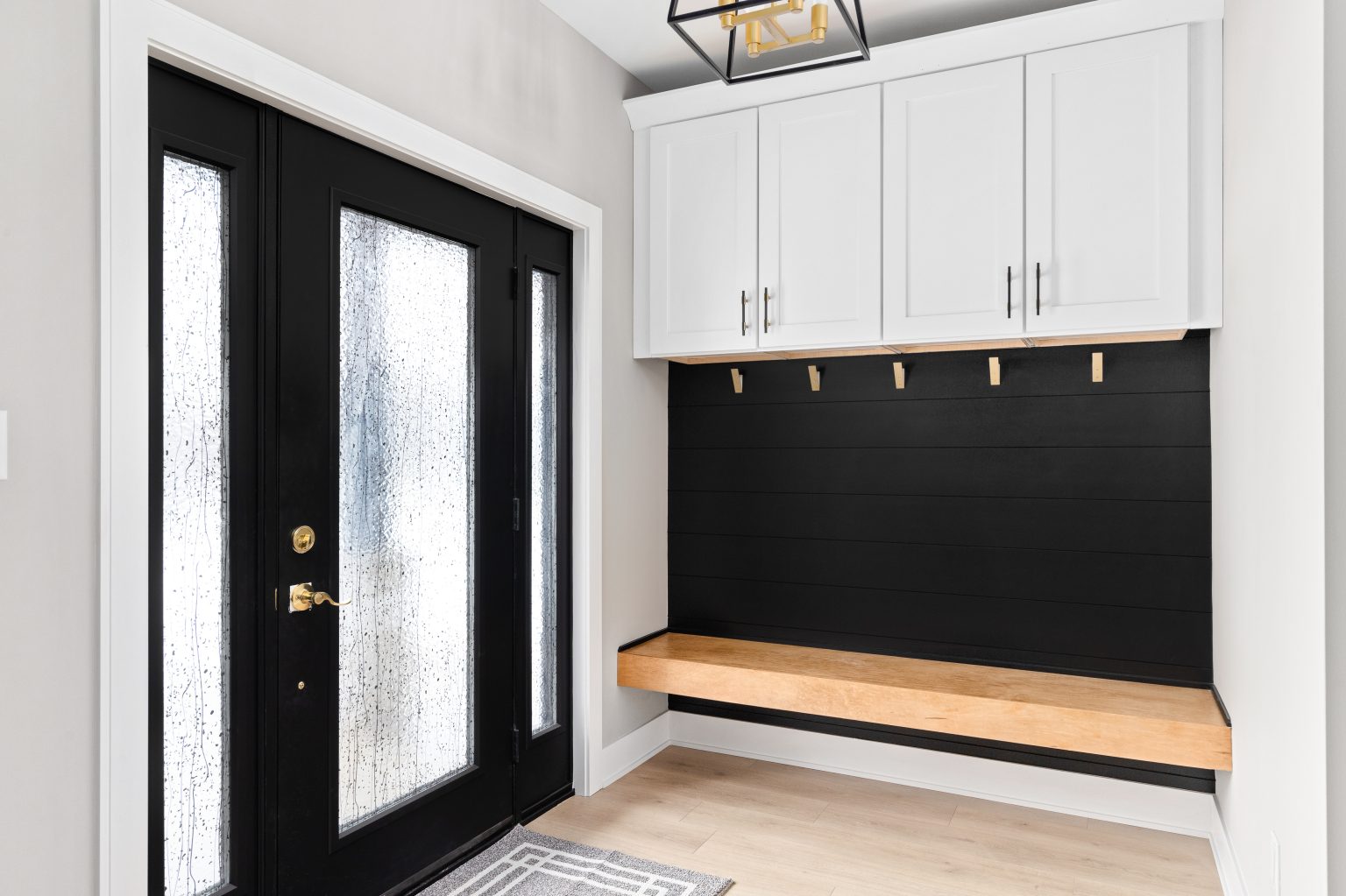
The front door swings open, a tote lands on the floor, two shoes slide under the bench, and the keys vanish beneath the mail. By the time everyone is home, the entry looks like a closet with no walls. A bigger cabinet might help, but it won’t fix a routine that has nowhere to land.
A small entryway drop zone is simply a spot for the things you carry in and out every day. It can be one shelf and a few hooks. It can be a slim cabinet and a tray. The right setup depends less on the look you want and more on what happens in the first ten seconds after you walk through the door.
Watch What Lands First
For one day, notice what you put down when you get home. Keys? A bag? A wet coat? The dog’s leash? A pile of school papers? Write down the few items that appear every day. Those are the items that need homes closest to the door.
Now look at what only shows up once in a while. A winter scarf in July or a pair of dress shoes worn twice a month can live in a closet. The entry does not need to store every item you own. It needs to make the trip in and out feel easy. If you start with your habits, you can avoid buying storage that looks good but never gets used.
Measure the Door Swing Before the Wall
A narrow console may fit against the wall and still be a poor choice if the door hits it. Open the door all the way. Walk through with a grocery bag in each hand. Check the path to the next room and the space needed for a stroller, walker, or wheelchair if your home uses one.
Measure the clear floor area, not just the length of the wall. Draw a simple rectangle on paper and mark the door arc. A strip of painter’s tape can show where a bench or cabinet would stand. Live with that outline for a day. If you keep stepping around it, the furniture is too deep. A clear route matters more than one extra drawer.
Choose One Landing Spot for Small Things
Keys and mail tend to spread because they are small and easy to set down anywhere. A shallow tray on a shelf can solve both problems if you give it a firm rule. Keys and a wallet go in the tray. Mail goes in a separate slot or basket, not in a growing pile beside the door.
Place the tray where your hand naturally reaches when you enter. If it is hidden behind a vase, no one will use it. Keep the shelf top mostly clear. The best sign that the system works is not how neat it looks in a photo. It is whether you can find your keys when you are already late.
Hooks Work Only When They Are Easy to Reach
A line of hooks is handy for bags, light jackets, and leashes. But too many hooks can turn a wall into a second closet. Give each person a spot for the item they carry most. Put the hooks where users can reach them, and keep heavy bags away from the edge of a narrow path.
Check the wall type and the weight of what you plan to hang. Adhesive hooks have rules about clean surfaces, cure time, and load limits. They are not a safe stand-in for wall anchors when a heavy object needs firm support. 3M’s hook guidance lists surfaces that suit its product and those that do not. Follow the exact directions for the hook you buy.
Shoes Need a Limit, Not Just a Rack
If five people leave three pairs each by the door, even a lovely bench will disappear under shoes. Decide how many pairs belong in the entry on a normal day. One or two daily pairs per person may be enough. Store the rest in bedrooms or a closet, then swap pairs as the weather changes.
Wet shoes need somewhere to drip without soaking wood or carpet. A boot tray can hold muddy soles and be easy to wash. Let damp shoes dry before you shut them inside a closed cabinet. A slim tilt-out unit can hide clutter, but it may not suit tall boots or large shoes. Test what you own before you buy a unit based only on its outer size.
Bench, Cabinet, or Shelf? Pick for the Space You Have
A bench makes sense if you sit to put on shoes, help a child with boots, or need a spot to set a bag. In a tight hall, it may block the path. A slim shoe cabinet gives more floor room, but it needs safe mounting and may hold fewer bulky pairs than you expect.
A wall shelf is a good fit when there is almost no floor space. It gives keys a place to land without adding legs to dodge. A free-standing basket can hold soft items, though it may become a catchall if no one sorts it. Pick the piece that solves the biggest daily snag. Do not try to squeeze all three into a space that only needs one.
Tall Furniture Must Be Safe
A narrow cabinet can look stable while its open drawers shift the weight forward. Some slim shoe cabinets must be fixed to the wall. IKEA’s STÄLL cabinet, for example, says it must be fastened to the wall. That rule is part of using the item, not an optional styling tip.
The U.S. Consumer Product Safety Commission urges people to anchor furniture such as bookcases and dressers. Follow the maker’s mounting steps and use fixings suited to your wall. If you rent and cannot drill, choose furniture that can be used safely without wall mounting rather than skipping a required anchor.
Give Wet Weather Its Own Plan
On a dry day, the entry may need little more than a tray and hooks. In October, coats drip, leaves cling to shoes, and umbrellas land in the corner. Plan for that mess before it arrives. Put a washable mat at the door and keep a boot tray close enough that people will use it.
A small towel on a hook can help wipe paws or dry a damp handle. Keep it away from electrical outlets and let it dry between uses. If the floor is slick when wet, choose a mat that stays flat and grips the surface. The goal is to catch dirt near the door, not move it into the living room.
What If the Door Opens Straight Into the Living Room?
Many apartments have no foyer at all. You step inside and are already next to the sofa. In that case, make a small visual border. A runner, one slim shelf, and a wall hook can mark the entry without building a new room.
Choose colors that work with the rest of the space so the drop zone feels like part of the home. A wood shelf can echo the coffee table. A small mirror can help with a last look before you leave. Keep decor light and useful. If the wall is rented, our renter-friendly wall decor guide has more ideas for making the space personal while checking the lease first.
Build a Setup for Kids, Roommates, or Guests
A family entry needs a place that each person can use without help. Give kids low, safe hooks for light bags if the wall and fixtures allow it. Put shoes where they can be put away in one move. A labeled basket may help in a busy home, but a simple open cubby often works better than a lid that no one closes.
For roommates, set clear space limits. One hook and one shoe spot each is easier to keep fair than a shared pile. Guests need a free hook too. Leave one open if you often have friends over. A system that only fits the people who live there can feel cramped the moment someone visits.
Don’t Turn the Drop Zone Into a Mail Archive
A small pile of mail can take over a narrow shelf in a week. Sort it near the door if that helps, but give papers a second home for later action. Recycle junk mail, put urgent items in a folder, and move the rest to a desk or drawer. Keep personal papers out of plain view if visitors pass through.
The same rule works for returns, packages, and library books. One basket can hold things that need to leave the house soon. Empty it on the way out. If the basket fills up every week, it may be a sign that the items need a better plan, not a larger basket.
A Ten-Minute Reset That Sticks
At the end of the week, take a look at the floor. Are shoes still lined up in the walkway? Does the key tray hold loose coins and receipts? Has a coat stayed on the hook all month? Move the extra items to their real homes. Wipe the tray and shake out the mat.
This should take less time than looking for your keys on a busy morning. If one item keeps landing in the wrong spot, change the layout instead of blaming the person who lives there. Put the basket closer. Lower the hook. Clear the shelf. The best drop zone fits your home as it is used, not as it looks when no one is there.
Final Thoughts
A small entry can feel calm without a built-in mudroom or a full wall of cabinets. You need a clear path, a home for daily shoes, and a spot for the few things you always carry. The rest is a matter of keeping the setup easy enough that people use it.
Start with the one thing that gets lost or dropped most often. Give it a place today. Once that works, add only what the space truly needs. The front door should feel like the start of home, not the start of another chore.
