The mirror clears after a shower, so the bathroom fan must be doing its job. Not necessarily. A fan can sound busy while sending warm, wet air into the attic, a hidden wall cavity or a crushed duct. That moisture may never show up on the bathroom ceiling. Instead, it can collect on cold roof sheathing, leave damp insulation behind, and turn a small installation mistake into a larger repair.
Bathroom exhaust fan venting should carry humid indoor air through a suitable duct to an approved outdoor termination, not dump it into the attic. Before replacing a noisy fan or repainting a peeling ceiling, trace where the air actually goes. This guide explains the warning signs, practical checks and decisions that make ventilation work as a system rather than just a spinning grille.
The fan and the duct have different jobs
The fan moves air out of the room. The duct carries that air to a safe discharge point. Both must work. A strong fan attached to a long, kinked or disconnected duct can perform poorly at the bathroom even if the motor is new. A well-routed duct connected to a failing fan has the opposite problem. Treat the entire path, from intake grille to exterior cap, as one assembly.
The most common homeowner mistake is assuming that air disappearing through a ceiling grille has left the house. In an older home, a duct may stop beneath the roof, end near a soffit or leak at a loose joint. Those conditions can let moisture return to the building envelope. A professional can identify the discharge location and assess whether the route meets the local code and the fan manufacturer’s installation requirements.
Why attic discharge creates trouble
Warm shower air carries water vapor. When that air reaches a cold attic, moisture can condense on framing, roof decking or insulation. Over time, repeated wetting may contribute to staining, deterioration and mold growth. The U.S. Department of Energy’s Consumer Guide to Durable Attics specifically warns against exhausting bathroom air into attic spaces and recommends correcting that condition.
This does not mean every dark mark in an attic came from a bathroom fan. Roof leaks, plumbing leaks, outdoor air and other sources can produce similar clues. Look for a pattern: moisture near the duct outlet, frost during cold weather, damp insulation, or discoloration concentrated above the bathroom. If there is widespread growth, damaged wiring or unsafe attic access, stop the DIY inspection and bring in qualified help.
Bathroom exhaust fan venting: where should air end up?
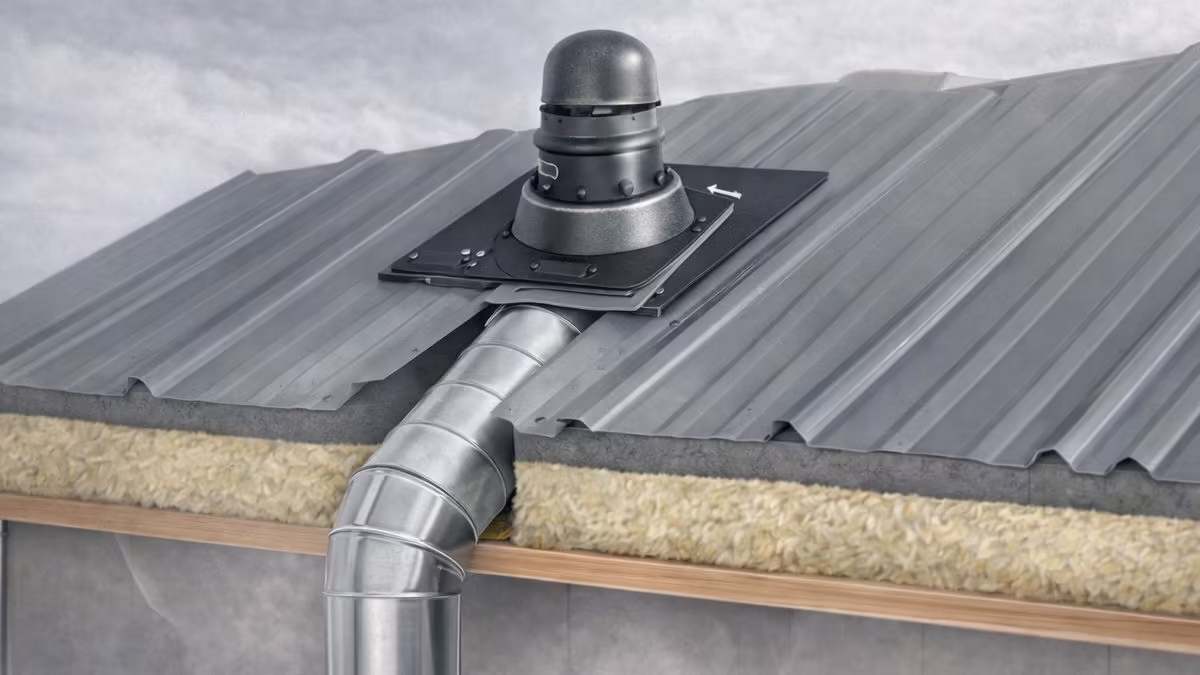
The discharge needs a properly installed outdoor termination with appropriate weather protection and a backdraft damper where required. Depending on the house and local rules, a roof or exterior wall outlet may be suitable. The right choice depends on duct length, structural access, snow exposure, the location of nearby openings and the manufacturer’s instructions. An installer should not simply poke the duct into a roof vent that was intended to ventilate the attic itself.
Soffit locations deserve special care because exhausted moisture may be drawn back through nearby attic intake vents. Ask the installer to explain the proposed termination and its clearance from openings, rather than accepting the vague phrase ‘it vents near the roof.’ On a two-story house, a roof exit may be practical; on a first-floor bath, a wall exit could be simpler. There is no universal route that fits every building.
A quick check without opening walls
Run the fan with the bathroom door slightly open and observe whether the grille pulls air consistently. A thin piece of tissue held near the grille can offer a rough indication of suction, but it is not an airflow measurement. Go outside and look for the identified wall or roof termination. If safely visible, the exterior damper should respond when the fan operates. Never climb a roof or ladder just to watch a vent flap.
If the fan runs but no exterior outlet can be identified, check the home’s plans or ask an HVAC contractor to trace the duct. If the room stays damp long after showers, note how often the fan runs, whether the bathroom has makeup air under the door and whether the duct is blocked. These observations help the contractor distinguish an undersized fan from a duct restriction or a disconnected run.
Bathroom exhaust fan venting depends on the duct
A short, smooth duct with gentle turns usually offers less resistance than a long run full of bends. Sagging flexible duct can trap condensation and restrict flow. Crushed sections, sharp elbows and leaky joints waste the fan’s capacity. The exact diameter, allowable length, insulation and support requirements depend on the specific fan and applicable code. Replacing a smaller duct with a larger one without checking the fan instructions is not a complete design method.
If the duct passes through an unconditioned attic, insulation and condensation control may be important. The route should also be supported so it does not droop or disconnect at the fan housing. Seal connections using materials approved for the duct system. Avoid ordinary cloth duct tape, which can fail with time. When electrical work, roof penetration or concealed routing is involved, professional installation is usually the sensible choice.
Quiet does not always mean effective
Fans are often compared by sound level, yet a whisper-quiet model can still struggle against a poor duct layout. Airflow is commonly expressed in cubic feet per minute, or CFM. The needed capacity depends on room size, fixture arrangement and local requirements. The Home Ventilating Institute’s fan maintenance guidance advises checking duct connections and confirming that air reaches the outdoor termination. It also explains why certified performance ratings help when choosing a replacement.
For a small powder room, you may care most about odor removal and comfortable operation. For a busy family bath with a shower used several times each morning, reliable moisture removal matters more. A humidity-sensing control can be useful, but it cannot compensate for a blocked duct. Before paying for an upgraded switch, make sure the existing air path is sound.
How long should the fan run?
Start the fan before a shower and leave it running afterward until the room’s excess moisture has cleared. The exact run time varies with shower length, room volume, climate and airflow. A timer switch can make the habit easier, especially when family members leave immediately after bathing. If condensation persists on walls or windows, check the system rather than simply running a weak fan for hours.
Clean dust from the grille and accessible fan components according to the manufacturer’s directions, with power safely disconnected when required. A clogged grille reduces airflow. Do not spray water or household cleaners into electrical parts. If the fan is part of a whole-house ventilation design and operates continuously, changing its settings without understanding that design could reduce needed fresh-air exchange.
Paint and surface finishes are not a ventilation fix
Peeling paint around a bathroom ceiling may tempt you to choose a glossier finish and move on. Durable paint helps a surface tolerate cleaning, but it cannot remove water vapor from the room or dry a damp attic. Repair the moisture source, allow affected materials to dry and assess damage before repainting. For finish decisions once the room is dry, our comparison of eggshell, satin and semi-gloss paint explains the tradeoffs.
A similar lesson applies to a musty laundry area. Covering the smell does not address trapped moisture. If you are troubleshooting other damp household spaces, the guide to front-load washer odors looks at another place where cleaning routines and moisture control have to work together.
Bathroom exhaust fan venting: when to call a contractor
Bring in a qualified installer if the duct ends in the attic, the termination is missing, there is visible water damage, or the route crosses difficult structural or electrical areas. Ask for a written scope naming the fan model, duct type and size, termination location, sealing details and any required permits. Request confirmation that airflow reaches outdoors after installation. A useful job is not finished when the fan makes noise; it is finished when the air goes where it should.
Final Thoughts
A bathroom can look spotless while its fan quietly delivers moisture into the wrong part of the house. Bathroom exhaust fan venting is worth checking whenever a fan is replaced, a roof is repaired or unexplained attic dampness appears. Follow the duct, not just the sound. Once the air path is correct, everyday habits and simple maintenance can do the work they were meant to do.
