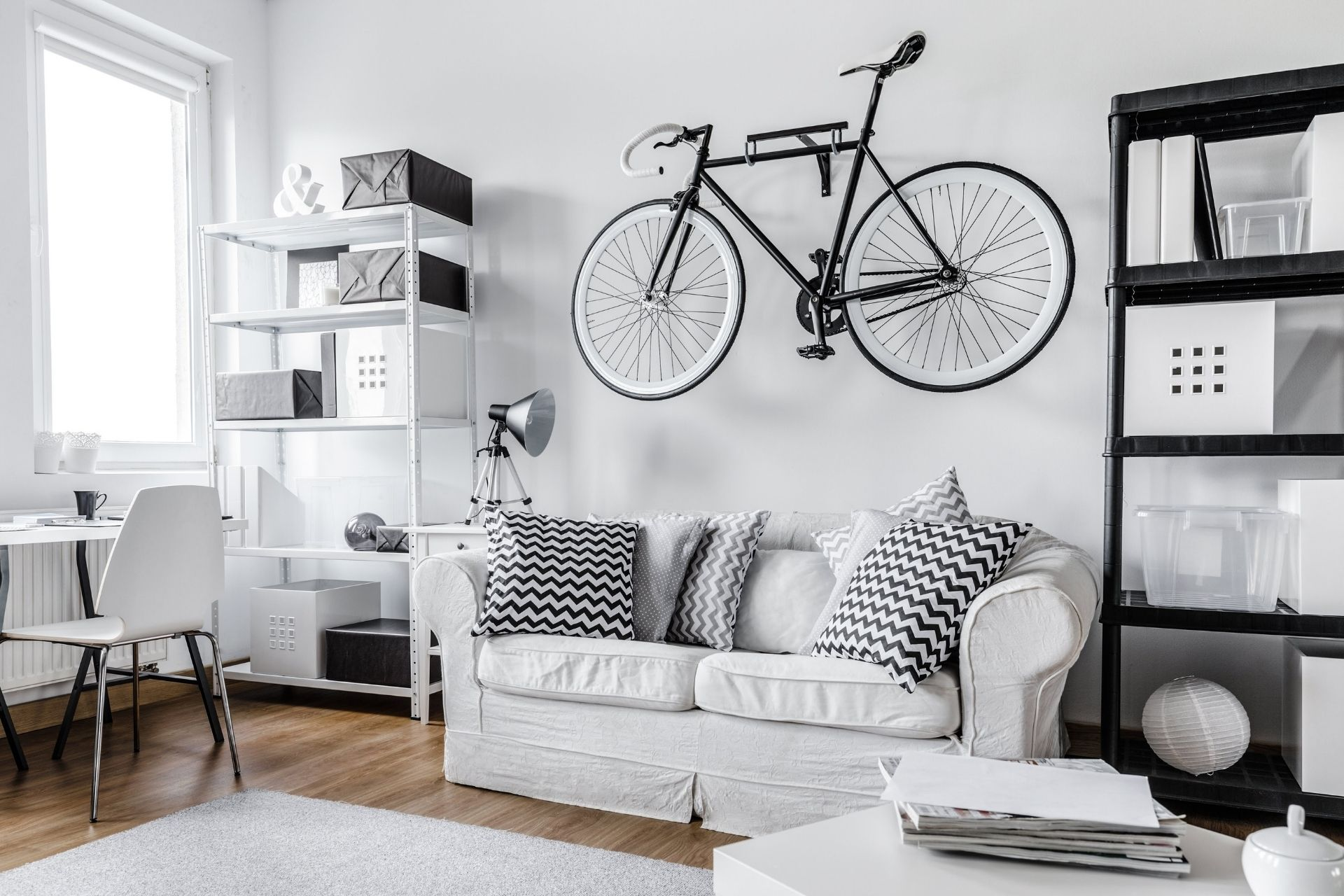
A bicycle can feel surprisingly large when it lives beside the sofa, leans against the only hallway wall, or knocks into the dining table every time you come home. Small apartment bike storage is less about finding a clever hook and more about choosing a spot you can reach without blocking doors, exits, or daily routines. A safe arrangement should hold the bike securely, protect the wall and floor, and make riding easier rather than turning every departure into a furniture shuffle.
Start by measuring the bicycle and the apartment, not by buying a rack. A folding bike, lightweight road bike, heavy commuter, and electric bicycle create very different storage challenges. Your lease, building rules, and wall construction also determine which solutions are realistic. This guide compares floor stands, wall mounts, and tucked-away parking spots with the everyday details that product photographs tend to leave out.
Measure the bicycle in its real parking position
Measure the bike from the front tire to the rear tire, the handlebar width, and the highest point when it is upright. Note whether the handlebars turn freely, whether a kickstand is fitted, and whether bags or baskets stay attached. A wall mount can reduce floor use, but the bicycle still projects into the room. The handlebars may become the widest part of the stored setup.
Use painter’s tape to outline the footprint on the floor and wall. Open the nearest door fully and walk the route from the apartment entrance to the kitchen and bathroom. If you have to sidestep the handlebars every morning, the proposed spot is not truly space-saving. In a small home, the best location is often the one that creates the fewest daily obstacles, even if it is not the most visually hidden.
Keep exits and shared corridors clear
A bike parked in an apartment hallway can become a serious obstacle in an emergency. Check the building’s rules and do not use a shared corridor, stair landing, or exit route as personal storage unless the building explicitly permits it and applicable fire rules allow it. The U.S. Fire Administration advises residents to keep doorways and windows clear for escape>.
That principle also applies inside a studio. A bicycle should not prevent a bedroom door from opening, narrow the only route to the front door, or sit where someone could trip over a pedal in the dark. If the apartment is too tight to store the bike without affecting an exit, investigate an approved bike room, secure building storage, or another authorized location. No clever-looking rack is worth compromising an escape path.
A floor stand is the easiest place to start
A simple floor stand supports a wheel or frame without drilling into the wall. It can suit renters, people who move frequently, or anyone who does not want to lift a heavy bike overhead. Look for a stable base, compatibility with your wheel size and tire width, and a position where the bike cannot tip into furniture. A rubber-backed mat can help catch road grit and protect a finished floor.
The tradeoff is that the bicycle still uses floor area. A stand placed behind a sofa may work if you can roll the bike out without moving the sofa first. A stand squeezed between a refrigerator and a wall may look efficient until the refrigerator door cannot open. Test the complete movement: arriving with the bike, placing it on the stand, removing a lock, and taking it out again.
Wall mounts free floor space but demand sound installation
A horizontal wall mount can place a bike above a low cabinet or in a wider section of a room. A vertical mount may fit a narrow wall but requires enough ceiling height and space to maneuver the bicycle into position. Neither option is automatically suitable for every bike. Check the mounting hardware’s load limit, the frame contact points, and whether the design supports your bike’s geometry.
For example, Trek lists a wall-mounted bicycle rack> designed for installation into a wood wall stud with a specified weight limit. That illustrates why attachment details matter. Do not rely on drywall alone for a heavy bike unless the product is explicitly engineered and approved for that installation. If the wall is masonry, metal stud, or a rental partition, use the appropriate manufacturer instructions or hire a qualified installer.
Choose the height for the person who rides
A rack mounted high above eye level can make the floor look clear, but it may be difficult or unsafe to use every day. Imagine arriving home after a rainy commute and trying to lift a bicycle over a console table while holding a bag. The storage location should suit your reach, strength, and the weight of the bike.
For a heavy commuter or e-bike, a ground-level solution is often more practical than a high hook. Some e-bikes have removable batteries, but battery handling and charging should follow the manufacturer’s instructions. Do not assume that removing a battery makes any wall mount safe. The rack must still be rated for the remaining weight and support the frame correctly. A storage system that is too awkward to use will soon leave the bike leaning against the wall again.
Protect the wall and floor from everyday grime
A bicycle brought indoors may carry rainwater, grit, chain lubricant, and small stones in the tire tread. Set up a simple arrival routine: wipe wet tires, check for dripping water, and keep a washable mat beneath the storage spot. A narrow protective panel behind the tire can reduce scuffs, but it should be removable or compatible with the wall finish.
Avoid storing the bike where oily components brush curtains, upholstery, or bedding. If the chain faces a wall, consider turning the bike or choosing a stand that keeps the drivetrain away from the finish. The most elegant apartment setup is one you can clean without pulling furniture apart. Leave enough room to sweep beneath the tires and inspect the wall for moisture or marks.
A studio apartment needs a visible plan
In a studio, the bicycle may share space with sleeping, eating, and working. Rather than hiding it behind a curtain that catches on the handlebars, choose a location that belongs to a defined zone. A corner near the entrance can work if it does not obstruct the door. A section of wall beside a bookcase can work if the bike remains accessible and the mount is secure.
Our guide to studio apartment zoning ideas explains how to give one room several functions without blocking light or walkways. Apply the same thinking to the bike: it needs a parking zone with a clear approach. A helmet hook and small tray for lights can make that zone feel intentional, but keep the accessories compact. Do not let bike gear spill across the entry or the bed.
A narrow entryway may not be the right answer
It is tempting to put the bike immediately inside the front door because that is where you arrive. Yet a narrow entry often has the most important circulation route in the apartment. If the handlebars collide with the door or the bike blocks a coat closet, try a different wall rather than forcing the entry to do everything.
Our small entryway drop zone article explores storage for everyday bags, keys, and shoes. Those items are much smaller than a bicycle and may deserve the entry space first. A bike stored several steps farther into the apartment can still be convenient if the route is clear. Prioritize movement and safety over the shortest possible distance from the door.
What about a balcony or outdoor corner?
Outdoor storage may look like the easiest way to reclaim indoor floor space, but it comes with weather, theft, and building-rule concerns. Many apartment balconies have restrictions on what can be stored, and an exposed bike can suffer from prolonged moisture and sunlight. Never attach a heavy rack to a balcony railing without an approved engineered system.
If your building has a dedicated bike room, ask about access hours, security, and whether you may use a separate lock. Photograph the bike’s serial number and keep purchase records where you can find them. If outdoor storage is the only approved option, choose weather protection and security appropriate to the location. A balcony should not become an improvised repair shop or a place to charge batteries contrary to building and manufacturer rules.
A worked example in a one-bedroom rental
Consider a one-bedroom apartment with a 5-foot-wide entry hall, a living room sofa against the longest wall, and a road bike used four days a week. A vertical hook beside the front door looks attractive online, but the handlebars project into the hall and the rider must lift the bike above shoulder height. The arrangement fails both the daily-use and circulation tests.
A better trial might place a compact floor stand beside a sturdy cabinet in the living room, with a washable mat and a hook for the helmet. If the landlord approves mounting into appropriate framing, a low horizontal wall rack could be another option. The owner tests each setup with the actual bike before drilling. The lesson is that the best storage choice depends on the whole movement pattern, not only the amount of floor visible after the bike is parked.
Final thoughts
Small apartment bike storage succeeds when the bicycle has a secure home that does not steal the apartment’s essential pathways. Measure the real footprint, respect building rules, match the rack to the bike’s weight, and make arrival and departure easy. A simple floor stand in the right spot can be better than an elaborate wall mount in the wrong one. The goal is to keep riding—and keep living comfortably in the space you have.
