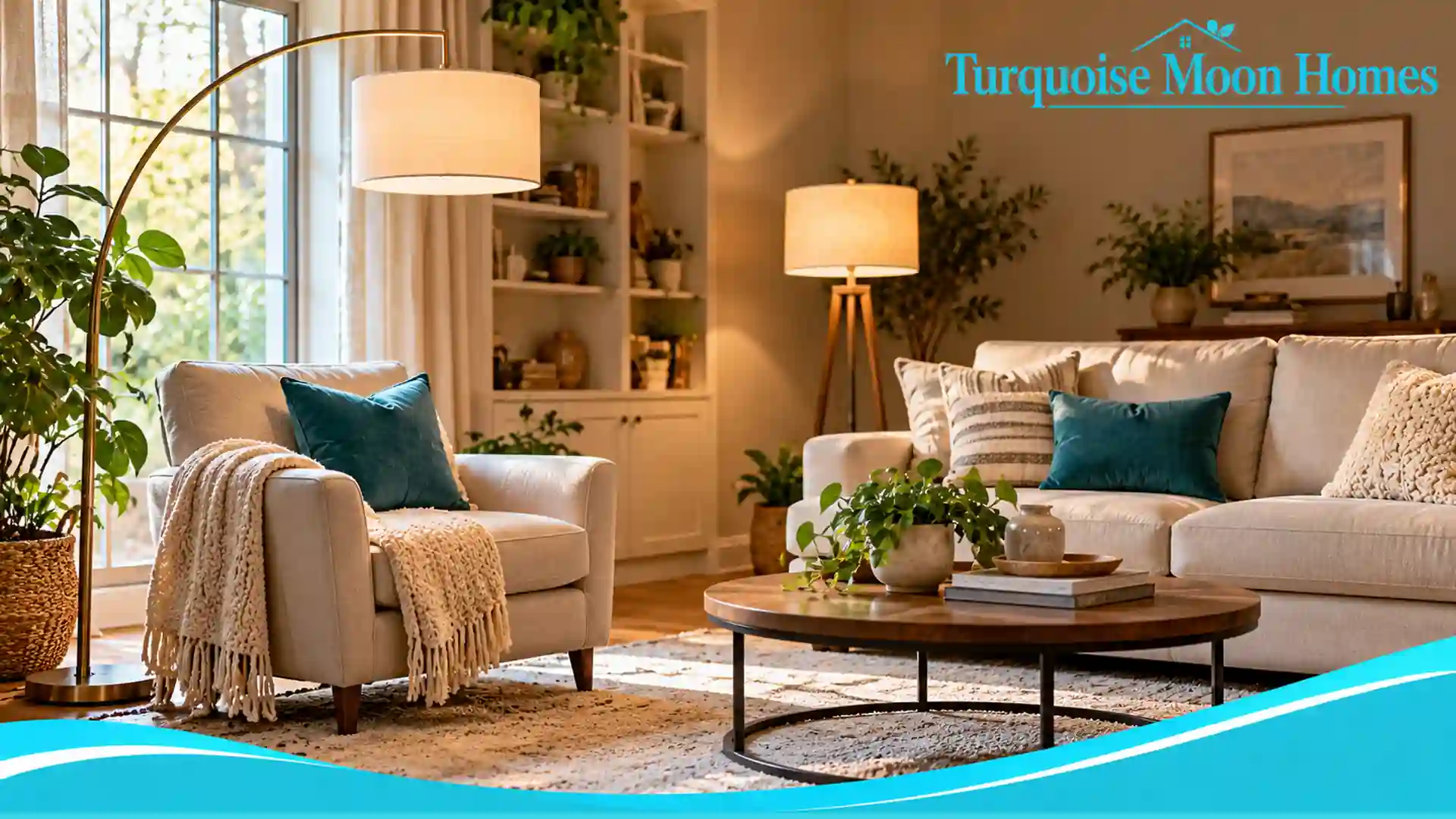
Good living room floor lamp placement starts with the activity you want to light, not the emptiest corner. Put a reading lamp where its beam reaches a chair or sofa seat, use a shaded lamp to soften a dark area, and keep bases and cords outside busy walkways.
A beautiful lamp can still feel wrong if it shines in your eyes during a movie or makes you reach across the couch to switch it on. The right spot should make everyday life easier as well as improve the room’s look.
In this article, we will work through real furniture layouts, choose lamp shapes for different jobs, handle outlets and cords, and build comfortable light without cluttering the floor.
Start With What the Room Needs After Sunset
Stand in the living room at the time you normally use it. Turn off the overhead lights and notice where the room feels flat, gloomy, or uncomfortable. The sofa may be bright enough for conversation but too dim for reading a book.
Think about three jobs: general light for moving around, task light for reading or hobbies, and accent light that gives a corner depth. One floor lamp may cover more than one job, but it rarely solves every lighting need by itself.
The U.S. Department of Energy’s guide to efficient lighting strategies emphasizes matching light to the task rather than making every part of a room equally bright. That is a useful design rule even when energy savings are not your main concern.
Walk through the room with the furniture in its usual position. Notice the path from the door to the sofa, the route to a hallway, and any area where children or pets move quickly. A lamp that narrows those routes is in the wrong place.
Beside the Sofa: Choose the Seat Before the Side
A floor lamp beside a sofa can light a reading seat without using table space. Put it near the end where someone actually sits with a book, not automatically on the side that looks best in a staged photo.
A lamp with a downward shade or adjustable arm works well when the beam can reach the reader’s lap or book. Test the light while sitting normally. If the bulb is directly in your line of sight, shift the lamp or choose a deeper shade.
Keep enough room for people to stand up and walk around the sofa arm. A broad tripod base may look attractive but can intrude into a narrow passage. A stable, compact base may be the better choice for a tight layout.
If you share the sofa, consider whether the lamp will bother the person watching television. A directed reading light can be kinder to the rest of the room than a bright exposed bulb that throws light everywhere.
Behind a Chair: Build a Reading Corner That Works
A favorite armchair often needs its own light, especially when it sits away from the ceiling fixture. Place a lamp just behind or slightly to the side of the chair so the light reaches the page without shining straight into your face.
For a right-handed reader, light from the left can reduce hand shadows while writing or sketching; the reverse may help a left-handed person. For ordinary reading, adjust the shade based on your posture rather than treating one side as a fixed rule.
Try the chair in the position you actually use. A recliner changes the reader’s head and arm position, and a lamp that works upright may glare when the back tilts. Leave room for the chair’s full movement.
A small side table can hold a cup and book, but it is not required for the lamp to do its job. In a narrow room, a single floor lamp and compact chair may feel much lighter than a table lamp plus another piece of furniture.
Use a Corner Lamp to Make the Room Feel Wider
A dim corner can make the room seem smaller because the eye stops at the shadow. A shaded floor lamp adds a pool of light that helps the walls feel connected to the rest of the space.
Choose a lamp that sends some light upward or outward if your goal is general brightness. A tightly focused reading lamp may leave the walls dark even when the floor beneath it is bright.
Do not press a fabric shade against curtains or furniture. Follow the lamp’s clearance and bulb-rating instructions, and allow air around the shade. If the corner has a houseplant, make sure the pot will not splash water near plugs or cords.
Try the lamp a few inches forward from the corner before deciding. Small moves can change the shadow on the wall and the balance of the room. Take a photo at night to compare positions rather than judging only in daylight.
Arc Lamps Over a Coffee Table or Sectional
An arc lamp can bring light over a seating area when there is no convenient ceiling fixture. Its curved arm lets the shade reach toward the center of the room while the base stays behind or beside furniture.
The tradeoff is reach and stability. A large arc needs enough height and a secure base, and the arm must not hang where people stand or walk. Check the actual dimensions rather than choosing by a product photo alone.
Over a coffee table, use a diffuser or shade that controls glare from seated eye level. A bare bright bulb can be unpleasant during conversation and can reflect on a television screen across the room.
With a sectional, position the base outside the main path between seats. If the lamp’s arm crosses a busy route or invites people to bump the shade, a smaller upright lamp may work better.
Keep Floor Lamps From Fighting the TV
Glare is often the reason a perfectly good lamp feels annoying. Sit in your normal viewing spot with the TV on and turn the lamp on. Look for reflections on the screen and bright bulbs visible just beyond its edge.
A lamp behind the viewer or off to the side may create softer background light than one placed directly opposite the screen. The best location depends on the screen finish, room shape, and shade direction.
Do not assume that a darker room is always better for watching television. A gentle light away from the screen can make the space feel less stark. Keep the beam off the display and avoid extreme brightness differences.
If your layout includes a fireplace and TV, test both focal points at night. A floor lamp that balances the sofa area should not block the hearth, crowd a mantel, or sit close to heat sources.
Pick the Shade and Bulb for the Job
A fabric drum shade spreads softer light, while an opaque directional shade puts more light onto a book or table. A torchiere sends light upward, which can brighten the ceiling and give a room a broad glow.
Brightness is measured in lumens, not simply watts. A lamp’s allowed bulb type and maximum rating matter for safety. Choose a bulb that fits the fixture and provides enough light for its intended task without excessive glare.
Color temperature changes the mood too. The Department of Energy’s bulb-selection guidance explains that warm light around 2700K and soft light around 3000K are common choices for homes. Try to keep nearby lamps reasonably consistent unless you want a deliberate contrast.
Dimming is helpful in a room used for reading, chatting, and movies, but only when the bulb and lamp controls are compatible. A dimmable bulb in an incompatible setup may flicker or fail to dim smoothly.
Small Living Rooms Need a Smaller Footprint
In a narrow room, the floor lamp should do more work than the floor space it consumes. Look for a slim base that can tuck beside a sofa arm or into the gap between a chair and wall without blocking movement.
Choose the spot based on reach to the outlet and the seating position. A lamp placed far from the sofa because it fits a corner may not provide useful task light. A compact adjustable design can be more flexible than a decorative statement piece.
Wall sconces may be worth considering if floor space is extremely limited, but they require a different installation plan. For renters, a plug-in lamp is usually easier to move and does not require permanent changes.
Do not hide an unstable lamp behind furniture where its base cannot sit flat. Stability and a safe cord route come before a perfectly symmetrical arrangement.
Plan Outlets, Cords, and Switches Before You Commit
Trace the cord from the lamp to the nearest suitable outlet. It should not cross a doorway, run under a rug, or create a loop where feet or chair legs can catch it. A floor lamp is only convenient when you can use it safely every day.
Keep cords away from heat, water, and moving furniture. Do not pinch them under heavy sofa legs. If the lamp needs an extension cord for a permanent location, consider moving the lamp or asking an electrician about a better outlet arrangement.
Think about the switch as well. A foot switch tucked under the couch is awkward, while a switch within easy reach of the chair makes the lamp much more useful. Some lamps offer accessible dimmers or controls on the stem.
In homes with young children or active pets, select a stable design and follow the manufacturer’s tip-over and cord-safety advice. A tall lamp with a narrow base may need a different location from one with a weighted, broad base.
Final Thoughts: Let Comfort Decide the Position
Living room floor lamp placement works best when the beam reaches the right person, the shade stays out of sight lines, and the base does not interrupt the room. That may mean putting the lamp beside a reading chair rather than in a picture-perfect corner.
Move the lamp, sit down, and test it after dark. A few small adjustments can make a bigger difference than buying a brighter bulb or another decorative piece.
Frequently Asked Questions
Should a floor lamp go behind or beside a sofa?
Either can work. Put the shade where it lights the seat you use without shining into your eyes. Keep the base and cord clear of the route around the sofa.
How many floor lamps does a living room need?
There is no fixed number. Start with the dark areas and the tasks that need light, then combine floor lamps with other fixtures as needed instead of adding matching lamps automatically.
Can an arc lamp replace a ceiling light?
It can light part of a seating area, but it may not cover every corner or task. Check reach, headroom, glare, and stability before using one as the main source.
What bulb color works well in a cozy living room?
Warm white light around 2700K to 3000K is a common starting point. Choose the brightness and color that suit the room, the shade, and the activity.
You may also read: Living Room TV Glare: Keep Daylight Without Losing the Picture.
