Under stairs storage ideas work best when they use the changing height beneath a staircase for specific needs, such as shoes, coats, pantry supplies, drawers, or books. Measure the space first, keep frequently used items easy to reach, and avoid changes that could affect the staircase or required fire protection.
From low-cost baskets to custom pull-outs, the right choice depends on your floor plan and habits. This guide compares practical options, explains how to plan access and lighting, and highlights the mistakes that can turn useful storage into a cramped closet.
Begin with the Shape of the Space
The best under stairs storage ideas start with the real dimensions beneath your staircase, not with a beautiful picture of someone else’s built-ins. The area narrows as the stairs rise, so one side may hold tall coats while the low end is better for shoes, baskets, or shallow drawers.
Measure the width at floor level, the height at several points, and the depth to the back wall. Note any pipes, outlets, access panels, or uneven surfaces. A quick sketch with these details will help you choose between freestanding shelves and a more permanent installation.
Also think about what is missing elsewhere in the home. If the entryway is crowded, coats and shoes may be the priority. If the kitchen lacks a pantry, closed shelves for dry goods may offer more everyday value than decorative cubbies.
Keep Everyday Items Near the Opening
Storage works best when the things you use most are easiest to reach. Put daily shoes, backpacks, pet supplies, or cleaning tools near the front. Save the deepest corner for seasonal decorations or luggage that comes out only a few times each year.
A deep cabinet with no pull-out system can become a place where useful things disappear. Use labeled bins or drawers that bring the contents forward. Transparent containers help with occasional-use items, while matching opaque baskets can make an open entry feel calmer.
The IKEA under-stair storage guide shows several approaches, including cabinets, drawers, and coat storage. The useful lesson is to match the storage type to the items rather than trying to fit every possible feature into one small area.
Open Shelves Suit a Visible Hallway
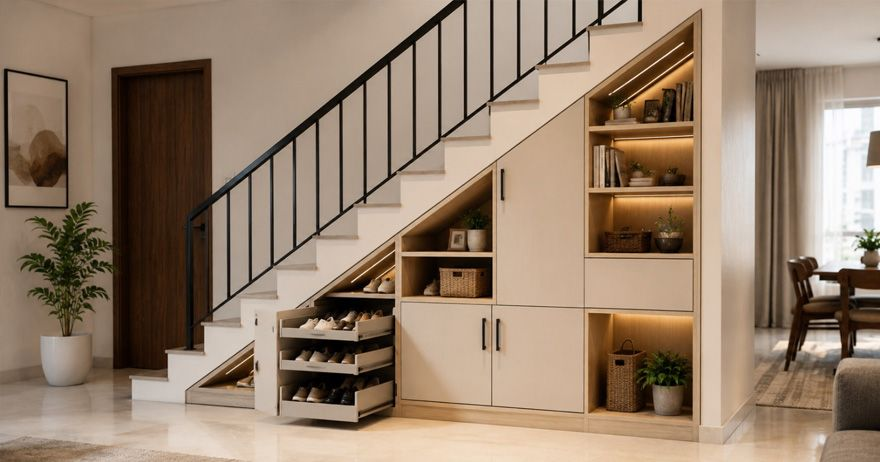
If the stairs are near the front door, open shelves can hold baskets, books, and a few decorative objects without making the space feel closed off. The shelves can follow the slope, creating a tidy built-in look even when the materials are simple.
Keep the lower shelves for heavy items and the upper ones for lighter objects. Avoid stacking loose items at the back where they can fall or become difficult to retrieve. A narrow shelf is often more useful than a deep one if you can see everything on it.
Open storage looks best when it has breathing room. Leave some empty space between groups of items. A few well-chosen baskets will usually feel more organized than a wall of small containers packed to the edge.
Drawers Make the Low Section Easier to Reach
The lowest part beneath the stairs is awkward because you cannot stand upright there. Deep drawers or pull-out bins solve that problem by bringing stored items into the room. They are particularly useful for shoes, toys, and folded linens.
Before ordering drawers, measure how far they can extend without blocking a door or walkway. A drawer that opens across the main route through the house may be frustrating, even if it holds plenty.
Full-extension hardware can make the back of a drawer accessible, but it also needs suitable support and installation. Ask a cabinetmaker to specify load ratings for heavy contents. A pull-out holding winter boots has different demands from one holding gift wrap.
A Coat Closet Can Replace a Crowded Entryway
If the staircase is near the entrance, a compact coat closet can keep jackets, bags, and umbrellas out of sight. Use the tallest section for hanging items and the low end for shoe trays or folded accessories.
Measure the longest coats before installing a rod. A short hanging space may work for children’s jackets but not for adult winter coats. Add a washable mat or tray beneath wet footwear to protect the cabinet floor.
For an even smaller entry, consider a combination of hooks and baskets rather than a full door. Our small entryway drop zone guide explains how to organize daily essentials without letting them take over the hallway.
A Pantry Needs a Dry, Sensible Location
An under-stair pantry can be useful when the kitchen is nearby, but food storage requires a clean, dry space away from excess heat and moisture. Check the area for musty smells or leaks before storing groceries.
Use shallow shelves for cans and jars so labels stay visible. Place heavier supplies at a comfortable height rather than above your head. Baskets can hold packets and small items that otherwise slip behind larger containers.
The IKEA under-stair pantry guide suggests organizing supplies with shelves, boxes, and crates. Keep frequently used ingredients near the front, and avoid storing food beside chemicals or damp cleaning equipment.
Think About Safety Before Closing the Space
The underside of a staircase is part of the building, not simply an empty closet waiting for a door. Some enclosed under-stair spaces require fire-protective finishes, and the staircase structure must remain intact.
Do not cut stair stringers, remove structural supports, or alter concealed walls without professional advice. Check local requirements before enclosing the area or adding electrical outlets. A qualified contractor can help preserve the stair assembly while making the space useful.
If you want a light inside a new closet, consider whether a battery-powered option will work before planning new wiring. Electrical work should meet applicable rules, and fixtures must be installed where stored items cannot cover or damage them.
Plan Doors for the Room Around Them
Hinged doors look clean but need swing space. In a narrow hallway, they may collide with furniture or block the route to another room. Sliding doors can reduce that problem, although their tracks and overlapping panels limit access in other ways.
Open shelving avoids doors entirely but leaves contents visible. Curtains can hide light items in some situations, yet they are not a substitute for a required fire-protective enclosure. Choose the solution based on safety and the way the hallway is used.
Tape the outline of a proposed door on the floor and swing a cardboard panel through the opening. This simple test can reveal a problem that is hard to notice on a drawing.
Lighting Makes Deep Storage Less Frustrating
An enclosed under-stair closet can be dark even during the day. Good lighting helps you find items and notice spills or moisture before they become larger problems.
A motion-activated light can be convenient when your hands are full. Choose a fixture suited to the space and mount it where boxes cannot knock it loose. For built-in electrical lighting, use a qualified installer when required.
Bright light also helps open shelves feel intentional. A modest wall light near a reading nook or display shelf can add warmth, but keep cords out of traffic areas and away from moving drawers.
Materials Should Match the Load and the Environment
Particleboard shelves may be suitable for light baskets in a dry area, while heavy books or tools may need stronger supports. Moisture-resistant finishes can help where wet shoes or cleaning supplies are stored, but they cannot fix an active leak.
Use wall anchors appropriate to the substrate and verify what lies behind the wall before drilling. A shelf fixed only to thin drywall may fail when loaded with heavy bins. Freestanding units should be stable and secured against tipping where necessary.
If children use the space, avoid sharp corners and pinch points. Soft-close hardware and accessible lower baskets can make daily storage safer and easier for everyone.
Budget Options Can Still Look Built In
A custom staircase cabinet can be beautiful, but it is not the only useful option. Freestanding shelving, uniform bins, and a painted backing wall can make an unfinished nook feel organized for far less money.
Start with the largest problem. If shoes pile up at the door, install one good rack before commissioning an entire wall of cabinetry. If seasonal items are the issue, labeled bins on a sturdy shelf may solve it immediately.
You can add matching trim or doors later after learning how the space is used. Building in stages reduces the risk of paying for drawers or compartments that do not match your habits.
Avoid Turning the Nook into a Dumping Ground
A space beneath the stairs can attract random objects because it is out of the way. Assign each shelf or drawer a clear purpose. Keep a small amount of spare capacity so new items do not end up on the floor.
Review the contents when seasons change. Donate shoes that no longer fit, return borrowed tools, and move rarely used items to a more appropriate storage area if the nook becomes crowded.
If the main problem is shoe clutter, our small entryway shoe storage guide offers practical ways to keep footwear contained without losing walking space.
Make the Storage Serve the Way You Live
The best under stairs storage ideas make the low, angled space easier to use while leaving the staircase and hallway safe. A narrow pull-out, a few well-placed hooks, or a small pantry can be more useful than an elaborate design that is difficult to reach.
Measure carefully, decide what belongs there, and test door and drawer clearance before ordering materials. Keep heavy objects low, preserve required access and fire protection, and choose finishes you can clean.
When the space has a clear purpose, it stops feeling like an awkward leftover corner. It becomes one more part of the home that quietly supports everyday life.

Nike Carkarel
Nike Carkarel writes about home decor, interior design, and practical ways to make living spaces more beautiful and comfortable. At Turquoise Moon Homes, Nike shares ideas for decorating rooms, choosing furniture, improving home layouts, and making everyday spaces work better. With an interest in thoughtful design and simple home improvements, Nike helps readers find inspiration for homes that feel welcoming, stylish, and easy to live in.