People often ask how many years an asphalt roof should last, hoping for a single number they can circle on a calendar. The more useful answer is a range shaped by climate, installation, ventilation, roof design, and the condition of the shingles themselves. Asphalt shingle roof lifespan is not a countdown that starts the day the contractor leaves. It is a pattern of wear that needs to be read in context.
One roof may look sound after years of summer heat while another shows brittle edges, storm damage, and recurring leaks much sooner. A manufacturer’s warranty is not the same thing as a promise that the roof will perform without maintenance for that many years. The smartest approach is to know the roof’s age, watch for meaningful changes, and decide whether a targeted repair or a full replacement makes sense.
How Long an Asphalt Shingle Roof Can Last
Many homeowners encounter planning ranges of roughly two to three decades for conventional asphalt roofing, with some architectural systems capable of longer service under favorable conditions. These figures are broad expectations, not a diagnosis for any particular house. Product grade, exposure, and workmanship can move the real outcome in either direction.
GAF’s homeowner guide to roof repair and replacement discusses different service-life ranges for three-tab and architectural asphalt products. Read those ranges as context for a condition assessment, not as permission to ignore visible damage on a younger roof.
If you bought an older house and do not know the installation date, look for permits, invoices, warranties, and seller records. A professional inspection can assess condition, but visual appearance alone rarely reveals an exact age. A dark roof may be relatively new; a clean-looking roof may still hide flashing or decking problems.
Why Climate Changes the Wear Pattern
Sun exposure is relentless on a roof. Long hot seasons can accelerate aging of asphalt materials, while repeated thermal expansion and contraction may stress vulnerable details. In colder regions, freeze-thaw cycles, snow, and ice can expose weak drainage or flashing. Coastal wind and salt, hail, and falling branches add their own risks.
Even two homes on the same street can age differently. A south-facing slope may receive stronger sun than a shaded north-facing plane. A large tree can provide shade but also drop debris and keep sections damp. Roof pitch affects drainage, while complex valleys create more places where water and leaves can collect.
None of these conditions automatically means a roof is failing. They help explain why one roof slope may need attention before another. An inspection should describe the location and cause of wear rather than issuing a replacement recommendation based only on age.
What Shingles Look Like as They Age
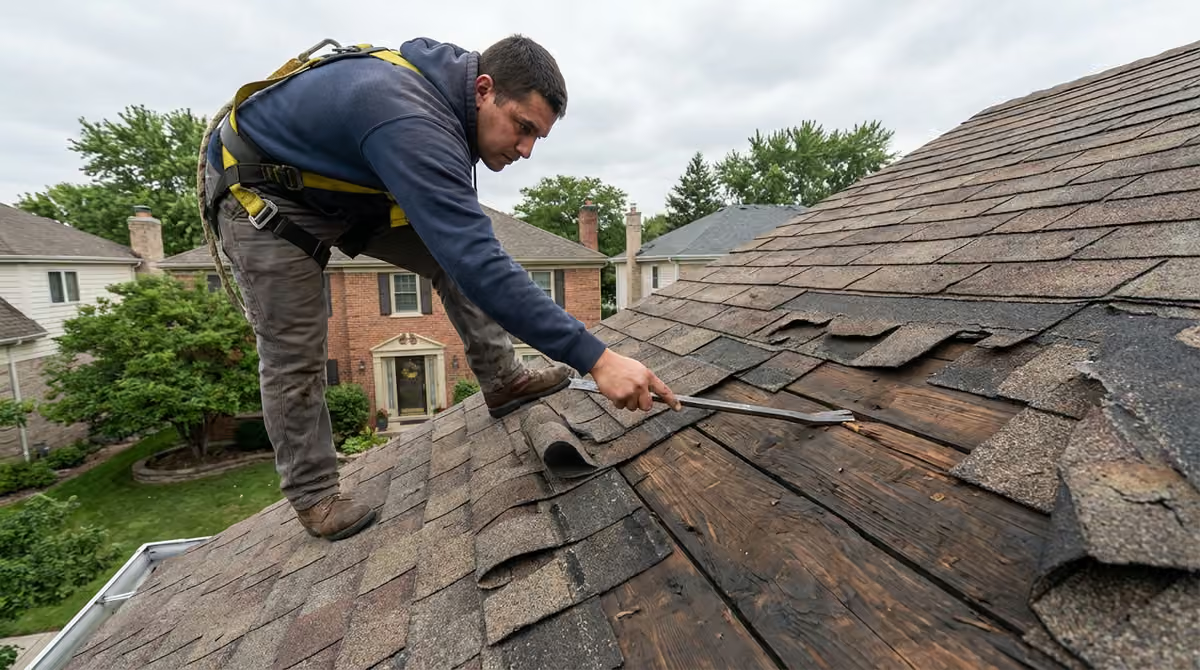
Start with what can be seen safely from the ground or in clear photographs. Look for tabs that no longer lie flat, cracking across exposed surfaces, missing pieces, and areas where the surface looks unusually thin or patchy. Check whether a recent storm left shingles in the yard or exposed a different color of material on the roof.
Granules naturally shed in small amounts, especially after installation. Heavy or ongoing granule loss accompanied by exposed asphalt is a different concern. Our guide to roof granule loss
Dark streaks are not automatically evidence of worn-out shingles. Algae can discolor otherwise functional roofing, particularly in humid areas. Moss is another issue because it can hold moisture and complicate drainage. Aggressive pressure washing may damage the roof surface, so cleaning methods should follow manufacturer guidance.
Leaks Tell a Story, but Not Always the Obvious One
A ceiling stain is a reason to investigate promptly, not proof that every shingle needs replacement. Water may enter around a vent boot, chimney, wall intersection, skylight, or damaged flashing and then travel along framing before it appears indoors. The stain may be several feet from the actual opening.
Record when the leak happens. Does it appear only in wind-driven rain, after snow melts, or during ordinary showers? Does it return after a previous patch? This timeline helps a qualified roofer distinguish a local detail failure from broader roof-system problems.
Water damage can spread into insulation, sheathing, and interior finishes. If you see active dripping, protect the interior and arrange professional evaluation rather than waiting for the next storm. Do not climb onto a wet, steep, or icy roof to find the leak yourself.
Installation Details Can Shorten a Roof’S Useful Life
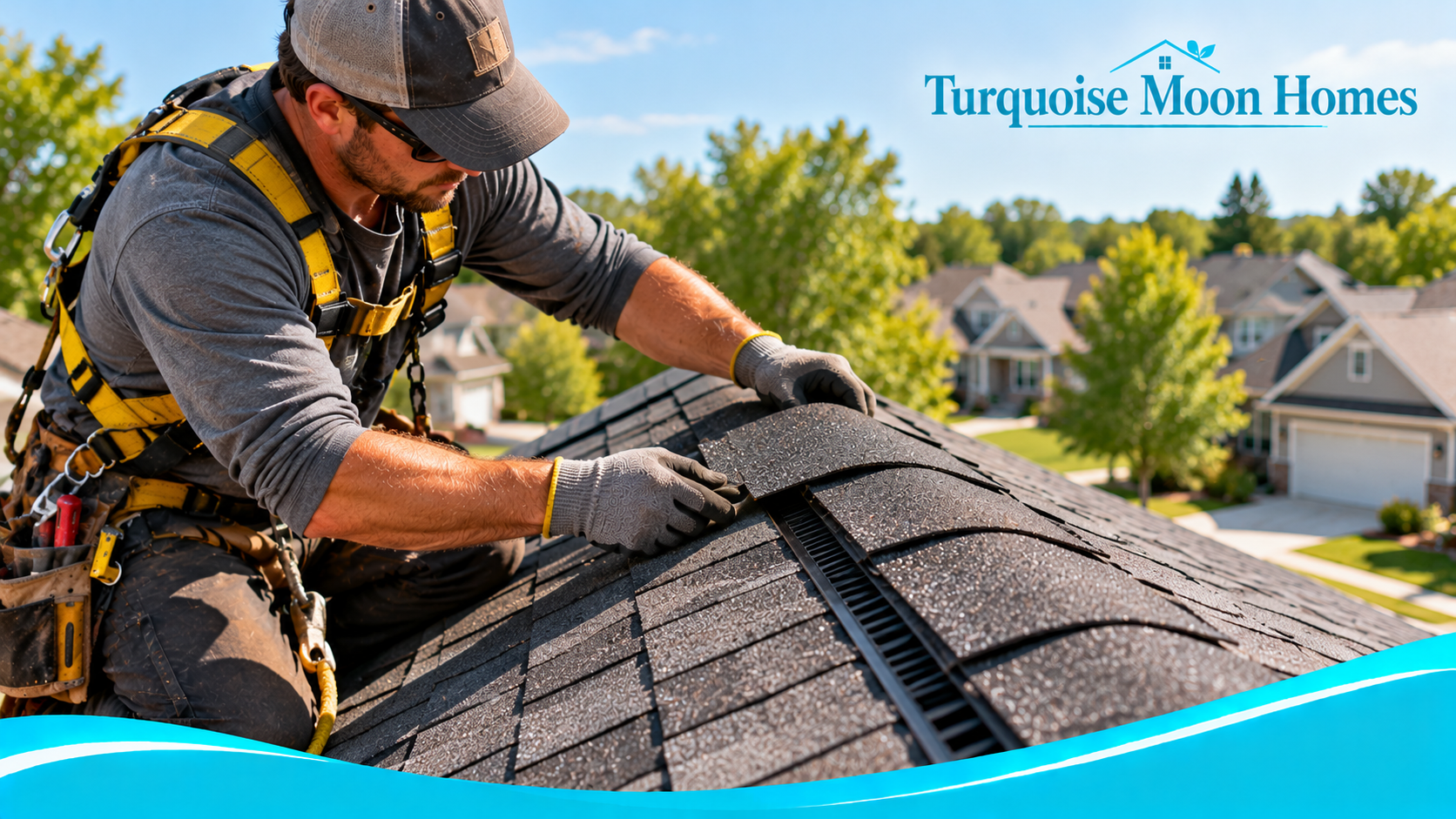
Shingles are only one layer of a roofing system. Fastener location, nail depth, underlayment, flashing, starter strips, ridge caps, and ventilation all affect performance. An attractive roof can still have weak spots if those details were rushed or mismatched.
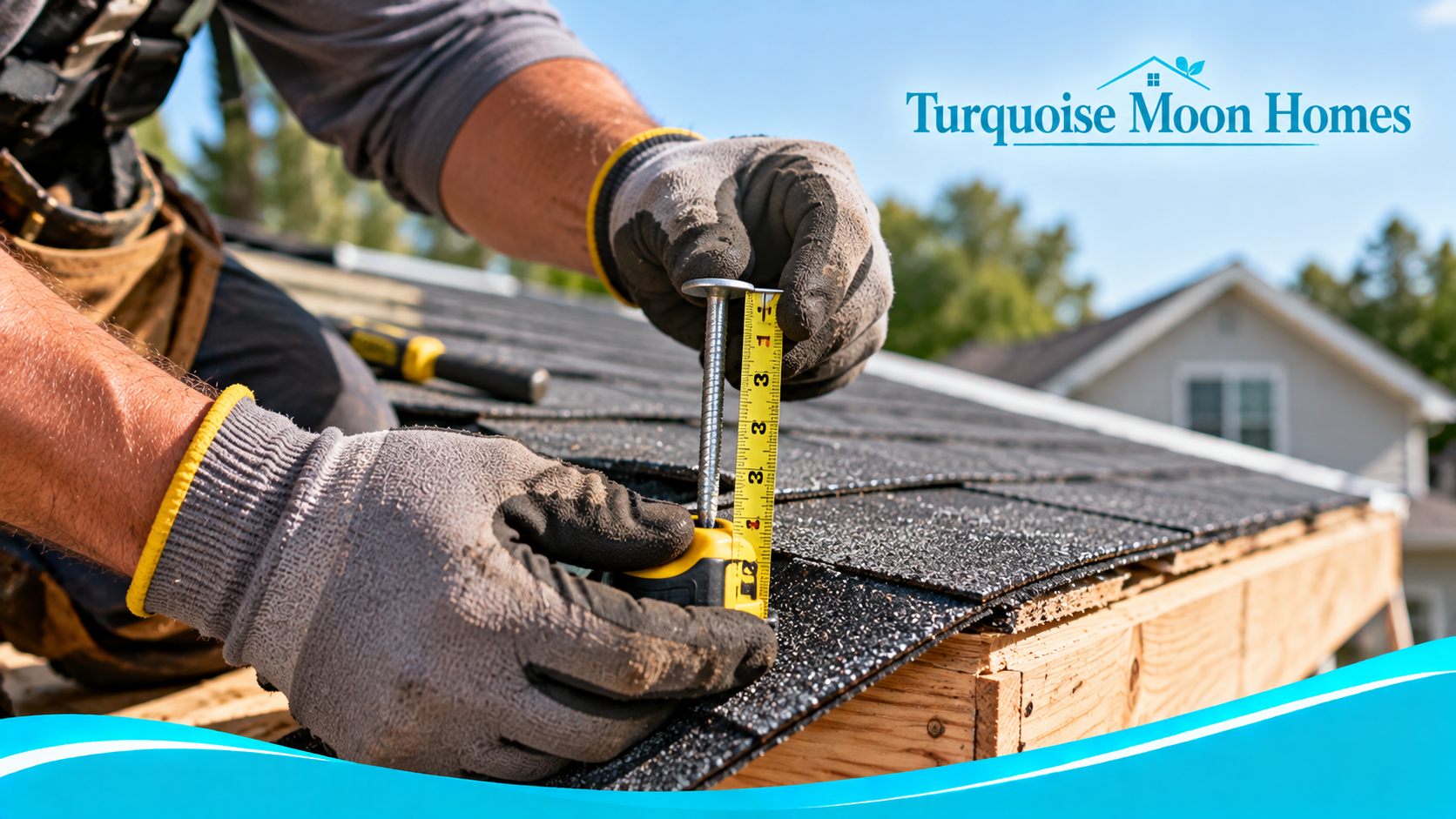
Too much shingle exposure can leave less overlap than the product requires. Nails driven in the wrong location may not secure the layers as designed. Poorly handled transitions at walls and valleys can allow water into places where the shingles themselves are still sound. See our roof shingle exposure explanation for why the installation pattern matters.
Attic moisture also deserves attention. Warm indoor air escaping into a cold attic can condense on surfaces, and blocked ventilation can contribute to unwanted heat and moisture buildup. A roofer should examine the whole system, not simply point to the outermost layer.
Repair or Replace: How to Weigh the Decision
A small, isolated problem on an otherwise healthy roof often deserves a repair estimate. One damaged vent boot, a few wind-lifted shingles, or a localized flashing failure may be repairable without tearing off the entire roof. The repair must still match the existing system and correct the actual cause.
Replacement becomes more reasonable when problems appear across many slopes, the shingles are brittle and difficult to handle, leaks keep returning in unrelated locations, or widespread deterioration makes spot repairs unreliable. Hidden decking damage can also change the scope once work begins.
Owens Corning’s discussion of reasons for roof replacement groups concerns around leaks, storms, and general roof condition. That is a useful way to organize your observations before requesting estimates, without treating every stain or storm as an automatic replacement order.
Ask contractors to explain what can be repaired, what cannot, and why. A good proposal identifies affected areas and includes photos. If recommendations differ widely, a second qualified opinion is sensible, particularly before a major expenditure.
What a Roof Inspection Should Cover
Beyond surface wear, the inspection should consider flashing at penetrations and wall junctions, roof edges, valleys, ridge details, gutters, and visible signs of moisture inside the attic. The roofer should note missing or loose shingles, unusual movement, sagging, and any soft or damaged decking that can be assessed safely.
Ask whether the findings are cosmetic, maintenance-related, or urgent. A photograph of a small algae streak should not be presented with the same urgency as exposed sheathing after a storm. You should understand which problems can wait, which need repair soon, and which require immediate protection.
If a contractor proposes replacing a roof, ask what material layers are included, how damaged decking will be priced, how ventilation will be handled, and which warranties apply to products and workmanship. A detailed estimate makes later changes easier to understand.
Simple Habits That Can Protect Roof Performance
Keep gutters and downspouts functioning so water does not back up at the edges. Arrange safe removal of debris that traps moisture in valleys. Trim branches where appropriate, using a qualified tree service for work near the roof or power lines. After severe weather, check for obvious damage from a safe location.
Keep records of inspections and repairs. Photograph the same roof sections periodically if they are visible from the ground. A dated image is more useful than trying to remember whether a lifted corner was present last year. Make note of indoor ceiling stains, attic dampness, and changes after heavy storms.
Do not attempt to extend a failing roof’s life with indiscriminate coatings or sealant. A product that temporarily hides a crack may also conceal the source of water entry or interfere with future repairs. Follow the shingle manufacturer’s care instructions and use experienced roofers for work at height.
Warranty Language Is Not a Replacement Date
A limited-lifetime shingle warranty can sound like a lifetime without roof expenses. In practice, warranties specify covered defects, exclusions, time periods, ownership conditions, and sometimes prorated benefits. Installation errors, storm damage, or neglected maintenance may be treated differently from manufacturing defects.
Read the actual documents for the product on your home. Keep proof of installation and any required registration. If the roof was installed by a previous owner, find out whether coverage transfers and what steps are necessary. Never make a repair or replacement decision based solely on a marketing phrase.
A Practical Decision for the Next Five Years
Suppose your roof is around 18 years old, has no active leaks, and shows a few localized issues. It may be sensible to repair those issues, document the condition, and plan financially for eventual replacement. If the same roof has widespread cracking, recurring leaks, and repeated patchwork, budgeting for a full replacement may be the more dependable path.
Now imagine a roof only seven years old with water entering around one pipe. The age alone should not push you toward replacing every shingle. A proper diagnosis may point to a much smaller repair. In both cases, the important question is not simply “How old is it?” but “What is failing, where, and how broadly?”
Asphalt shingle roof lifespan is best treated as a planning guide supported by visible condition and a professional inspection. Use the roof’s history to know when to look more closely, then let evidence guide the choice between maintenance, repair, and replacement. That approach protects both the house and the budget.

Nike Carkarel
Nike Carkarel writes about home decor, interior design, and practical ways to make living spaces more beautiful and comfortable. At Turquoise Moon Homes, Nike shares ideas for decorating rooms, choosing furniture, improving home layouts, and making everyday spaces work better. With an interest in thoughtful design and simple home improvements, Nike helps readers find inspiration for homes that feel welcoming, stylish, and easy to live in.