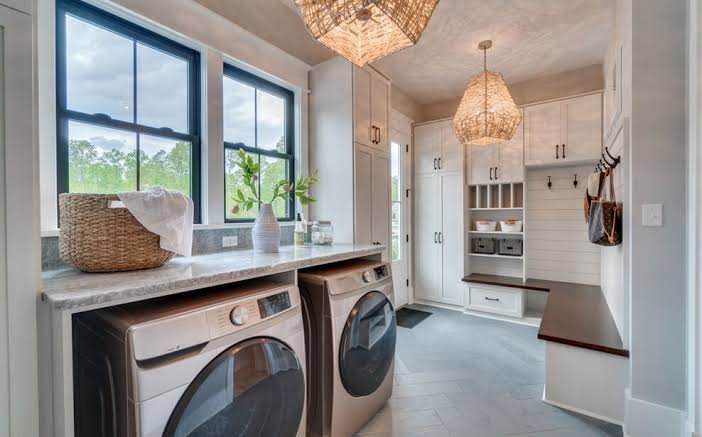
Small laundry closet organization works when detergent, baskets, cleaning tools, and everyday supplies have assigned places without blocking the washer, dryer, vents, or service connections. Start by measuring the closet and the full door swing, then use shallow shelves and reachable storage. The goal is a laundry space that stays safe and easy to use, not a wall packed with containers.
A closet with stacked machines can feel tidy when the doors are shut and impossible when it is time to sort towels. A basket falls over, a detergent bottle hides behind the dryer, and there is nowhere to put clean clothes.
These ideas focus on realistic storage choices for apartments, hall closets, and compact utility areas where every inch needs to earn its place.
Measure for Small Laundry Closet Organization
Open the closet doors completely and measure the width, depth, and height. Then note the machine doors, control panels, hookups, and any vent duct. A shelf that fits on paper may still block a washer lid or make it impossible to remove the dryer for service. Leave the clearances required by the appliance manuals.
Make a quick sketch showing where a laundry basket sits while the machines are running. Include the space needed to open the dryer and pull out a damp load. This working zone is more important than a decorative row of jars across the top shelf.
Small laundry closet organization should begin with the tasks you do most often. If you wash several small loads a week, keep detergent and a hamper within easy reach. If you mostly handle bedding on weekends, prioritize a clear staging area for bulky items.
Give the Most-Used Supplies the Easiest Shelf
Keep detergent, stain remover, and laundry bags on a shelf you can reach without climbing. Place heavy containers lower rather than high above your head. In a shared household, consider a child-resistant location for laundry products and follow every package’s storage directions.
Shallow bins can keep bottles from tipping while allowing you to pull the whole group forward. Use one for wash products and another for fabric-care tools. Avoid stacking containers so deeply that you cannot see what is behind them; hidden duplicates take up more space than they save.
Choose bins only after measuring the shelf. A pretty basket that projects into the doorway will be frustrating every laundry day. A plain container with a comfortable handle may work better, especially on a high shelf where you need to bring the contents down.
Use the Wall Without Crowding the Machines
A narrow wall shelf or peg rail can hold a lint brush, mesh laundry bags, and a small cloth. Mount storage into suitable framing or use anchors rated for the wall and load. Do not attach heavy cabinets to thin drywall without proper support, and avoid drilling near concealed pipes or wiring.
Over-the-machine shelves are useful only when they respect the manufacturer’s clearance requirements. Leave enough room to open a top-loading washer lid and to reach shutoff valves. A shelf should not force you to climb over the machine to find a leaking hose.
If the closet is rented, choose freestanding or removable options that comply with the lease. A slim rolling cart may fit beside a washer, but only if it can move without pinching a cord or obstructing a vent. The cart should roll out easily when maintenance is needed.
Keep the Dryer Vent and Electrical Area Clear
Storage should never cover the dryer’s air path or crowd the back of the appliance. The U.S. Fire Administration advises cleaning dryer vent ductwork regularly and keeping major appliances connected directly to wall outlets. A laundry closet needs safe equipment access before it needs another organizer.
Do not hang clothes over the dryer or stack paper products against warm equipment. Keep the lint screen easy to reach and clean it after each load. If drying times grow longer or the closet feels unusually hot, check for a venting problem rather than trying to hide the machine behind a tighter cabinet.
Heat-pump dryers use a different drying system and may not require an exterior exhaust vent, but they still need the clearances and maintenance specified by their manufacturer. Never assume that a ventless model can be boxed into an airtight space. Follow the exact installation guide for the appliance you own.
Small Laundry Closet Organization for Sorting
Not every laundry closet has room for a permanent hamper. A slim folding basket can live on a nearby hook or shelf and come out only when needed. Another option is a pair of small labeled bags for lights and darks, provided they do not block the closet doors or walking route.
Think about where clean clothes go after drying. A narrow wall-mounted folding surface outside the closet may be more useful than trying to fit one above the machines. If the laundry sits near a bedroom, carrying one basket directly to the dresser can save the need for a separate sorting station.
Do not overdesign the system. Three sorting bins may look organized but take up too much floor area for a one-person apartment. A single basket and a simple routine can work better when the closet is only wide enough for the appliances.
Choose Stacking and Compact Appliances Carefully
Stacked machines free floor space but move controls and loading doors to different heights. Before changing the setup, confirm that the washer and dryer are approved to stack together with the correct kit. A generic shelf or homemade platform is not a safe substitute for the manufacturer’s stacking hardware.
The ENERGY STAR guide to heat-pump dryers notes that compact models can work in tight spaces and that their drying process differs from conventional vented machines. This may expand options during a renovation, but drainage, power, access, and clearance still need to be planned.
If you are replacing appliances, measure the doorway and hallway as well as the closet. A machine that fits the final opening may not fit around a tight turn on delivery day. Check how much room its door needs and whether the hookups remain reachable after installation.
Put Awkward Corners to Work Without Filling Them
A narrow gap beside the washer may hold a flat broom or lightweight drying rack. Use a simple wall hook where safe and permitted. Avoid storing liquids directly above electrical outlets or loose cleaning supplies behind a machine where spills are hard to notice.
An upper corner can hold seasonal laundry items in a small closed bin, but do not store heavy containers where they are difficult to lift. Reserve the topmost space for rarely used, light supplies. Keep a sturdy step stool elsewhere rather than balancing on the machine to reach a shelf.
Leave some empty space. It helps you see hoses, wipe up spills, and remove an appliance when necessary. A closet packed from floor to ceiling may photograph beautifully, yet it can become expensive to service after the first small leak.
Plan for Moisture, Light, and Noise
Laundry closets can become humid, especially if damp clothing sits in a closed washer. Leave the machine door open when the manufacturer recommends it and when it is safe for children and pets. Check the room’s ventilation requirements and watch for condensation on nearby walls.
A battery-operated motion light or a properly installed fixture can make labels and controls easier to see. Avoid running extension cords behind machines or under rugs. If the closet lacks a suitable outlet or light, consult an electrician rather than creating a hidden wiring problem.
Vibration can shake lightweight bins and make shelves rattle. Level the machines according to their manuals and avoid loading wall shelves with loose glass containers. A rubber-backed mat under a removable basket may help keep supplies stable without interfering with appliance operation.
Keep the Setup Easy to Maintain
Every month, pull out the bins, wipe the shelf, and check for spills. Look for signs of water near supply hoses and the drain connection where accessible. The goal is to catch small problems before they become stains in the hall or damage to the room below.
Give each supply a clear home, but avoid buying duplicates just to fill matching containers. Keep product labels or instructions when transferring is allowed, and never mix cleaning chemicals. A simple system that everyone in the household understands will stay organized longer than an elaborate arrangement only one person can maintain.
Our under-sink cabinet organization guide uses the same principle: storage must leave plumbing accessible. For another tight-space layout, see small apartment pantry storage. Both show why reachable supplies beat hidden piles.
Final Thoughts
Small laundry closet organization succeeds when the room is easier to use on a busy Tuesday, not only when the doors are closed for a photograph. Safe clearances, reachable detergent, and a place for the basket do most of the work.
Measure first, store only what belongs there, and keep the machines serviceable. The little closet can feel surprisingly capable when it has room to function.
