Small bedroom nightstand alternatives can give you a place for a lamp, phone, glasses, and a glass of water without squeezing a bulky table beside the bed. A narrow wall shelf, floating cabinet, slim cart, headboard ledge, or carefully chosen storage stool may fit where a conventional nightstand blocks the walkway. The best option depends on what you reach for at night and how much clear space you need.
In a compact bedroom, every inch beside the mattress has a job. You want your essentials close, but you also need to get out of bed safely and open drawers or closet doors. Here is how to choose a bedside setup that looks calm, works every day, and does not create new hazards.
Measure the Bedside Gap Before Choosing Furniture
Start by measuring from the bed frame to the wall, closet door, or nearby furniture. Then check the space you actually walk through. A table may fit on paper but still catch your hip every morning or block a drawer from opening.
Look at the mattress height and where your hand naturally reaches while lying down. A surface that is much lower than the mattress can be awkward for a water glass; one that is too high may be easy to knock into. There is no universal perfect height, but a top close to mattress level often feels convenient.
Finally, list what must stay at the bedside. If you need only a phone and glasses, a shallow shelf may be enough. If you use medication, a book, tissues, and a reading light, hidden storage or a second small compartment may be worth the space.
Floating Shelves Make the Floor Feel Larger
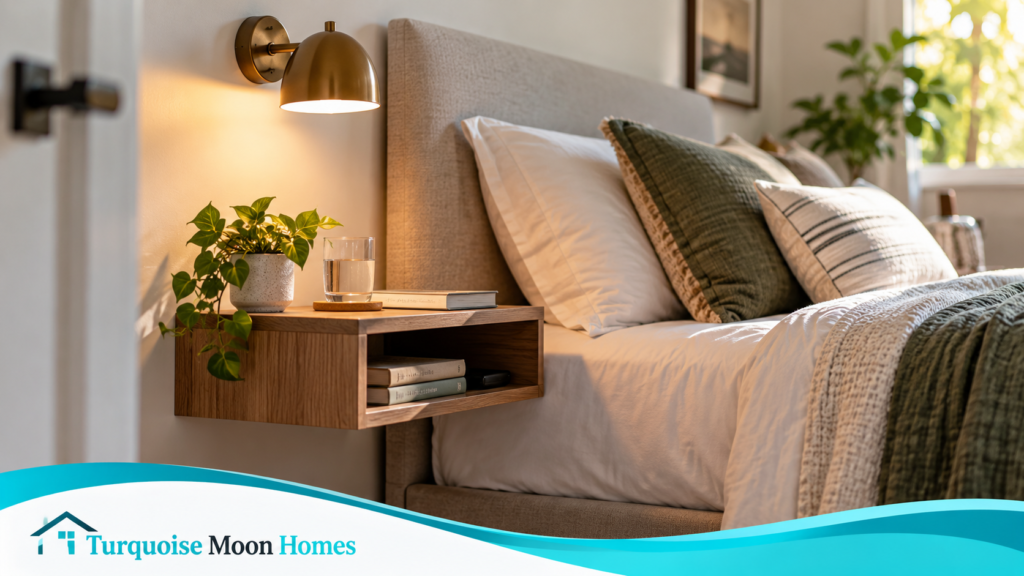
A simple wall shelf is one of the cleanest ways to create a bedside landing spot. Because there are no legs, the floor remains visible, and cleaning is easier. Choose a depth that holds your essentials without extending far into the walkway.
Wall mounting is the important tradeoff. The shelf and brackets must suit the wall material and expected load. A drywall anchor appropriate for a lightweight decorative shelf may not be suitable for a heavy cabinet or a surface someone might grab while getting out of bed.
If you rent, check the lease before drilling. Removable adhesive shelves can be tempting, but they should not be trusted for heavy items or anything that could fall onto a sleeping person. Sometimes a freestanding narrow table is safer and easier to reverse.
Wall-Mounted Cabinets Add Hidden Storage
A floating bedside cabinet offers a small drawer or enclosed compartment while keeping the floor clear. It can hide chargers, tissues, and other items that make a tiny room feel busy. The cabinet should still be shallow enough to avoid blocking the path around the bed.
A practical example is the wall-mounted bedside furniture described in IKEA’s wall-mounted bedside table guidance, which emphasizes selecting fixings suited to the wall and securing the unit properly. The principle applies to any brand: the right mounting hardware matters as much as the cabinet’s appearance.
Measure door and drawer clearance before buying. A wall cabinet beside a bed may look sleek until its door hits the mattress or a nearby dresser. Check whether the hardware can be installed into sound support and whether the manufacturer’s load limits suit your use.
A Slim Rolling Cart Works for Flexible Rooms
A narrow utility cart can serve as a bedside station when you want storage without permanent wall holes. Its upper tray holds daily items, while lower levels can store books or small accessories. It can also move out of the way when you clean or rearrange furniture.
Choose a cart with a stable base and wheels that lock if needed. A top-heavy cart beside a bed is not a good place for a large lamp or heavy stack of books. Look for rounded corners and avoid trays that project into a tight walkway.
In a room that doubles as an office or guest bedroom, mobility is especially useful. You can shift the cart between the bed and a work area. Just make sure the charging cable does not trail across the floor when the cart moves.
Use a Headboard Ledge When Both Sides Are Tight
A headboard with a built-in shelf can replace two nightstands in a room where the bed nearly touches the walls. A shallow ledge behind the pillows may hold a small clock, book, or low-profile light. It works best when the items are secure and do not risk falling onto the sleeper.
Check the total bed depth before choosing this solution. A thick storage headboard can push the mattress farther into the room, making the foot-of-bed walkway smaller. A narrow wall-mounted ledge may use less depth, but it still needs secure installation.
Keep the ledge simple. A collection of glass frames, tall plants, and heavy books above your head is not a practical bedside setup. Choose a few lightweight items and give each a stable spot.
Try a Narrow Stool or Small C-Shaped Table
A compact stool can be a useful nightstand substitute if it is sturdy, level, and wide enough for the essentials. A small C-shaped table may slide partly beneath a bed frame, bringing its top close without taking up a full table footprint.
These options work best when the surface is stable and the base does not create a tripping hazard. Some C-shaped tables are designed for sofas and may wobble when used on thick carpet. Test the footprint and the clearance beneath your particular bed before buying.
A stool with a woven or uneven seat may not be a safe place for a full glass of water. Add a stable tray only if it cannot slide, or choose a flat-topped piece instead. A tiny room benefits from practical choices more than clever furniture tricks.
Wall Sconces Can Replace the Biggest Nightstand Item
Sometimes the lamp is what forces you to buy a wide bedside table. A wall-mounted reading light frees the entire surface for a phone, book, or water glass. Adjustable sconces can also direct light onto a page without lighting the whole room.
Plug-in sconces are convenient where you do not want new hardwiring, but the cord needs a safe route away from pillows and walkways. Hardwired fixtures should be installed according to electrical requirements. Avoid running cords beneath rugs or pinching them behind a bed frame.
If your bedroom lighting is generally dim, see our guide to bedroom lighting ideas. A bedside light works best as one part of a room that also has comfortable general lighting.
Keep Chargers and Cords Under Control
A floating shelf looks tidy until several cables dangle beneath it. Plan where the outlet sits and whether the charging cable will reach without being stretched. Small adhesive cable clips may help route lightweight cords along furniture, but they are not a substitute for safe electrical installation.
A charging dock can reduce clutter if it suits your devices. Avoid placing chargers beneath pillows, blankets, or other soft materials that can trap heat. Keep liquids away from power strips and use equipment according to its instructions.
For a wall cabinet, check whether there is a safe path for the cord before mounting it. Cutting random holes in a cabinet or wall can damage wiring or weaken the furniture. A little cable planning often makes the finished bedside area look far more polished.
Think About Children, Pets, and Tip-Over Safety
A small room does not make furniture tip-over hazards disappear. Tall narrow storage pieces can be attractive to climbing children, and a bedside cart may move unexpectedly if a pet bumps it. Choose low, stable furniture and follow anchoring instructions for units that require it.
The U.S. Consumer Product Safety Commission’s Anchor It guidance urges households to secure top-heavy furniture and keep tempting objects from encouraging children to climb. Even when your bedside solution is small, stability and secure mounting deserve attention.
Avoid placing a heavy shelf directly above a crib or a child’s sleeping area. In a shared family bedroom, a simple, low surface away from the mattress edge may be better than a dramatic floating display.
Choose Storage Based on What You Actually Use
If you read in bed, prioritize a stable book surface and a light you can switch off without standing. If you wear glasses, a shallow tray keeps them from sliding. If you need a CPAP machine or other medical device, follow its placement and ventilation requirements rather than squeezing it onto a decorative shelf.
Nightstand alternatives should make the room easier to use, not create a nightly puzzle. Try laying out your essentials on a piece of cardboard cut to the proposed shelf size. If everything overlaps or falls off, the surface is too small for your habits.
Keep occasional items elsewhere. Extra books, backup chargers, and seasonal accessories can go in a drawer or closet. Our article on under-bed storage for small bedrooms
Match the Option to Your Bedroom Layout
For a bed pushed against one wall, a single slim shelf on the open side may be enough. For a bed centered between two narrow gaps, matching floating shelves can create balance without bulky furniture. If a closet door swings near the bed, a shallow wall-mounted cabinet may fit where a standard nightstand cannot.
In a guest room, a small wall shelf with an outlet nearby and a reading light may be more useful than a drawer unit. Guests usually need a place for their phone and glasses, not a full storage system. In a child’s room, prioritize rounded corners and safe anchoring over a stylish floating arrangement.
Take a photograph from the bedroom doorway before buying. A piece that seems tiny on a store floor can look crowded beside a bed. The photo helps you judge the overall balance and spot a walkway that needs to stay open.
Final Thoughts
Small bedroom nightstand alternatives work when they solve the real problem: keeping a few essentials within reach without taking over the floor. Floating shelves, slim carts, headboard ledges, and narrow tables each offer different benefits and compromises.
Measure the gap, test your nightly essentials, plan the lighting and cables, and make safety part of the choice. The best bedside setup is the one you stop noticing because it quietly makes the room easier to live in.

Nike Carkarel
Nike Carkarel writes about home decor, interior design, and practical ways to make living spaces more beautiful and comfortable. At Turquoise Moon Homes, Nike shares ideas for decorating rooms, choosing furniture, improving home layouts, and making everyday spaces work better. With an interest in thoughtful design and simple home improvements, Nike helps readers find inspiration for homes that feel welcoming, stylish, and easy to live in.