A sofa can look perfect in a showroom and still feel strangely uncomfortable at home. You sit down to read, your feet hover above the floor, and the back cushion seems a long way behind you. Or you want to curl up for a movie and the seat feels too shallow. The problem may not be softness at all. It may be living room sofa seat depth, one of the most useful measurements that furniture listings often bury.
Seat depth affects posture, leg support, and how easily you can stand up. It also influences whether a sofa feels like a conversation seat or a lounging spot. The best number depends on the people who use the room and how they spend their time there, not simply on the sofa’s style or overall size.
Seat Depth and Overall Depth Are Not the Same
Overall depth is measured from the front of the sofa to its farthest back point. It includes the frame, backrest, and cushions. Usable seat depth measures the distance from the front edge of the seat to the surface that supports your back when the cushions are in place.
That difference can be substantial. A sofa with a deep frame and thick back cushions may offer less usable sitting space than a slimmer design. Conversely, removing loose back pillows can make a seat much deeper. Always ask which measurement the retailer is showing.
Look at real product specifications rather than assuming one style has a standard size. For example, IKEA’s SALTSJÖBADEN two-seat sofa listing separates overall depth from seat depth, illustrating why those dimensions should not be confused.
What a Comfortable Seat Depth Feels Like
For upright sitting, your back should meet the cushion without forcing you to slide forward, and your thighs should feel supported without the front edge pressing hard behind your knees. Many adults prefer a usable depth in the neighborhood of the low twenties in inches, but height, leg length, cushion firmness, and posture change the result.
A shallower seat can be easier for shorter adults, older relatives, or anyone who wants to sit upright with feet on the floor. A deeper seat may suit taller people and those who like to lounge with their legs folded up. Neither is automatically better. A family sofa often needs a compromise.
Try sitting naturally rather than striking a showroom pose. Stay for several minutes. Lean back, reach for a cup, and stand up again. If you must use a large pillow behind your back every time you sit upright, the seat may be too deep for your preferred posture.
Measure Your Body and Your Habits Before Shopping
Start with a chair or sofa that already feels comfortable. Sit with your back supported and feet resting naturally. Measure the useful depth from the front of the seat to the back cushion. That familiar measurement is often a better shopping reference than a generic chart.
Then think about how the living room works. Is it where guests sit and talk, where children sprawl during movies, or where someone works on a laptop? A household that mostly entertains may value upright support. A family that spends evenings watching television may prefer more room to tuck up their legs.
Consider seat height alongside depth. A deep, low sofa can make standing more difficult for some users. A slightly shallower seat at a comfortable height may be more practical, even if the deep sofa looks inviting in photographs. Arm height and back support also affect the experience.
How Cushion Design Changes the Number
Two sofas with identical published seat depth can feel different. Firm back cushions hold their shape and reduce how far you sink backward. Soft pillows compress and shift, effectively changing the available depth as you sit. A sloped back can also create a different posture from an upright one.
Bench seats, separate cushions, and loose pillows each behave differently. A deep sofa with movable back cushions may adapt well to multiple users, while a fixed-back design offers a more consistent sitting position. Think about who will rearrange the cushions and who will simply want to sit down without fuss.
If a showroom sofa feels too deep, try a modest lumbar cushion before rejecting it. But be realistic: if it needs a tower of pillows to become usable, the underlying proportions may not suit your home. Accessories should fine-tune comfort, not rescue an unsuitable purchase.
Choosing a Sofa for Shorter and Taller People
Shorter adults often notice the mismatch first. Their feet may not touch the floor when they lean back, or the seat edge may press into their legs. A supportive back cushion and a shallower usable seat can help. A footstool may make occasional lounging more comfortable but is not a substitute for proper everyday fit.
Taller adults may find a shallow sofa leaves too little thigh support. A deeper cushion can feel more relaxed, particularly with a higher back. Yet very deep seating can encourage slouching if the cushions do not support the lower back. Taller does not automatically mean the deepest sofa is best.
For a mixed-height household, consider a sofa with a moderate depth and adjustable pillows, plus a separate lounge chair or ottoman. That can be more flexible than buying one enormous deep-seat sectional and expecting everyone to enjoy the same posture.
Deep Seating Versus Upright Seating in Real Rooms
Imagine a living room used for conversation and board games. People lean forward, reach the coffee table, and turn toward each other. A very deep sofa may encourage them to perch on the front edge. A more upright seat with good back support often works better for that routine.
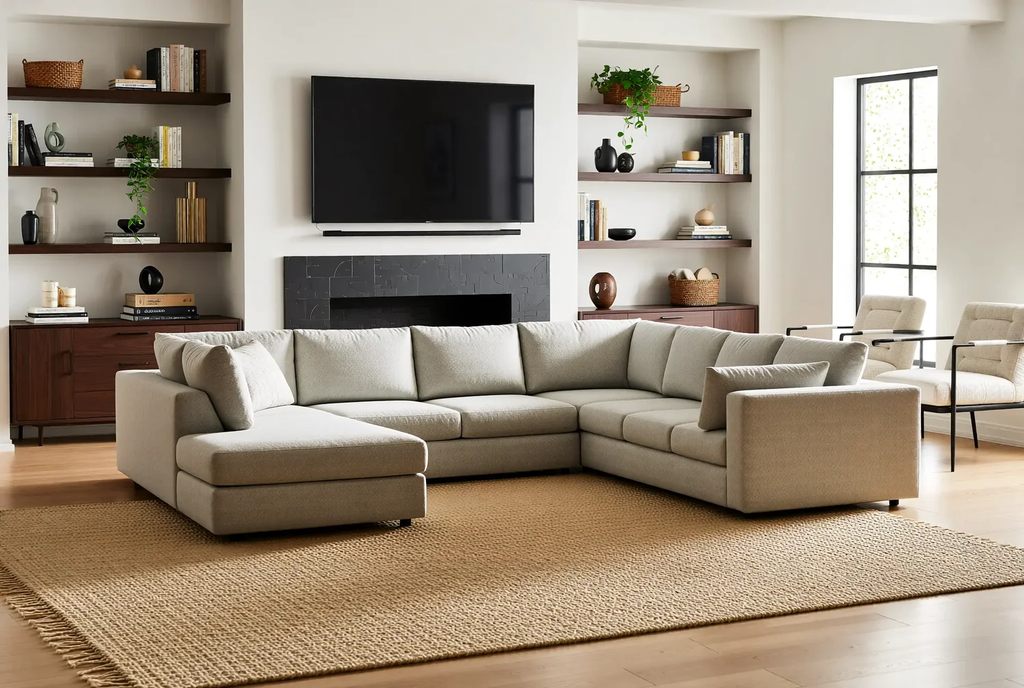
Now picture a media room where the main activity is watching a long movie. A generous seat can make room for a blanket, crossed legs, or a relaxed side position. A deeper sofa may be ideal there, especially when there is enough floor space for an ottoman and easy circulation.
The same sofa can be used for both, but choose based on the activity that happens most often. A beautiful sofa that makes everyday sitting awkward is not a good use of space or money.
Do Not Forget the Room Around the Sofa
Deep seating also increases the sofa’s overall footprint. Before ordering, mark its full dimensions on the floor with painter’s tape. Include the distance to the coffee table, the route to the doorway, and space for people to pass when someone is seated.
A sofa may fit against a wall yet leave an uncomfortable squeeze between the table and television unit. In a smaller room, a few inches of overall depth can matter as much as the sofa’s width. Our coffee table size guide
Measure the delivery path as well. A deep sofa that looks ideal on the floor plan still has to pass through doors, halls, and stairs. Check whether legs, cushions, or sections can be removed and whether the manufacturer provides package dimensions.
Why Showroom Testing Beats a Single Number
Published specifications are useful for narrowing options, but the best test is sitting on the actual model. IKEA’s ÄLVDALEN sleeper sofa specifications show that different seating positions, including a chaise, can have very different usable depths within one piece of furniture.
When testing, remove your coat, sit as you would at home, and try both upright and relaxed positions. Check whether your feet rest comfortably, whether your lower back is supported, and whether the seat edge bothers the backs of your knees. Ask another household member to try it too.
If buying online, check the return policy, cushion construction, and detailed dimensions. Customer photographs may reveal scale, but they cannot tell you exactly how the seat will feel to your body. A store that provides both overall and seat measurements makes comparison easier.
Small Changes That Can Improve an Existing Sofa
If your current sofa is a little too deep, a firm lumbar pillow or appropriately sized back cushion can bring the support surface forward. Try one or two cushions rather than filling the entire seat with pillows. Make sure the added support stays in place and does not create an awkward neck position.
If the sofa feels too shallow, moving a loose back cushion may create more space, provided the remaining back support is safe and comfortable. An ottoman can offer leg support for lounging without changing the sofa itself. Avoid makeshift furniture risers or structural modifications that could make seating unstable.
Changing the coffee table location can also improve how the seating feels in use. If you constantly lean too far to reach a drink, the problem may be the furniture arrangement rather than seat depth. Our end table height guide
Use These Questions to Make the Final Choice
Can everyone who uses the sofa sit with comfortable back support? Can shorter users rest their feet or use a practical footrest? Is there enough depth for the household’s preferred lounging style? Does the full sofa footprint preserve walking space? And will the cushions maintain useful support after regular use?
Do not be swayed by labels such as “cloud,” “extra deep,” or “apartment size” without measurements. Those names describe a style or marketing idea, not a universal comfort standard. Two sofas in the same category can feel very different.
Living room sofa seat depth is worth checking because it changes how the room feels every day. Measure a seat you already like, compare usable depth rather than overall depth, and test the sofa in the posture you actually use. The right choice should make sitting down easy, not turn every evening into a pillow-adjusting project.

Nike Carkarel
Nike Carkarel writes about home decor, interior design, and practical ways to make living spaces more beautiful and comfortable. At Turquoise Moon Homes, Nike shares ideas for decorating rooms, choosing furniture, improving home layouts, and making everyday spaces work better. With an interest in thoughtful design and simple home improvements, Nike helps readers find inspiration for homes that feel welcoming, stylish, and easy to live in.