That familiar squeak between the bedroom and the hallway can be irritating enough to make you tiptoe around one board. Squeaky wood floor repair is not always a major project, but the right fix depends on whether the sound comes from boards rubbing, a loose subfloor, or movement below.
A quiet-looking surface can hide several different causes. Start by locating the exact spot and checking for bounce, moisture, or seasonal change before buying screws or lubricant.
The smartest repair addresses the moving layer without damaging the floor you want to keep.
Find the Exact Board Before Buying a Fix
A floor that squeaks near the bedroom doorway can sound as though the entire hallway needs repair. Often the noise comes from a much smaller area where two pieces of wood move against each other.
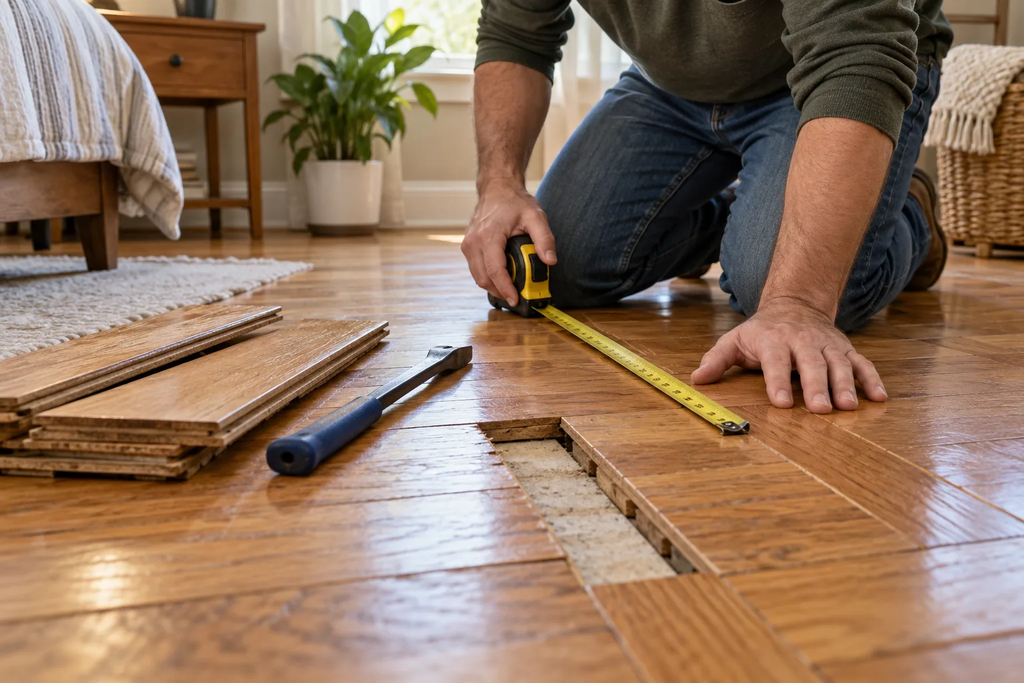
Squeaky wood floor repair starts with finding the movement. Walk slowly in socks while another adult listens from a nearby room. Mark the noisy spot with painter’s tape, then step around it to see whether the sound follows one board or a wider section.
Do not start driving screws through the floor simply because the sound is loud. A squeak may come from the finish flooring, subfloor, or a connection to the framing below. Each needs a different approach.
Why the Floor Makes Noise When You Step
Wood responds to humidity, and a seasonal change can open tiny gaps between boards. The boards may rub at their edges or against old fasteners when weight shifts across them.
A subfloor can also move slightly over a joist if the original fastening has loosened. That can create a sharper sound than a gentle board-to-board squeak. The noise alone cannot tell you whether the framing is sound.
The National Wood Flooring Association’s technical publication notes that occasional squeaks are not necessarily a failure, and that changes in temperature and moisture can contribute. A growing bounce or visible movement deserves a closer look.
Use the Season as a Clue
Notice whether the squeak appears after the heat has been running for weeks or during a humid summer. Wood flooring can shrink or swell as indoor conditions change, and the sound may follow that pattern.
Keep indoor humidity within the flooring manufacturer’s recommended range rather than adding moisture blindly. Too much humidity can create cupping or other problems, while very dry air may widen joints.
If the sound began after a leak or a spill that reached the subfloor, stop treating it as ordinary seasonal noise. Look for staining, soft spots, and swelling. Drying and moisture repair come before any cosmetic attempt to silence the boards.
Check Whether the Floor Is Actually Moving
Place a small straightedge across the suspected boards and watch for a change when someone steps nearby. You may see a narrow joint open and close or a board shift slightly against its neighbor.
A broad dip, pronounced bounce, or new gap at the baseboard points beyond a simple surface squeak. In an older house, that may call for a qualified flooring or structural professional to assess the framing and support.
Never cut into a floor to investigate without knowing what lies below. Plumbing, electrical wiring, and radiant-heating components can run near the surface. A rushed screw can turn a minor noise into a much more expensive repair.
The Gentle Fix for a Board-to-Board Squeak
If the finish is sound and the sound seems to come from a tight board joint, a product specifically approved for the floor may reduce friction. Test in a hidden spot first to avoid staining the finish.
Better Homes & Gardens’ floor-repair guide describes dry lubricants as one possible surface approach. That is not a cure for a loose subfloor or a board that moves visibly.
Keep powders and sprays away from rugs and walking surfaces where they could create a slip hazard. Clean residue as the product directs. If the sound returns quickly, take that as evidence the movement needs a more lasting repair.
What to Look for When the Basement Is Open Below
An unfinished basement can make diagnosis easier because the underside of the subfloor and joists may be visible. Have one adult walk above while another watches from a safe, well-lit spot below.
Look for a small gap between the subfloor and a joist or movement around a fastener. Do not touch wiring, plumbing, or suspected damaged framing. If the area is cramped or unsafe, let a contractor inspect it.
A narrow gap may sometimes be stabilized with a carefully fitted shim and suitable adhesive, but forcing a thick wedge can lift the floor above. The goal is to stop movement, not jack the subfloor upward.
Why Screws Through the Top Are Not a Guessing Game
Special floor-fastening systems can work when a subfloor has loosened, but the fastener must reach the right material and avoid services below. The finished surface also needs an appropriate method so heads do not remain exposed.
A screw driven between joists may add a hole without improving support. One driven through an engineered floor or radiant-heating system can cause damage. Read the flooring and repair-system instructions before selecting a fastener.
If you cannot identify the joist layout and what lies beneath, hire a flooring professional. A quiet floor is not worth puncturing a pipe or damaging a heated floor.
Solid Hardwood, Engineered Wood, and Laminate Need Different Care
Solid hardwood is often nailed or stapled to a subfloor. Engineered boards may be glued, floated, or mechanically fixed. Laminate is commonly installed as a floating system with room for expansion.
A floating floor that rubs against a tight doorway trim may squeak for a different reason than a nailed oak plank. Adding screws through a floating floor can prevent its normal movement and create buckling.
Find the flooring product and installation method before choosing a repair. If the original paperwork is gone, a flooring contractor can often identify the system at a vent opening or transition strip without tearing up the center of the room.
A Room-by-Room Repair Example
Imagine a hardwood hall that squeaks only near the bathroom door in winter. The boards look flat, and there is no bounce. Start with humidity history and a close look at the board joint rather than opening the ceiling below.
Now imagine the same spot also feels springy and the baseboard has separated from the floor. That changes the priority. The movement may involve the subfloor or framing, so a surface lubricant is unlikely to solve it.
These two situations can sound similar underfoot but call for different work. A careful diagnosis saves money because it narrows the repair to the layer that actually moves.
Know When the Sound Is a Warning
An occasional squeak in an otherwise solid floor is often more annoying than dangerous. But new sagging, widespread softness, water staining, or a sudden change after renovation deserves professional attention.
If a leak caused the problem, fix the water source first. Our guide to showerhead dripping when off shows how a small plumbing symptom can point to a repair that should not be ignored.
Also check nearby trim and doors. A sticking interior door can have its own simple cause, but several new alignment changes together may warrant a broader look at the building.
Compare Repair Quotes by What They Actually Fix
One contractor may propose fastening a small subfloor area from below. Another may want to remove finished flooring. Ask each to identify the noisy layer and explain why the less invasive option will or will not work.
Request details on access, dust control, finish matching, and whether boards can be reused. In a hallway, even a small refinished patch can look different under morning light, so appearance belongs in the conversation.
Keep the repair scope tied to observed movement. A broad replacement recommendation should come with evidence of damage beyond a single squeak. Good diagnosis is worth more than a dramatic promise of silence.
Keep a Quiet Floor Quiet After the Repair
Maintain the indoor conditions recommended by the flooring maker and clean spills promptly. Put protective pads beneath furniture legs so moving a heavy chair does not grind grit into the finish.
Listen for the sound returning in the same spot. If it does, photograph any new gap or movement and share the repair record with the contractor. Repeated noise can reveal that the first fix did not reach the true source.
Do not chase every creak in an older house. Focus on changes, movement, moisture, and comfort. A sound floor can make a little noise; the useful question is whether something is shifting that should stay still.
Final Thoughts
A floor does not need to be perfectly silent to be healthy. The real payoff is knowing when a little friction is normal and when movement or moisture deserves a closer look.
Mark the spot, observe the conditions, and choose the least invasive fix that matches the cause. That is how you protect both the floor’s structure and the finish you see every day.

Nike Carkarel
Nike Carkarel writes about home decor, interior design, and practical ways to make living spaces more beautiful and comfortable. At Turquoise Moon Homes, Nike shares ideas for decorating rooms, choosing furniture, improving home layouts, and making everyday spaces work better. With an interest in thoughtful design and simple home improvements, Nike helps readers find inspiration for homes that feel welcoming, stylish, and easy to live in.