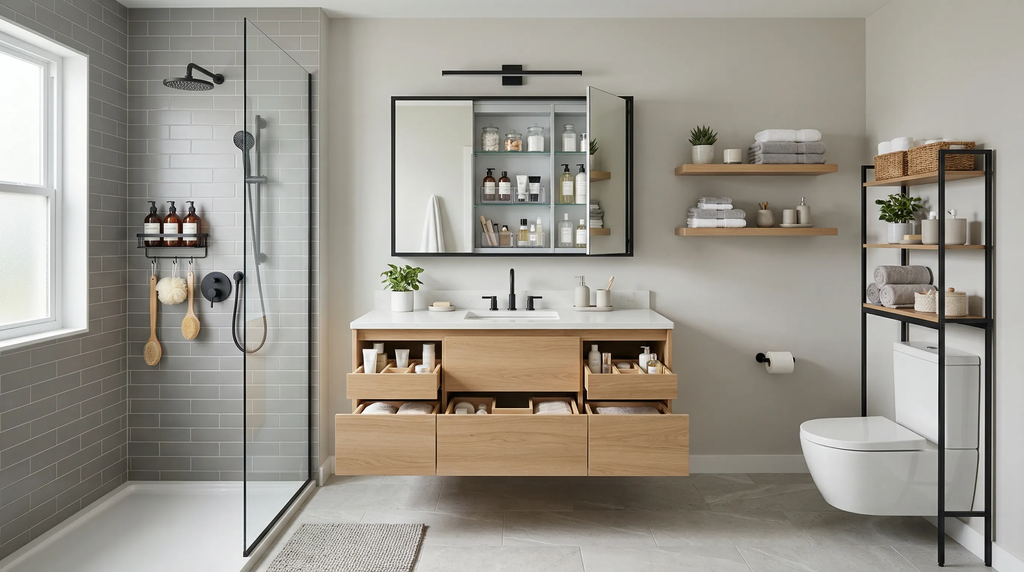
A tiny bathroom cabinet can turn into a jumble remarkably fast. Cotton swabs tumble behind bottles, a spare toothbrush disappears, and every morning starts with moving three things to reach one. Good small bathroom medicine cabinet organization is less about buying miniature containers and more about deciding what belongs in that shallow space at all.
The best cabinet is easy to use when you’re half awake, easy to clean when something spills, and safe for the people who share the home. It also needs to respect a detail many bathrooms get wrong: a steamy cabinet is not necessarily the best place to store medication. That distinction changes how you should plan the shelves.
Empty the Cabinet and Sort by Actual Use
Take everything out and wipe the shelves before buying organizers. Sort items into daily grooming, occasional care, duplicates, expired products, and things that belong elsewhere. A shallow cabinet works best when it holds the few things you reach for often rather than serving as a miniature warehouse.
Keep only items that tolerate bathroom humidity and are appropriate to store there. Toothbrushes, toothpaste, contact-lens accessories, skincare, and small grooming tools may all have different storage needs, so check product labels. Damp cloths, leaking bottles, and rarely used bulk packages should not crowd the shelf.
Make a quick count of what remains. You may discover that the real problem is five partly used bottles of the same product, not a lack of storage hardware. Finishing or responsibly disposing of duplicates can free more room than adding another rack.
Why Medication May Need a Different Home
The name “medicine cabinet” can be misleading. Steam and temperature changes are common in bathrooms, and some medicines can be affected by those conditions. The U.S. Food and Drug Administration’s medicine-storage guidance notes that damp bathroom cabinets can reduce the effectiveness of certain medications and recommends following the product’s storage instructions.
For many medicines, a cool, dry, secure location outside the bathroom is a better choice. Keep products in their original labeled containers unless a pharmacist advises otherwise. Check expiration dates and use approved local take-back or disposal options for medicines you no longer need.
Children’s safety matters more than convenient shelf placement. The Centers for Disease Control and Prevention’s medication-safety advice stresses keeping medicines, vitamins, and supplements out of children’s sight and reach after every use. A mirrored cabinet above a sink is not automatically childproof, especially if a child can climb.
Measure the Cabinet’S Useful Space, Not Just Its Outside Size
Open the door fully and measure shelf width, depth, and clear height. Watch for hinges, mirror frames, and the door’s closing path. A container that fits on the shelf may still prevent the door from closing if it sticks out too far.
Measure the tallest items you actually intend to keep. A toothbrush cup may need more height than a row of small jars. Adjustable shelves are helpful, but moving one shelf up can leave another too cramped. Make changes based on the items, not on an assumption that evenly spaced shelves look best.
Some cabinets have metal interiors, some use plastic or glass shelves, and others have a wood-based frame. The material affects which accessories are suitable. Adhesive organizers may not bond reliably to textured or damp surfaces, and magnets only work on compatible metal.
Create a Simple Front-to-back System
Put everyday items near the front where they can be reached without knocking anything over. Keep occasional items behind them only if you can still see and retrieve them. In a very shallow cabinet, a single row of products is often more useful than two tightly packed rows.
Use low-sided trays for small items that tend to scatter. A narrow washable tray can hold nail clippers, tweezers, and similar tools while making shelf cleaning easier. Avoid tall bins that hide everything below their rim. Visibility is part of good organization.
Group products by routine rather than by packaging color. Morning dental care belongs together; occasional grooming tools can share another small zone. If two people use the cabinet, consider assigning each a clearly defined section to prevent one person’s items from gradually occupying every shelf.
Choose Organizers That Solve a Real Problem
Small clear bins can help with loose accessories, but they should be easy to remove and wash. A slim shelf riser may create an extra layer for short containers if the door still closes and taller products remain accessible. Door-mounted holders can be useful for light items when the cabinet is designed to support them.
Do not overload the door with heavy bottles or sharp tools. Added weight can strain hinges and cause the mirror to shift. A cabinet door is not a general-purpose pegboard. Follow the manufacturer’s limits and avoid drilling into a mirrored door or unknown backing.
Think about cleaning before choosing materials. Open wire baskets may collect dust around tiny bottles, while deep fabric pockets can hold moisture. Smooth, removable surfaces are often easier to maintain in a room where splashes and condensation happen.
Make Room for Tall Bottles Without Wasting a Whole Shelf
A common frustration is one tall bottle forcing every shelf to be spaced far apart. Try placing tall items at one side or on the bottom shelf, with shorter items grouped elsewhere. If shelves adjust, set the clearances around the actual bottles instead of the tallest possible container.
Keep heavy glass containers low to reduce the chance of them falling when the door opens. If an item is too large or awkward for the cabinet, give it a home in a drawer or linen closet rather than forcing it to fit. A crowded cabinet is more likely to spill during a rushed morning.
Reserve some empty space. You need room to pick up a bottle without knocking the one beside it. A cabinet filled to the last inch may look efficient in a photograph but can be frustrating to use every day.
Use the Space Around the Cabinet Thoughtfully
Not every bathroom item needs to live behind the mirror. A drawer can hold grooming tools, a closed shelf can store backup supplies, and a wall hook can keep a washcloth within reach. The best arrangement distributes items according to how often they are used and how well they tolerate moisture.
Our small bathroom towel storage guide
If you have storage beneath the sink, avoid blocking plumbing or shutoff valves. Our under-sink cabinet organization guide
What Works in a Shared Family Bathroom
In a bathroom used by several people, labels can be helpful, but they do not need to be elaborate. A small name label on a tray or shelf edge is often enough. Place shared dental products where everyone can reach them safely, and keep personal grooming items in separate zones.
Children’s toiletries should be stored at a height and location appropriate to their age and supervision needs. Do not place medicine, razors, or sharp grooming tools where children can reach them. The best organization system is one that remains safe even when someone forgets to close the door promptly.
For guests, leave a small clear area for temporary items. A bathroom cabinet that has no free shelf space can be awkward for visitors, especially in a compact home where there is little countertop room.
Keep Moisture and Mess from Rebuilding
After hot showers, use the bathroom exhaust fan according to its instructions and address persistent condensation. A dry cabinet is easier to clean and less likely to develop unpleasant odors. If you notice water collecting inside, inspect for leaks, poor ventilation, or a cabinet positioned where it is repeatedly splashed.
Wipe shelves periodically and check for sticky residue from hair products or cosmetics. Replace damaged containers before they leak. Avoid storing open cotton products where splashes can reach them. The point is not a spotless display but a cabinet that stays practical between cleanings.
Our bathroom exhaust fan sizing guide
A Five-minute Weekly Reset
Once a week, return items to their zones, remove empty packaging, and wipe any spills. Check whether an item has been unused for months and could live somewhere else. If one shelf repeatedly becomes crowded, adjust the arrangement rather than blaming everyone for not keeping it tidy.
Every few months, check dates on toiletries and products that have limited use periods after opening. Do not treat a product as safe indefinitely because it still looks normal. Follow its label, and discard items responsibly when they are no longer appropriate to use.
A simple reset works better than a complicated color-coded system that nobody has time to maintain. The cabinet should help you get ready, not create a new chore.
What to Buy and What to Skip
Start with one or two narrow, washable trays if loose items are the main issue. Add a riser only if the cabinet has enough vertical clearance. Choose containers that fit the real shelf dimensions and leave room for fingers to grasp items. You may not need to buy anything at all after removing duplicates and relocating medicines.
Skip bulky rotating organizers that waste corners in a shallow cabinet, and avoid over-the-door racks that prevent proper closure. Do not attach heavy accessories to a mirror without clear manufacturer approval. A small amount of well-chosen storage is more useful than a collection of gadgets that crowd the space.
Small bathroom medicine cabinet organization succeeds when every item earns its place. Store medication safely according to its label, measure the shelves, keep daily products visible, and leave a little breathing room. The result is a calmer morning routine and a cabinet that is genuinely easier to live with.

Nike Carkarel
Nike Carkarel writes about home decor, interior design, and practical ways to make living spaces more beautiful and comfortable. At Turquoise Moon Homes, Nike shares ideas for decorating rooms, choosing furniture, improving home layouts, and making everyday spaces work better. With an interest in thoughtful design and simple home improvements, Nike helps readers find inspiration for homes that feel welcoming, stylish, and easy to live in.